
Rural Prefabricated Modular Housing
Rural prefabricated modular housing generally refers to prefabricated rural houses, which are a new construction method centered around the on-site assembly of factory-prefabricated components.
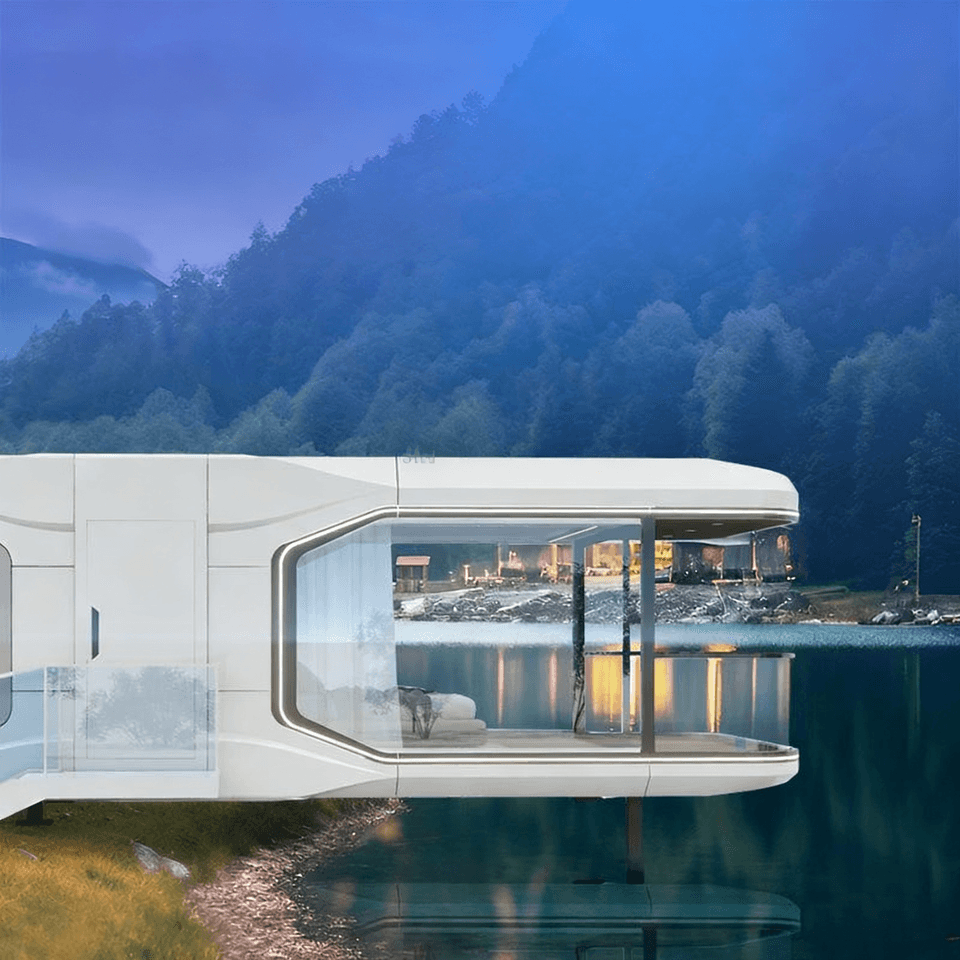
Significantly Improved Construction Efficiency
Prefabricated rural houses are produced through factory assembly lines for components such as columns, beams, and wall panels, which are then transported to the homestead for direct assembly and fixation. The construction process is similar to 'building with blocks'. Taking rural areas in Hebei Province as an example, from the pilot program in 2022 to the end of 2025, a cumulative total of 20,000 rural households have chosen this model, with some projects achieving commencement and completion within the same year. For instance, Li Zhanjun, a farmer in Weichang County, Chengde City, had a prefabricated rural house with a main structure costing 1,650 yuan per square meter and a total cost of 170,000 yuan. After receiving provincial subsidies and subsidies for dilapidated house renovations, he only paid slightly more than 110,000 yuan in actual expenses, significantly shortening the construction period and reducing costs.
Continuously Increased Policy Support
Hebei Province provides a provincial subsidy of 10,000 yuan per household for newly built prefabricated rural houses included in the pilot program and has developed the 'Yunongtong' app to enable full-process online handling, simplifying the approval process. Some cities and prefectures have叠加 supporting incentive measures. For example, Weichang County has coordinated the promotion of prefabricated rural houses with rural dilapidated house renovations, allowing eligible farmers to enjoy both subsidies simultaneously, further reducing their financial burden.
Diversified Market Participants
Design, construction, and component production enterprises promote prefabricated rural houses through live streaming Q&A sessions, on-site observations, and other methods. For example, Xinyi Construction Engineering Co., Ltd. in Renqiu City, Cangzhou, answers farmers' questions in live streams, enhancing market awareness. Enterprise participation not only optimizes technical solutions but also reduces component costs through large-scale production, creating a healthy competitive environment.
Expansion of Application Scenarios from Residential to Public Buildings
Modular construction technology is not only used for rural residential buildings but also widely applied in scenarios such as schools and hospitals. The affordable rental housing project in the Dinghui Temple North plot, Haidian District, Beijing, adopts concrete modular technology, while Building 19 in Kaiyangli Sanqu, You'anmen Subdistrict, Fengtai District, achieves original demolition and reconstruction through 'low-rise steel-concrete composite modules', effectively addressing safety hazards in old residential communities and demonstrating the technology's adaptability to multiple scenarios.
Outstanding Environmental Advantages
Modular construction can reduce construction waste by approximately 80%. The prefabrication of components in factories allows for better quality control and reduces on-site construction dust and noise pollution. Compared to traditional construction methods, prefabricated rural houses perform better in terms of resource utilization efficiency and environmental friendliness, aligning with the trend of green building development.



