
On-site Video of Rural Prefabricated Houses (English Translation)
Currently, a direct link to an on-site video of rural prefabricated houses cannot be provided, but the construction process can be understood through a written description.
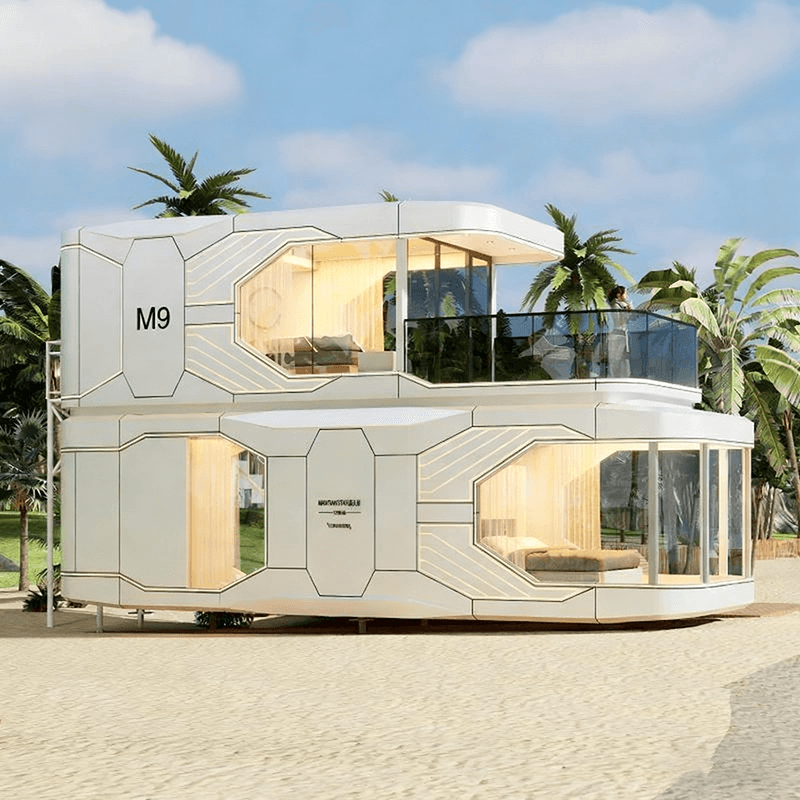
Construction Process of Prefabricated Houses in Rural South Korea
In rural South Korea, the construction of prefabricated houses is highly efficient, typically completing the main structure within 14 days. The specific steps are as follows:
- Leveling the foundation: This is the foundational step in constructing a prefabricated house, requiring the foundation surface to be level and solid to provide stable support for subsequent installation work.
- Installing foundation piles: Foundation piles are installed on the foundation to enhance the stability of the house and prevent issues such as settlement during subsequent use.
- Assembling beams: Prefabricated beams are assembled to form the frame structure of the house. The assembly of beams requires precise measurement and positioning to ensure the overall structural stability of the house.
- Hoisting stairs: Hoisting equipment is used to install prefabricated stairs at designated locations, considering the connection and stability with other parts of the house.
- Laying floor slabs: Prefabricated floor slabs are laid on the frame structure, requiring a level and tight fit to ensure the functionality and safety of the house.
- Grouting: Grouting is performed between the floor slabs and the frame structure to enhance the overall integrity and stability of the structure, improving the house's earthquake resistance.
Construction Process of Cement 'Prefabricated Houses' in Rural Henan
The cement 'prefabricated houses' used in rural Henan are constructed even faster, with a villa being completed in four hours and a building in two days. The construction process mainly relies on prefabricated cement components, which are quickly assembled on-site to complete the house construction. This construction method significantly shortens the construction period, reduces construction costs, and ensures the quality and stability of the house. Prefabricated components are uniformly produced in factories, allowing for better quality control and reducing errors and uncertainties during on-site construction.



