
Rural Container Simple House
Whether it is feasible to use containers as simple houses in rural areas needs to be judged comprehensively based on multiple factors such as law, safety, and practicality. Generally, it is necessary to meet conditions such as planning permits and safety standards, and there are certain restrictions.
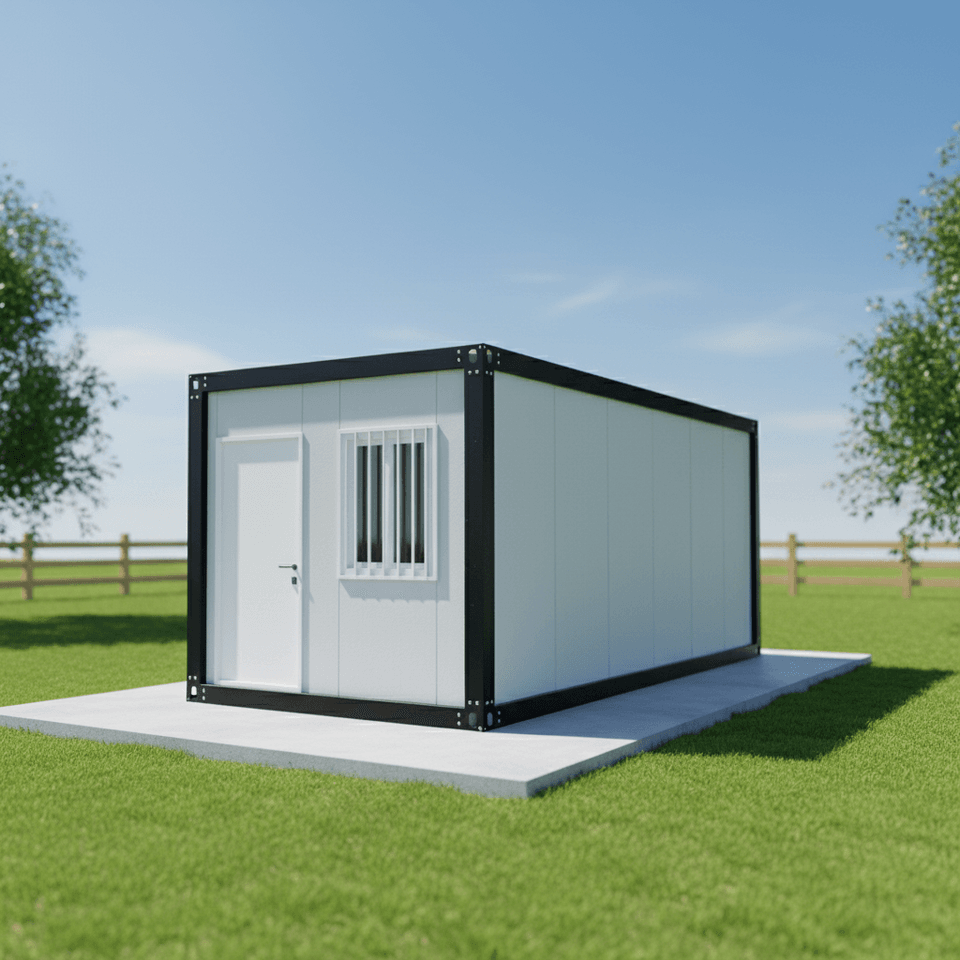
1. Legal Aspect: Whether it is an illegal construction depends on the situation
According to the Urban and Rural Planning Law and the Land Administration Law, construction activities require planning permits and land use permits. Due to their movable and non-fixed building characteristics, container houses are usually regarded as temporary buildings. However, whether they are illegal constructions specifically depends on local regulations:
- Allowed situations: If used for temporary storage of agricultural materials and tools (such as farmland guard houses), without hardening the ground, connecting to water and electricity, changing the land use purpose, and occupying farmland quotas, they are generally not considered illegal constructions.
- Prohibited situations: If the ground is hardened, permanent foundations are built, or they are used for business operations or long-term residence (substantially changing the land use purpose), they may be considered illegal constructions. For example, in multiple cases of farmland container houses handled in a certain county in Zhejiang, those used by returning young people for homestay business operations without approval were all identified as violations.
2. Safety Aspect: Need to meet fire protection and structural standards
Although container houses have a sturdy structure, if they are improperly renovated or low-quality materials are used, there may be safety hazards:
- Fire risks: Some container houses use flammable sandwich materials such as polystyrene and polyurethane foam. In case of a fire, they burn rapidly, have high toxicity, and are difficult to extinguish. It is recommended to use Class A fire-resistant materials such as rock wool boards and fire-resistant cotton, and equip them with fire-fighting equipment and maintain a safe distance (at least 6 meters).
- Structural safety: It is necessary to ensure that the container house is firmly connected to the ground to avoid problems such as settlement and window and door deformation due to local pressure. For example, in the Yiqi area where there are large temperature differences between day and night and significant humidity changes, hot-dip galvanized coatings should be selected to extend the anti-corrosion life.
3. Practical Aspect: Need to weigh costs and functions
The advantages of container houses lie in their low cost, fast construction, and mobility, making them suitable for temporary housing needs:
- Cost: The price of a second-hand 20-foot standard container is about 8,000 - 15,000 yuan, and the total renovation cost usually does not exceed 50,000 yuan, which is much lower than that of traditional buildings.
- Function: Through reasonable design (such as insulation layers, ventilation systems, and zoning layouts), they can meet needs such as residence and office work. For example, in a case in Xiaogan, Hubei, Mr. Zhou renovated a second-hand container into a "net-red small house" with a kitchen and bathroom at a cost of only 13,000 yuan.



