
Development of Rural Cement Prefabricated Housing
The development of rural cement prefabricated housing is rapid and is becoming a new trend in rural housing construction, with advantages reflected in cost, efficiency, policy, quality, environmental protection, and application scenarios.
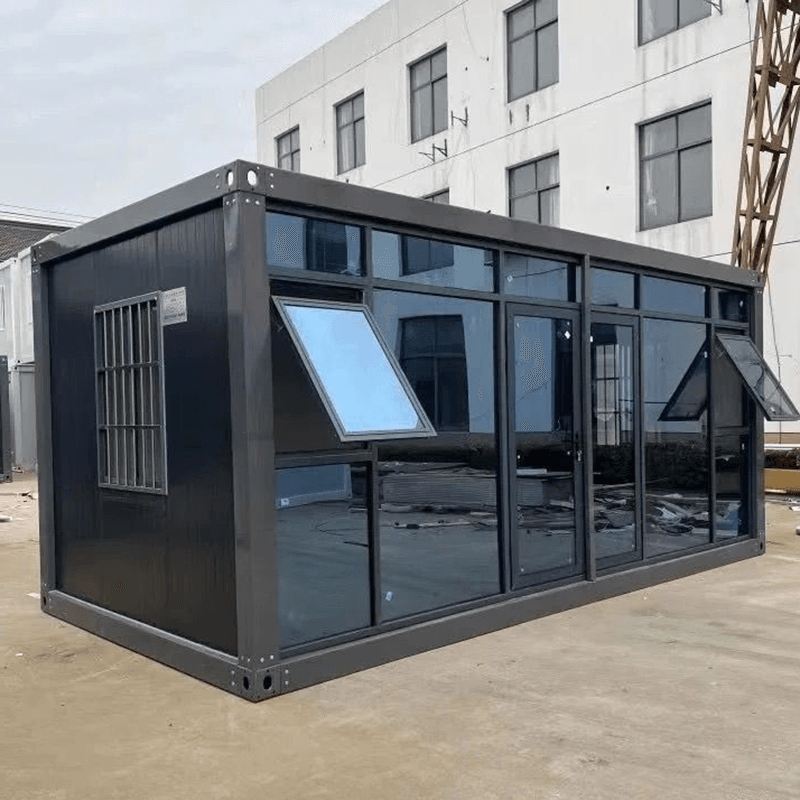
Significant cost and cost advantages: In traditional housing construction, labor costs account for nearly 50%. However, with cement prefabricated housing, through factory prefabrication and on-site hoisting, labor costs are almost negligible, with a construction cost of about 350 yuan per square meter. Taking Qixian County in Henan as an example, a 100-square-meter house can be ready for occupancy in just 5 days from an empty lot, with labor costs reduced by 60% compared to traditional methods, significantly lowering the total construction cost.
Technological innovation drives efficiency improvements: Using C35 high-grade concrete and national standard threaded steel, through factory integrated pouring and molding, it achieves professional design, modular production, and on-site assembly construction. The production cycle for a single module is only 7 days, with an error controlled within 2 millimeters. On-site hoisting can complete the main installation of a single villa in 4 hours, and the construction period for a 300-square-meter house is shortened from the traditional 6 months to 1 day, with an efficiency improvement of 180 times.
Policy support unleashes market potential: Many local governments provide subsidies for prefabricated rural houses, such as 10,000 yuan per household in Hebei Province and 400-500 yuan per square meter in Hunan based on building area, promoting the standardized development of the industry. Taking Luoyang City as an example, based on an estimate of 15 households per village adopting prefabricated cement houses each year, it is expected to consume 1.9109 million to 2.3886 million cubic meters of concrete and create an output value of 440 million to 549 million yuan by 2025, indicating huge market potential.
Comprehensive optimization of quality and performance: Prefabricated components have higher requirements for concrete strength and durability, forcing enterprises to optimize mix ratios, improve processes, and establish strict quality control systems. The full-frame shear wall structure has a compressive strength of up to 30 MPa, and the double connection of mortise and tenon + bolts results in a displacement of only 3 centimeters in a magnitude 9 earthquake. The intelligent integrated system (such as EPS insulation layers and photovoltaic panel interfaces) further reduces energy consumption and improves living comfort.
Outstanding environmental protection and sustainability: Factory centralized mixing reduces dust emissions and material waste, with construction waste reduced by 98% compared to traditional methods. Ready-mixed concrete, transported in sealed containers, complies with green building guidelines, promoting the industry's transition to a low-carbon model and aiding rural ecological protection.
Continuous expansion of application scenarios: Upgrading from temporary panel houses to permanent housing, it meets urgent needs such as epidemic isolation wards and post-disaster reconstruction (e.g., Shenzhen built 300 isolation wards in 48 hours). At the same time, through modular design, it adapts to diverse needs such as villas and multi-story residential buildings, covering all scenarios of rural housing.



