
Ruian Foldable Container House
Ruian foldable container house is a new type of mobile house that adopts modern home design concepts and is made of materials such as steel and sandwich panels, featuring mobility and recyclability. The following is a detailed introduction from the aspects of structure, performance, and application scenarios:
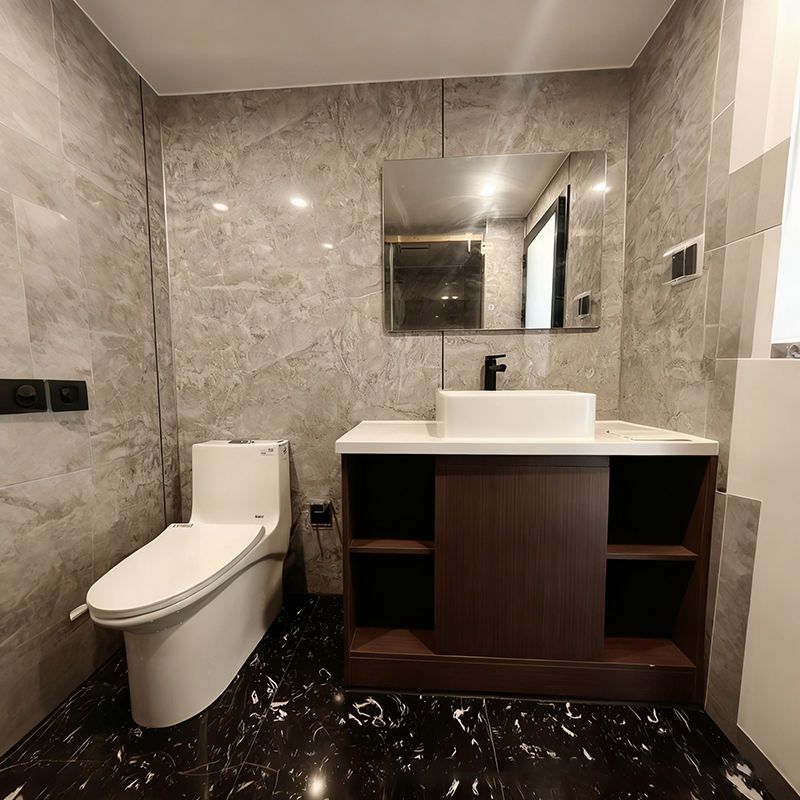
I. Structural Features
Ruian foldable container house adopts a modular design, enabling rapid deployment and stowage through a folding structure. Its main frame is usually welded from low-alloy high-strength structural steel, ensuring overall stability. The walls are made of color-steel sandwich panels filled with glass wool and other insulation materials, with a smooth surface. The joints are processed using a facing edge-stapling process, ensuring both airtightness and improved moisture resistance. The house typically measures 3 meters in width, 6 meters in length, and 2.8 meters in height, with a floor area of 18 square meters and a self-weight of about 1.5 tons. It supports multi-layer stacking for storage, significantly reducing transportation and storage costs.
II. Performance Advantages
- Durability: The welded steel frame meets strength requirements and can withstand significant loads, with a typical service life of over a decade.
- Environmental Adaptability: Through optimized moisture-proof design (such as glass wool edging and double-sided tape fixation), it effectively copes with humid environments; its fire rating meets national standards, and it features earthquake resistance, wind resistance, and rain leakage prevention.
- Economy: Compared to traditional color-steel houses, foldable container houses offer optimization opportunities in material costs, transportation costs (6 sets can be loaded on a 6-meter vehicle), and usage costs. They support repeated folding over 500 times, providing high recycling value.
III. Application Scenarios
Ruian foldable container houses are widely used in temporary housing, emergency relief, construction camps, and other fields. For example:
- Construction Sites: Used as worker dormitories, offices, or meeting rooms, they can be quickly deployed and moved along with the progress of the project.
- Disaster Relief: After earthquakes, they can be rapidly set up as temporary shelters, providing safe living spaces.
- Commercial Use: They can be transformed into mobile shops, exhibition halls, or event booths, adapting to various scenarios.
IV. Customization and Services
Some suppliers (such as Wenzhou Yazhi Portable House Co., Ltd.) offer personalized customization services, allowing adjustments to dimensions, interior decoration (such as built-in air conditioning, lighting, tables, and chairs), and functional zoning (such as bathrooms and kitchens) according to needs. They also provide design consultation and after-sales support.



