
Rental Container Rebuilt House
When renting container-rebuilt houses, it is essential to focus on legality, safety, functionality, and contract specifications. The detailed analysis is as follows:
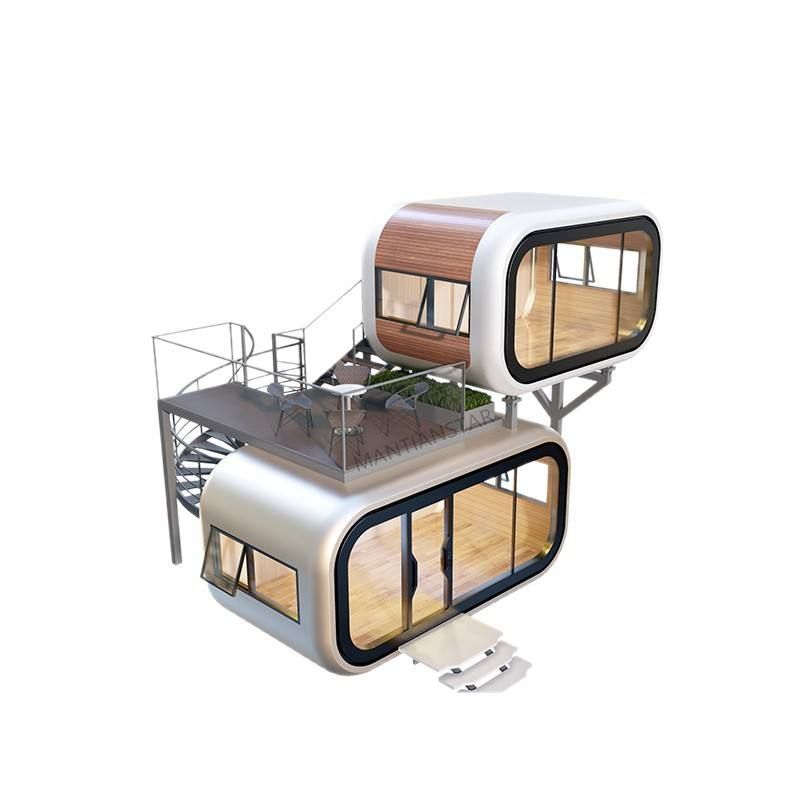
1. Legality Requirements: Planning Approval is a Prerequisite
According to Article 44 of the Urban and Rural Planning Law, temporary construction (including container-rebuilt houses) within urban and town planning areas must be approved by the urban and rural planning administrative department of the city or county government. Unauthorized use without approval may be deemed illegal construction, rendering the lease contract invalid. For example, in a case from Yingkou District, Bayuquan, Liaoning Province, Company A's 'House Lease Contract' with Company B was ruled invalid due to the lack of planning approval, and Company A could only claim occupancy fees instead of rent.
2. Safety Standards: Fire Prevention and Structural Integrity are Core
- Fire Prevention Performance: Rebuilt containers must be filled with fire-resistant materials. For instance, in a case from Fushan, Yantai, Shandong, a container-rebuilt house used rock wool filling, achieving a Class A fire prevention standard and effectively preventing fire spread.
- Structural Stability: It must comply with building safety regulations, ensuring earthquake resistance, wind resistance, and waterproofing. Products from Chongqing Pinjian Integrated Housing Co., Ltd., made of all-steel materials, offer earthquake resistance, waterproofing, and wind resistance, and reduce radiation pollution through solid wood flooring.
- Electrical Safety: The electrical system must be reasonably planned to avoid unauthorized connections. In some cases, container houses have upgraded energy supply systems (such as photovoltaic panels + underfloor heating) to reduce electrical risks and enhance comfort.
3. Functional Design: Adapting to Different Scenarios
- Residential Scenarios: Ventilation, lighting, and sound insulation facilities must be provided. For example, in a case from Wuhai, Inner Mongolia, container houses used color steel plate materials, offering diverse color options and focusing on sound insulation and wind resistance design.
- Commercial Scenarios: Functional modules can be customized according to needs. For instance, Hefei Luyuanfang Integrated Housing Co., Ltd. provides supporting facilities (mobile toilets, activity booths, etc.) for construction sites, meeting diverse needs.
- Temporary Emergency Scenarios: Rapid deployment and mobility are emphasized. For example, the packaged container houses from Chongqing Pinjian Company can meet the rapid construction needs of post-disaster emergency buildings or temporary construction sites.
4. Contract Specifications: Clarifying Rights, Responsibilities, and Risks
- Contract Validity: The nature of the house (temporary building) and approval status must be clearly stated in the contract to avoid invalidation due to illegality.
- Allocation of Rights and Responsibilities: Responsibilities for house maintenance, safety inspections, and insurance purchases should be agreed upon. For example, in a case where Company B was ordered to suspend use due to the leased property not meeting fire safety regulations, such risk response clauses should be预设 (pre-set) in the contract.
- Breach Clauses: Details such as rent payment, vacating conditions, and penalty calculations should be clearly specified to reduce dispute risks.



