
Qinzhou Container House Design
The design of container houses in Qinzhou needs to comprehensively consider structural performance, enclosure systems, process connections, and functional expandability, and be optimized in combination with local industrial advantages and green and low-carbon concepts. The following analysis is carried out from three dimensions: design points, industrial foundation, and technological trends:
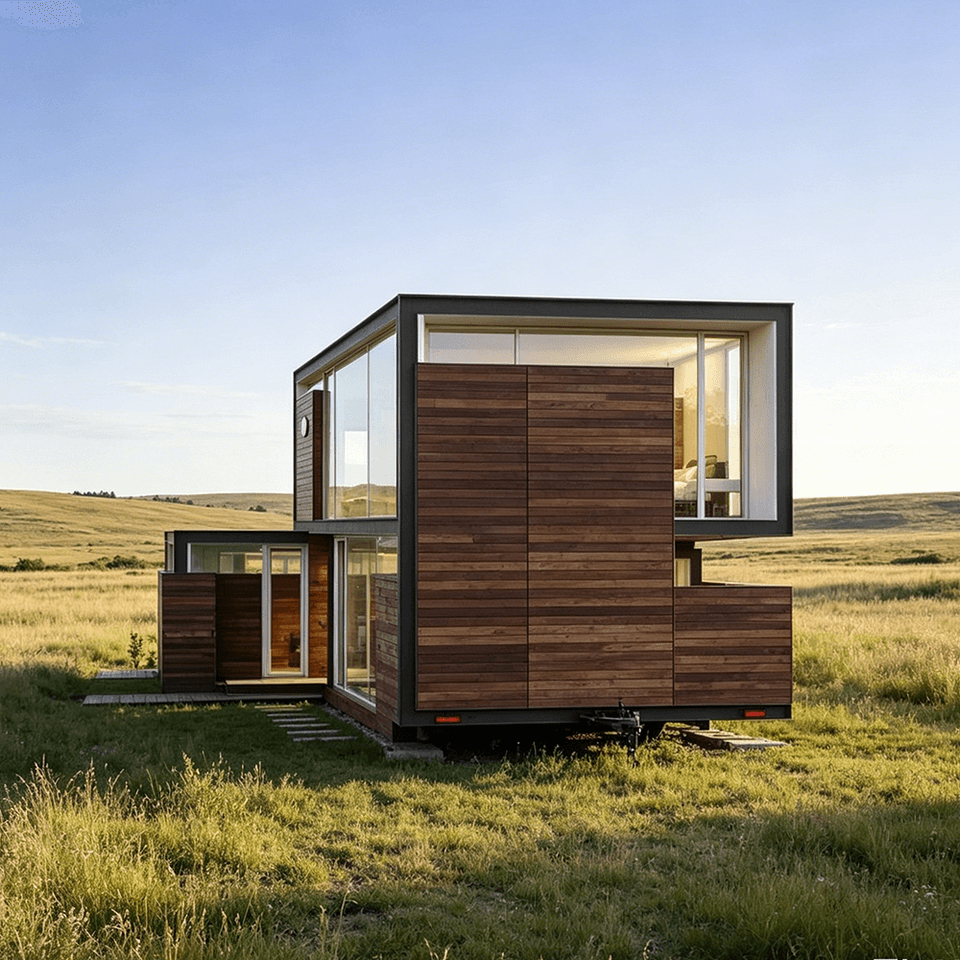
I. Core Design Points
- Structural Performance: The main frame should use high-strength steel (such as Q235B and Q345B). Load simulations should be conducted using professional software to ensure that key indicators such as wind resistance (Level 12), earthquake resistance (8-degree seismic fortification), and load-bearing capacity (floor load ≥ 3.0 kN/m²) meet the standards. For example, the Qinzhou Automated Container Terminal adopts a U-shaped process layout, reducing construction and operational costs through structural optimization while improving the balance of yard operations.
- Enclosure System: Wall panels should be made of materials with excellent fire resistance (Class A or B1), thermal insulation (thermal conductivity ≤ 0.03 W/(m·K)), and sound insulation properties, such as rock wool, glass wool sandwich panels, or new composite materials. The Beibu Gulf Port Qinzhou Automated Container Terminal further reduces energy consumption through distributed photovoltaic and smart lighting systems, reflecting the concept of green design.
- Process and Connection: Standardized components and high-precision manufacturing should be adopted. Modules should be connected using high-strength bolts or patented quick-installation systems to ensure tightness and firmness, with installation efficiency increased by more than 60%. Qinzhou Jiacheng Integrated Housing Co., Ltd. achieves easy disassembly, storage, and multiple turnovers of products through modular design.
II. Industrial Foundation Support
Qinzhou has formed a complete container house industry chain, covering design, production, installation, sales, and distribution. For example, Guangxi Delosi Mobile Container Co., Ltd. provides rental and sales services for residential containers, with rents as low as 6 yuan per day. Qinzhou space capsule manufacturers have introduced advanced global modular housing equipment, with products widely used in tourism resorts, construction site camps, and other fields. These enterprises provide cost-effective and efficient solutions for customized design through large-scale production and technological innovation.
III. Integration of Technological Trends
- Intelligent Integration: By combining water and electricity pipelines, ventilation and air conditioning, intelligent security, and other systems, rapid conversion from basic containers to fully functional office, dormitory, and medical units can be achieved. Enterprises such as Hongyu Steel Structure control the proportion of non-standard customized parts within a reasonable range through BIM design, balancing personalized needs and production efficiency.
- Green and Low-Carbon Orientation: Referring to the practice of the Beibu Gulf Port Qinzhou Automated Container Terminal, low-carbon technologies such as caisson prefabricated automatic spray curing technology (saving 85% of water and 70% of labor) and all-electric drive operations (zero carbon dioxide emissions) can be integrated into the design to help achieve the "dual carbon" goals.



