
Qinzhou Container House Construction
The construction process of container houses in Qinzhou mainly consists of four stages: factory prefabrication, transportation and hoisting, on-site connection and fixation, and interior decoration and exterior embellishment. It features high efficiency, flexibility, and environmental friendliness, making it suitable for various scenarios.
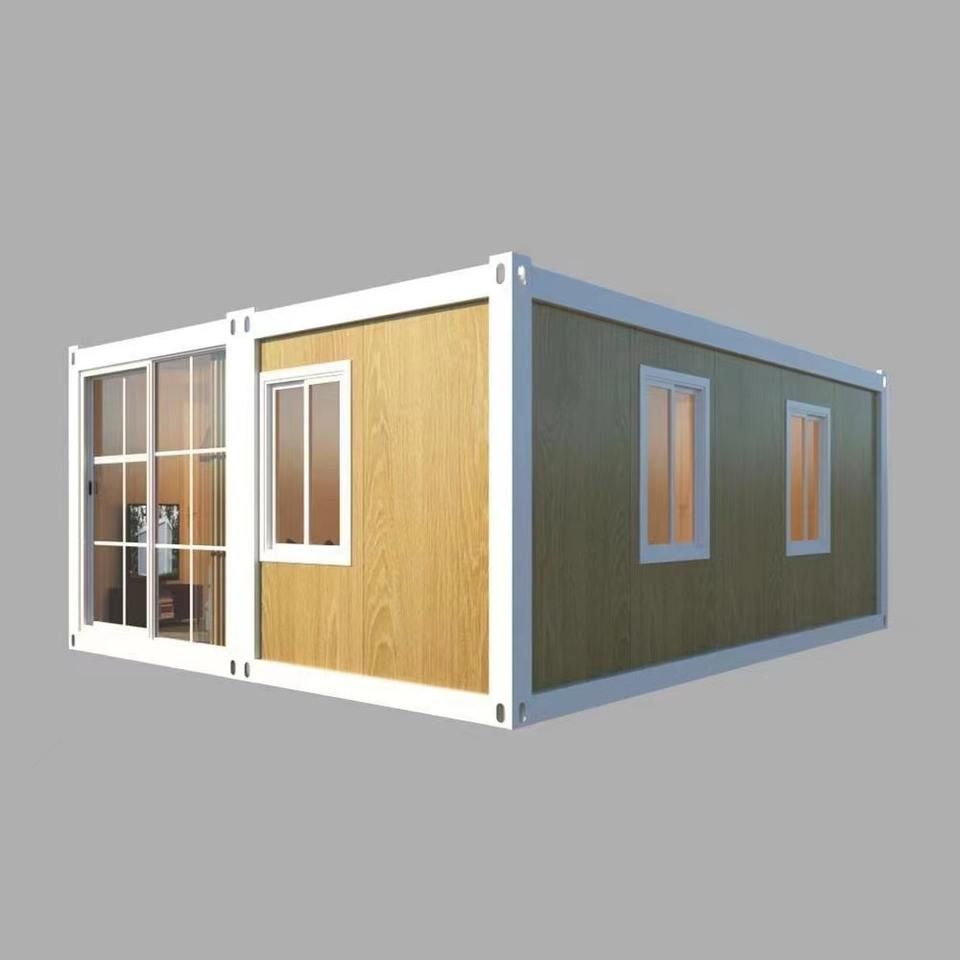
The factory prefabrication stage is the foundation of container house construction. Inside the factory, the main body of the container is formed through structural welding, using weather-resistant steel to ensure structural strength. Uniform dimensions (such as a width of 2.5 meters, lengths of 6 meters or 12 meters, and heights of 2.7-3 meters) facilitate subsequent transportation and assembly. The container undergoes anti-corrosion treatment and is equipped with insulation layers (such as rock wool or glass wool) to enhance thermal insulation performance. Additionally, internal wiring is pre-installed to provide convenience for subsequent use. This stage achieves standardized and modular operations through factory production, laying the groundwork for shortening on-site construction time.
The transportation and hoisting stage involves transporting the prefabricated containers to the construction site. Due to their uniform dimensions, containers can be efficiently stacked during transportation, reducing logistics costs. Upon arrival at the site, lifting equipment is used to hoist the containers to designated positions, where they are horizontally or vertically connected to form building spaces. This process requires precise control of container positions to ensure subsequent connections are secure and to accommodate diverse needs such as temporary offices, residences, and commercial spaces.
The on-site connection and fixation stage is crucial for ensuring the overall stability of the house. Structural connections between containers are made using bolts or welding, and pipeline systems (such as water, electricity, and ventilation) are connected to form a complete functional network. Shipping containers, after professional reinforcement, anti-corrosion, and fireproof treatments, meet safety standards for conventional residential and office use, providing reliable protection for users.
The interior decoration and exterior embellishment stage involves personalized design based on usage requirements. Internally, environmentally friendly paints can be applied, and decorative panels installed to enhance living comfort. Externally, painting or cladding can be used to blend with the surrounding environment, creating distinctive commercial spaces or cultural and tourism accommodation facilities. Ultimately, the container house becomes a fully functional and aesthetically pleasing building.
Container houses have a wide range of applications in Qinzhou, including temporary project offices and living camps, unique commercial spaces (such as cafes and retail stores), and cultural and tourism accommodations. Their efficient construction, flexibility, and environmental and economic benefits make them a convenient and flexible new choice for living.



