
How Much Do Container Houses Cost in Puyang
The prices of container houses in Puyang vary significantly depending on their type and specifications, and the specific price needs to be determined after selection based on actual needs. Here is an analysis of the price ranges and influencing factors for different types of container houses:
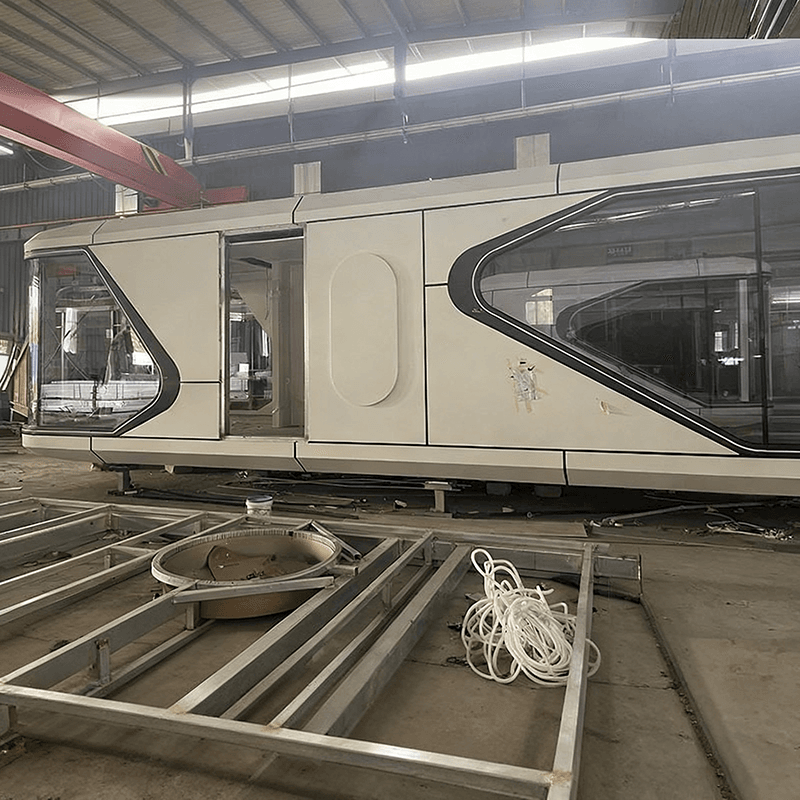
The price of packing-box units usually starts at ¥4200.00 per set or more. Packing-box units are a relatively common type of container house, with a complete structure and strong mobility, suitable for temporary office and accommodation scenarios on construction sites. The price differences mainly stem from the material, size, and configuration. For example, packing-box units made of high-strength steel or with added insulation layers have higher costs; if equipped with independent bathrooms, air conditioners, and other facilities, the price will also increase accordingly.
The prices of prefabricated panel houses show a diverse range. Some prefabricated panel houses are priced by area, such as ¥68.00 per 10,000 square feet or more or ¥80.00 per unit or more. Such prices may be applicable for large-scale purchases or leasing scenarios, but attention should be paid to unit conversion (e.g., 'unit' may refer to the area of a single module). There are also prefabricated panel houses priced per single module, with prices ranging from ¥2000.00 per unit or more to ¥5800.00 per unit or more. The differences mainly depend on the material (such as color-steel sheets, rock wool boards), the number of floors (single-story or double-story), and whether they include basic configurations like doors, windows, and electrical circuits.
There is room for discounts in bulk purchases. For example, a quote of ¥4500.00 for 5 units or more indicates that when the purchase quantity reaches a certain scale, suppliers may offer discounts. Such discounts are usually applicable to long-term cooperation or large-scale projects, and specific terms need to be negotiated with the supplier.
Price fluctuation factors need to be closely monitored. In addition to type and specifications, the prices of raw materials (such as steel and insulation materials), transportation costs, installation fees, and market supply and demand all affect the final price. For example, if the project site is far from the production location, transportation costs may significantly increase the total cost; if the supplier is required to provide installation services, additional labor costs will be incurred.
It is advisable to clarify needs and compare prices from multiple sources before purchasing. Users should determine the required type based on the usage scenario (such as temporary residence or commercial display), select the specifications according to the budget, and request the supplier to provide a detailed quotation (including sub-items such as materials, transportation, and installation). At the same time, they can refer to the average market price to avoid excessive costs due to information asymmetry.



