
Putian Container House Construction
The construction of container houses in Putian requires following a professional process, covering steps such as container selection, design, modification, installation, and decoration, and must be carried out by a professional team to ensure safety and compliance.
1. Selecting the Appropriate Container
The first step in constructing a container house is to choose a standard shipping container with a complete structure and minimal rust. These containers come in uniform sizes, with common specifications being 20 feet (approximately 6 meters long) or 40 feet (approximately 12 meters long), facilitating unified design and construction. It is essential to focus on inspecting the load-bearing capacity of the container frame and the integrity of the floor and side panels, avoiding containers with severe deformation or corrosion to ensure the stability of subsequent modifications.
2. Design and Planning
Determine the functional layout of the house based on usage needs, such as whether to divide areas into bedrooms, kitchens, bathrooms, etc. During the design phase, consider the local climate characteristics of Putian, including ventilation, lighting, and moisture-proofing requirements. For example, in humid environments, additional vents or moisture-proof materials can be used; in areas with high summer temperatures, shading structures or insulation layers can be planned. Additionally, reserve routes for water and electricity lines and positions for equipment installation to ensure subsequent construction complies with regulations.
3. Cutting, Welding, and Reinforcement
Cut the container (e.g., for windows or door openings) and weld (e.g., for joining multiple containers or expanding space) according to the design plan. After cutting, apply rust-proof treatment to the cut edges, and reinforce the welded areas to prevent a decrease in load-bearing capacity due to structural modifications. For example, add steel beams or angle irons at container connections to enhance overall stability.
4. Installing Windows, Doors, and Insulation Materials
Add insulation layers (such as polystyrene boards or rock wool boards) and windows and doors to improve the comfort of the house. Given Putian's humid climate, add a moisture-proof membrane outside the insulation layer and use sealing strips at window and door gaps to prevent water infiltration. Simultaneously, design a reasonable ventilation system (such as exhaust fans or skylights) to avoid moisture accumulation indoors.
5. Arranging Water and Electricity Systems
Water and electricity installation must strictly adhere to safety regulations, including circuit wiring, water pipe laying, and sewage system design. For example, circuits should use waterproof sockets and leakage protection devices, and water pipes should be insulated to prevent freezing and cracking. All pipelines should be concealed to avoid affecting aesthetics and safety by being exposed.
6. Interior Decoration and Exterior Painting
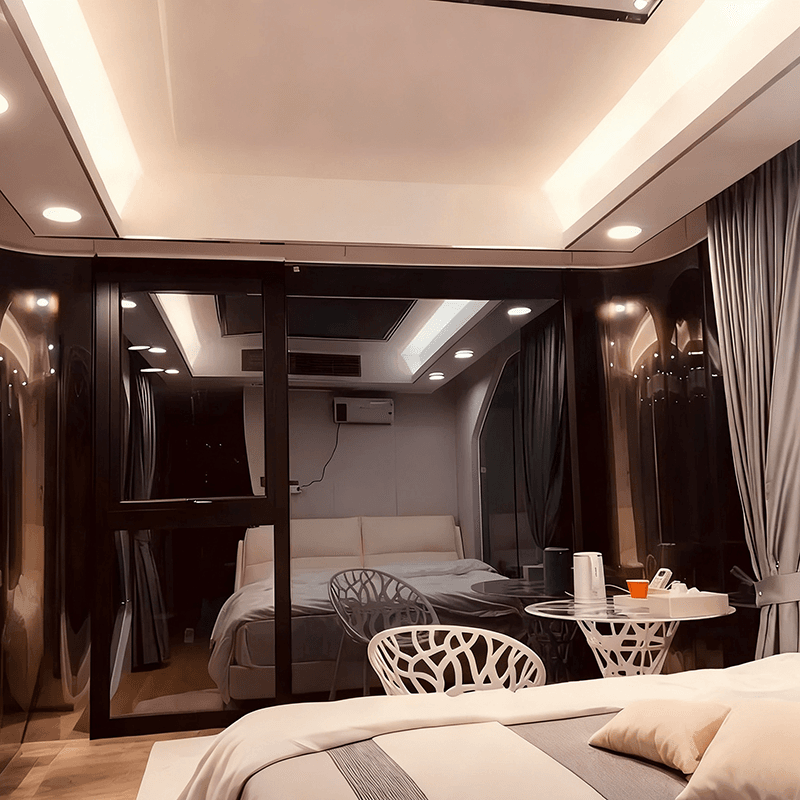
For interior decoration, choose environmentally friendly materials (such as moisture-proof flooring and water-resistant wall paint). For exterior painting, select weather-resistant coatings based on the climate and add sunscreen layers or reflective materials to reduce the impact of high temperatures. Putian craftsmen often add moisture-proof agents to exterior paints to extend the lifespan of the house.
Precautions: Container house modification involves structural safety and water and electricity compliance and must be carried out by a qualified professional team. Ordinary individuals should not attempt it on their own.



