
Purchase Second-Hand Container Houses
When purchasing second-hand container houses, it is essential to focus on quality standards, inspection methods, dimensions and load-bearing capacity, manufacturer processing capabilities, and the identification of manufacturer types. The key points are as follows:
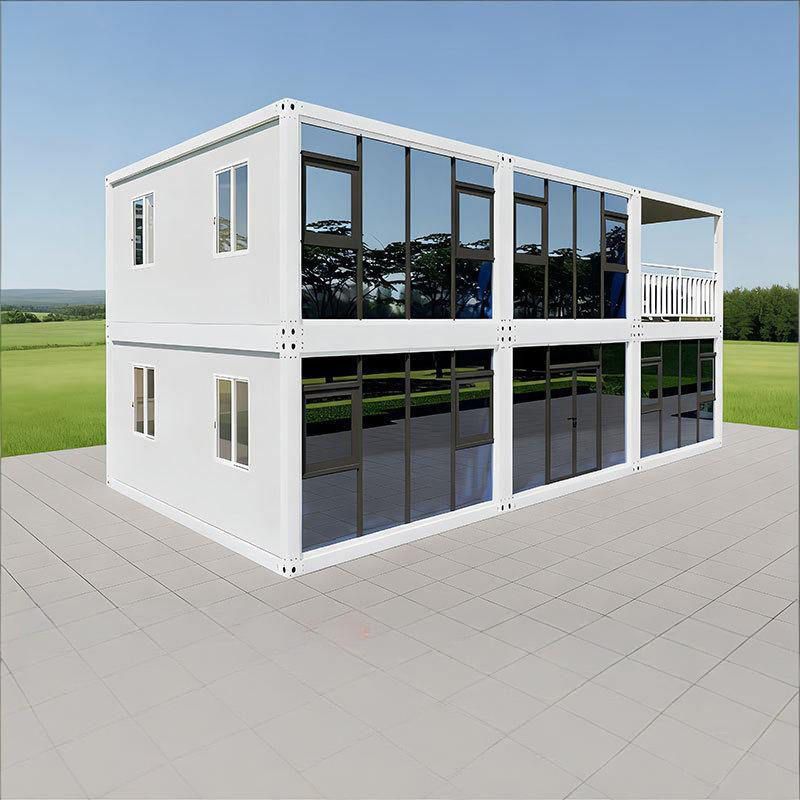
1. Prioritize used containers that meet IICL standards
The IICL (International Institute of Container Lessors) standards serve as the core basis for grading the quality of second-hand containers. Containers that comply with these standards have not undergone permanent deformation in their main structures, with no severe rusting or perforations on the roof and side panels, and the door seals and floors remain largely intact. Such containers significantly reduce the risk of secondary rework and structural reinforcement, making them particularly suitable for direct conversion into houses. If the IICL standard is not explicitly indicated, it is necessary to carefully evaluate the structural safety of the container.
2. Conduct thorough inspections, checking for potential issues step by step
- External inspection: Walk around the container to observe the roof and side panels, focusing on identifying weld scars, dented patches, or rust pits. Use a flashlight to shine from inside the container to the outside to check for any light leakage (which may indicate perforations or gaps).
- Seals and floor: After closing the container doors, confirm that the door seals are complete and free from aging or breakage. Check that the wooden floor inside the container is dry to prevent mold or insect infestation. If the floor feels soft in certain areas, it may indicate rusting through the underlying layer, requiring further inspection.
- Structural components: Verify that the corner fittings, bottom cross members, and door lock rods are intact, avoiding any signs of abnormal welding repairs (which may result from accident repairs and reduce structural strength).
3. Clarify dimensions and load-bearing capacity to assess actual usability
For 40GP used containers provided by reputable manufacturers, the external dimensions (12.19m × 2.438m × 2.6m) and internal dimensions (12m × 2.35m × 2.48m) should be consistent with those of new containers. However, the actual load-bearing capacity will decrease due to years of use and wear. For example, a container designed with a gross weight of 30,480 kilograms and a tare weight of 3,900 kilograms has an effective payload of approximately 26.5 tons. However, it is crucial to inspect the bottom cross members and corner fittings for rust. If severe rusting is present, the actual load-bearing capacity may be lower than the stated value, affecting the stability of the house.
4. Confirm manufacturer processing capabilities to avoid subsequent modification risks
The key is to assess whether the manufacturer has the capability to customize "fully welded structures." If the manufacturer can only provide the original container, subsequent cutting, window installation, electrical circuit addition, or interior renovation must be completed by the buyer. Non-professional construction can easily damage the waterproof structure, leading to issues such as water leakage and poor sound insulation. For example, comprehensive enterprises like Shanghai Shiqian can provide full-chain services from design to production, with containers featuring fully welded structures that are more robust and earthquake-resistant than traditional panel houses.
5. Identify manufacturer types to avoid intermediary risks
Distinguish manufacturer types directly based on their "custom processing" capabilities. If the product information explicitly states "custom processing: yes" and the main products cover customized container dormitories, offices, and other products, the manufacturer is typically a producer or modifier with welding, cutting, painting workshops, and complete renovation plans. If the manufacturer only provides standard containers and is vague about modification plans, they are likely intermediaries, making subsequent quality issue accountability complex and potentially increasing maintenance costs.



