
Pulley-Type Mobile Toilet
The pulley-type mobile toilet is a public facility with strong mobility and flexible design, suitable for various temporary or mobile scenarios.
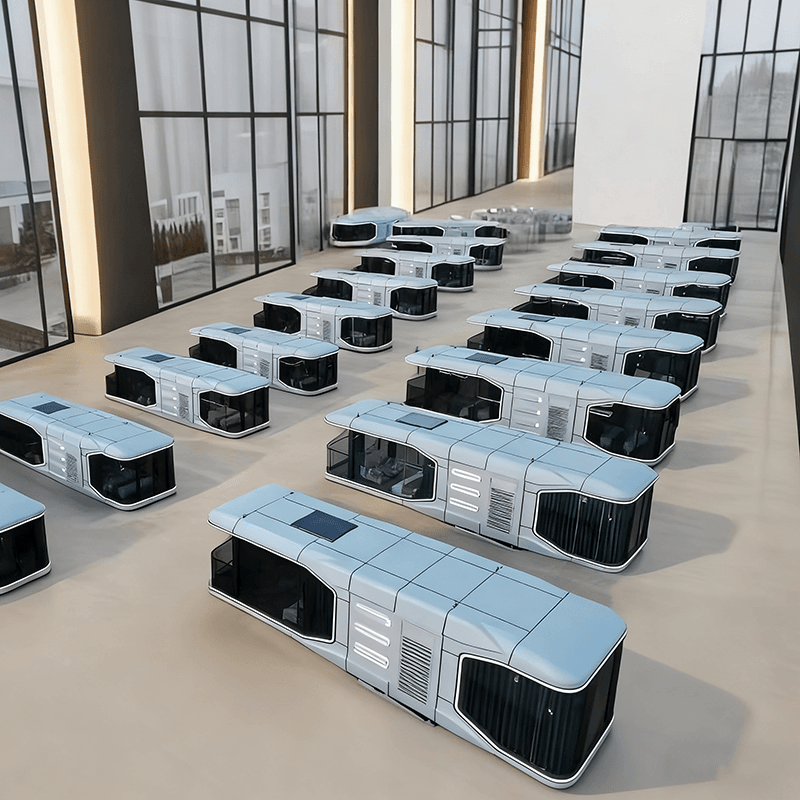
I. Basic Structure and Moving Principle
The core design of the pulley-type mobile toilet is to install pulley devices at the bottom. For small mobile toilets with fewer than 4 toilet stalls, pulleys can be directly installed at the bottom of the toilet, and the position can be adjusted by manual pushing. This design does not rely on large-scale mechanical equipment and can be moved with a small amount of manpower, significantly reducing deployment costs. For example, in scenarios such as temporary construction sites, outdoor music festivals, or scenic spot events, the toilet can be quickly adjusted according to the distribution of people to avoid the waste of resources caused by improper location selection of fixed toilets.
II. Application Scenarios and Advantages
- Temporary Demand Scenarios: In street temporary deployments, disaster relief sites, or large gatherings, the pulley-type mobile toilet can quickly respond to public service needs. Its flexibility makes it an effective supplement to traditional fixed toilets, especially in areas with temporary land use rights or unclear site planning.
- Environmental Protection and Resource Optimization: Through pulley movement, the toilet can be reused in different locations, reducing the construction waste generated by demolition and reconstruction. At the same time, its modular design facilitates the integration with sewage treatment systems, enabling resource recycling and aligning with the concept of green buildings.
- Low-Cost Maintenance: Compared with large mobile toilets that require vehicle traction, the pulley-type structure is lighter and has lower maintenance costs. Some simple versions (such as those made from modified plastic buckets) can even be made through DIY methods, further lowering the threshold for popularization.
III. Innovative Cases and Extended Applications
In addition to standard commercial products, folk innovations also demonstrate the diversity of pulley-type mobile toilets. For example, some enthusiasts have modified plastic buckets by cutting an opening at one-third of the height and installing pulleys at the bottom to create a movable multi-functional toilet. Although this design is simple in structure, it verifies the feasibility of the pulley movement principle in small-scale scenarios and provides new ideas for the construction of sanitation facilities in areas with limited resources.
IV. Limitations Consideration
Despite its significant advantages, the applicability of the pulley-type mobile toilet is still limited by ground flatness and bearing capacity. When moving on slopes or soft ground (such as sandy areas), additional reinforcement or adjustment of the pulley structure is required. In addition, large toilet stalls (such as those with more than 6 stalls) require mechanical traction due to increased weight, weakening the portability advantage of the pulley design.



