
Professional Mobile Toilet
A professional mobile toilet is a facility that can be moved as a whole and provides toilet services to the public. It has the advantages of being movable, combinable, and easy to transport.
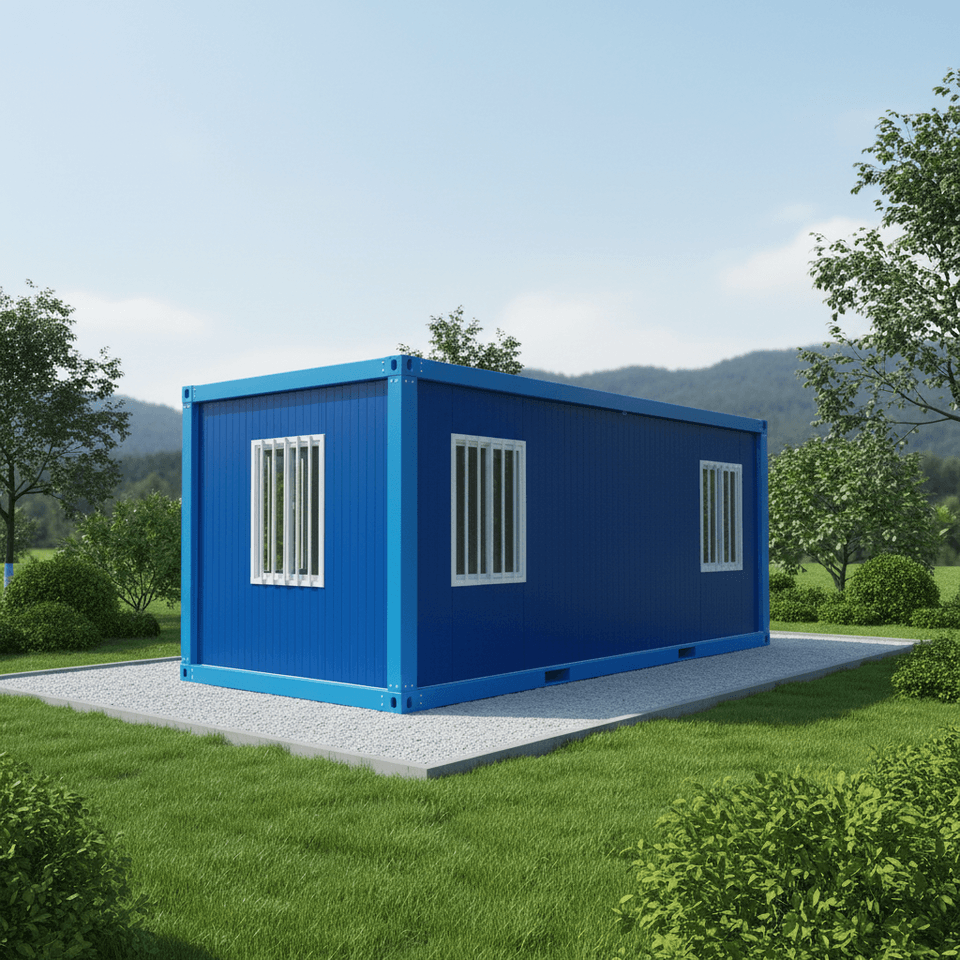
I. Basic Components A professional mobile toilet generally consists of a fecal sewage storage tank (or fecal sewage treatment device), floor slab, sanitary ware, walls, washing equipment, water tank, roof, moving device, etc. These components work together to ensure the basic functions of the toilet are realized. For example, the fecal sewage storage tank is used to collect and treat excreta, the sanitary ware provides convenience for using the toilet, and the walls and roof form an enclosed space to protect the privacy and safety of users.
II. Classification Methods
- By structural form: It can be divided into single-structure mobile toilets and composite-structure mobile toilets. Single-structure mobile toilets are usually relatively simple and suitable for small-scale or temporary needs; composite-structure mobile toilets are more complex and may contain multiple functional areas, suitable for large-scale or long-term needs.
- By moving method: It can be divided into lifting and handling mobile toilets and powered and towed mobile toilets. Lifting and handling mobile toilets rely on external equipment for movement and are suitable for short-distance or fixed-location deployment; powered and towed mobile toilets have autonomous movement capabilities and can be transported over long distances, offering higher flexibility.
- By sewage treatment method: It can be divided into water-flush and waterless-flush suction mobile toilets, circulating water-flush mobile toilets, and dry-packing mobile toilets. Water-flush and waterless-flush suction mobile toilets treat excreta through water flushing or suction, suitable for places with a water source or high hygiene requirements; circulating water-flush mobile toilets reduce water consumption by recycling water resources, suitable for areas with scarce water resources; dry-packing mobile toilets pack and treat excreta without a water source, suitable for extreme environments or temporary events.
III. Characteristics and Advantages Professional mobile toilets can be easily transported to any place where a toilet needs to be deployed and can be used repeatedly. Their mobility enables them to quickly respond to temporary or emergency needs, such as large-scale events and disaster relief scenarios. At the same time, their combinability allows for flexible adjustment of the toilet scale and functions according to actual needs, improving usage efficiency. In addition, the convenience of transportation also reduces construction and maintenance costs, making professional mobile toilets widely used in various places.



