
Production Container Prefabricated Housing
Production container prefabricated housing is an industrialized building form that uses standard containers as modules, enabling rapid construction through factory prefabrication and on-site assembly. Its technical principles and core advantages can be analyzed from the following aspects:
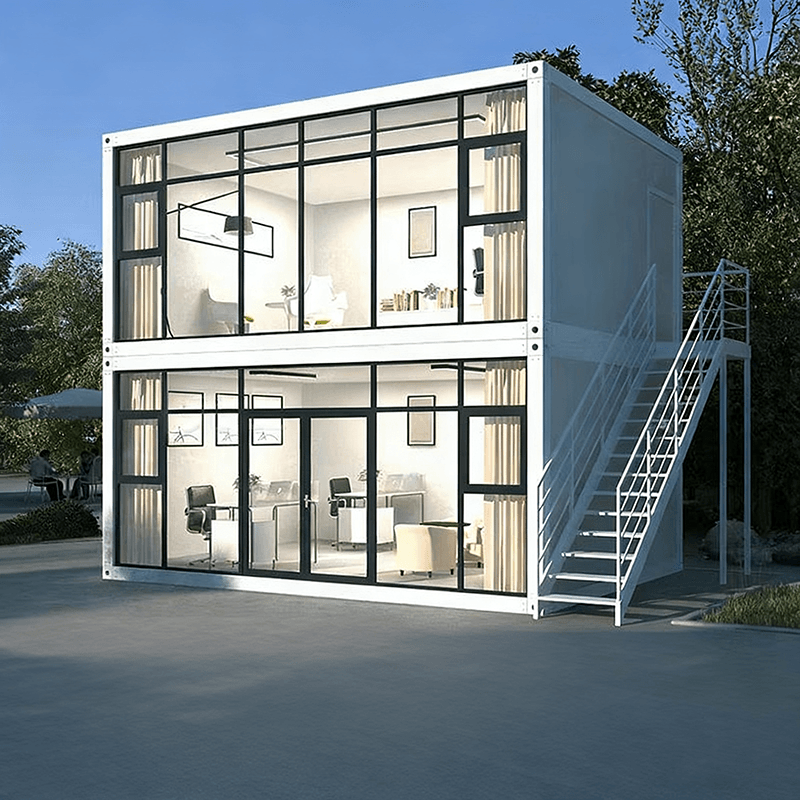
I. Modular Design and Construction Logic
Using 20-60 foot standard containers as basic units, steel frame structures and bolt connection technologies are employed, supporting horizontal splicing, vertical stacking, and other combination methods. For example, the MRDC Hotel project in Papua New Guinea utilized modular design to compress the traditional 14-18 month construction period to just 7 months (including production, transportation, and assembly). This "LEGO-style" construction method achieves rapid assembly through standardized interfaces, enabling the delivery of multi-story buildings within 3 months and significantly improving construction efficiency.
II. Cost and Quality Advantages of Industrial Manufacturing
- Cost Efficiency: Factories employ CNC cutting technology, reducing material waste rates from 8%-12% on traditional construction sites to 3%-5%, while cutting labor costs by 60%-70%. The reusable nature of materials further reduces long-term costs.
- Quality Control: Marine anti-corrosion technologies (such as marine-grade environmental paints) and steel frame structures are applied, achieving 20-year rust resistance and coating durability while meeting wind and earthquake resistance requirements. The "Space Capsule" intelligent container house developed in Wen'an County, Hebei, has passed extreme environment tests to verify its stability.
III. Diversified Expansion of Application Scenarios
- Emergency Scenarios: In earthquake-stricken schools, temporary pandemic hospitals, and other scenarios, modular housing can be deployed within 48 hours to address urgent accommodation needs.
- Commercial Innovation: Through customizable functional modules, new business formats such as smart waste stations, mobile coffee shops, and 24-hour self-service fitness pods have emerged. The Tang-style container coffee shop in Xi'an receives over 5,000 visitors per month on average, validating its commercial feasibility.
- Policy-Driven Development: China's "Carbon Peak Implementation Plan for Urban and Rural Construction" promotes the development of prefabricated buildings. Shenzhen plans to launch 50,000 affordable rental housing units with rent 20% below market rates, reflecting both policy and market demand.
IV. Technological Optimization Directions
- Energy Systems: The adoption of photovoltaic-thermal panels combined with underfloor heating reduces indoor temperature fluctuations from 78% to 12.5%, while cutting carbon emissions by nearly two-thirds.
- Smart Management: Algorithm-optimized heat pump operation requires less than 38 hours of additional electricity supplementation annually, achieving near-zero energy consumption operation.
V. Industry Status and Risk Warnings
The industry has now formed large-scale clusters, with China's prefabricated building exports growing by 45% in the first quarter of 2026, covering products to over 150 countries and regions. However, it should be noted that installation by non-professional teams may result in substandard wind and earthquake resistance performance, necessitating the selection of qualified manufacturers to ensure safety.



