
Prefabricated Whole Building Finished Product
Prefabricated whole building finished products generally refer to modular buildings, also known as 'prefabricated houses'. This is a construction model where buildings are disassembled into independent modules, with most manufacturing processes completed in factories before being transported to the site for assembly.
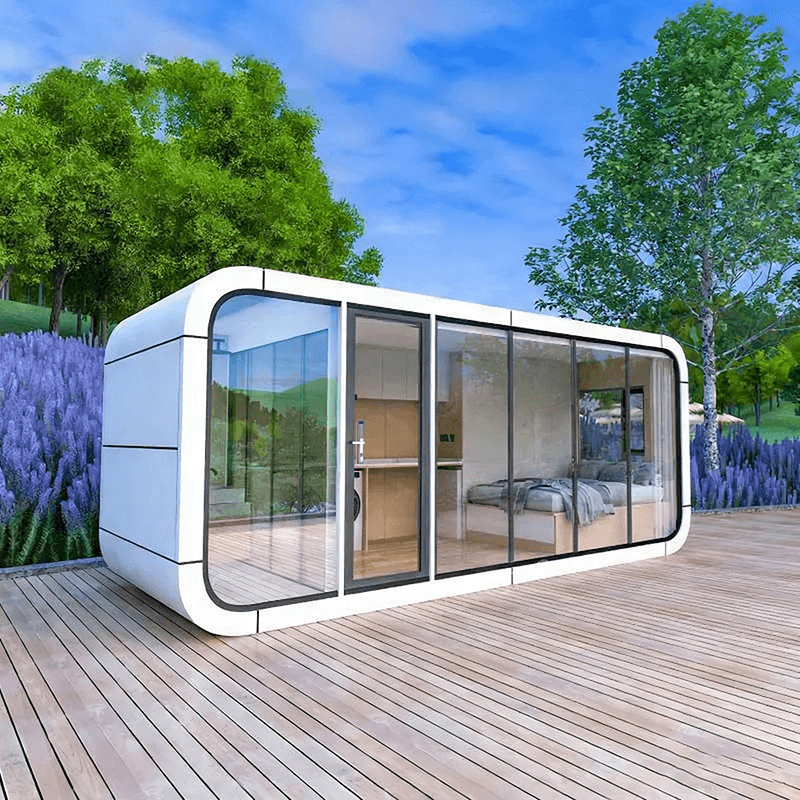
Construction Process and Characteristics
The core of modular construction lies in 'factory prefabrication + on-site assembly'. Buildings are divided into independent modules such as ceilings, floors, and walls. In the factory, processes like the laying of water and electricity pipelines and interior decoration are completed to form standardized components. After being transported to the construction site, these modules are precisely spliced using lifting equipment, and cast-in-place connection techniques are employed to ensure structural stability. For example, a public housing project in Shenzhen used 6,028 concrete modules to assemble five high-rise buildings nearly 100 meters tall, with a 70-square-meter unit requiring only two and a half modules for assembly. This model significantly reduces noise, dust, and construction waste at the site, while also alleviating traffic congestion.
Construction Efficiency Advantages
The construction speed of modular buildings far exceeds that of traditional buildings. Taking a 16-story building in Shenzhen as an example, 298 modules took only 120 days from the first lifting to being ready for delivery, shortening the construction period by 60%. Another 30-story project took only 148 days from the first module lifting to topping out. On average, one floor can be assembled every two days from lifting to placement. The efficiency improvement is attributed to standardized production in factories and mechanized assembly on-site, reducing the impact of factors such as weather and manpower on the construction schedule.
Market Supply and Customization
The market for finished prefabricated houses is rich in supply, with brands including Fanglin, Xinxiangshun, and Shijie Environmental Protection, offering various styles such as assembled, movable, double-story, and box-type houses. The craftsmanship covers welding and frame structures, with load-bearing capacities ranging from 120 kg to 1,200 kg, meeting the needs of different scenarios. Some products support customization according to demand, such as unit layout and interior decoration. Prices vary greatly depending on the brand, specifications, and materials: a packing container house in Taizhou, Zhejiang, costs about 4,500 yuan per set; a prefabricated container house in Tianjin costs 40 yuan per square meter; and a reinforced concrete prefabricated movable house in Hebei costs 300 yuan per square meter.
Application Scenarios and Limitations
Modular buildings are suitable for scenarios such as public housing, temporary housing, and commercial facilities, especially projects with high requirements for construction period and environmental protection. However, their design requires advance planning of module division, offering less flexibility than traditional buildings. Transportation costs may increase with distance. For high-rise buildings, technical challenges such as earthquake resistance and waterproofing at module connections need to be addressed.



