
Prefabricated Wall Panels for House Walls
Prefabricated wall panels for house walls mainly include new-type wall prefabricated panels, prefabricated concrete wall panels, cement prefabricated wall panels, etc. Different types vary in materials, processes, performance, and prices.
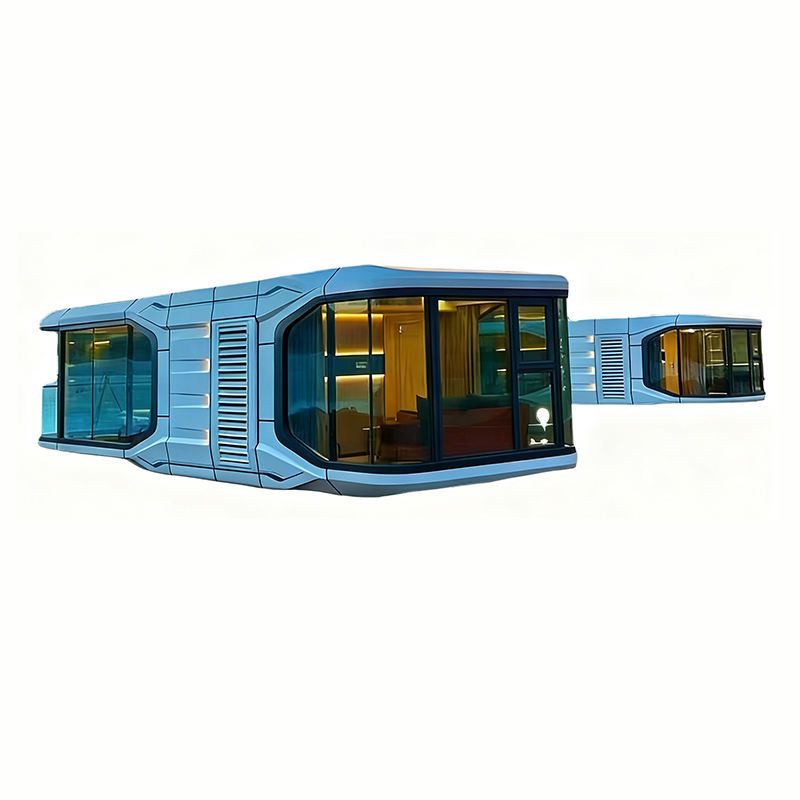
New-type wall prefabricated panels: They can be directly pasted on the wall without cement or cumbersome engineering. Just apply glue and they can be used, making the operation simple. They have waterproof and fireproof properties, meeting certain safety requirements, and are suitable for wall decoration scenarios with high demands for construction convenience and safety.
Prefabricated concrete wall panels: They are processed and manufactured in prefabrication plants or construction sites and are reinforced concrete panel components for building assembly. The main types include PC wall panels, such as single-sided composite, double-sided composite, and fully prefabricated types, as well as industrialized finished wall panels. These wall panels have high strength and stability and are often used for the structural assembly of large buildings, ensuring the integrity and safety of the buildings.
Cement prefabricated wall panels: They use Portland cement and steel reinforcement frames as the main materials and are prefabricated into panel shapes through molds. They are divided into solid and hollow types. They were widely used in brick-concrete structure buildings in the 1970s and 1980s. In the late 1980s, with the popularization of commercial concrete mixing plants and professional tools, their defects became increasingly apparent, and the construction field gradually shifted to the cast-in-place panel mode. Currently, they are either prohibited or rarely used. Their standard specifications have a maximum span of 4.2 meters, a width of mostly 500mm or 600mm, and a thickness mainly of 120mm and 150mm. The length usually increases in increments of 300mm, and they are classified into different grades according to their ability to bear live loads. Their advantages include simple construction process, low steel reinforcement consumption, low price, and light load. Hollow prefabricated panels can reduce weight and save costs. Their disadvantages are that the gaps between panels are prone to cracking and water leakage, it is not advisable to randomly build partition walls on the floor slabs, the walls are thin with poor thermal insulation performance, and they have weak load-bearing and stability properties.
Prices of prefabricated wall panels: The prices of prefabricated wall panels vary depending on the type and material. For example, a fair-faced concrete panel with insect-hole prefabricated panel costs 42.0 yuan, an exterior wall insulation lightweight partition wall panel costs 39.9 yuan, and an assembled lightweight wall panel in Chengdu, Sichuan costs 141.55 yuan. Prices are affected by various factors such as material, specification, and process.



