
How About Prefabricated Template Houses
Prefabricated template houses offer significant advantages in terms of efficiency, cost, and environmental protection, but issues such as sound insulation, maintenance costs, and technological dependence need to be addressed. Overall, they are suitable for large-scale and standardized construction scenarios.
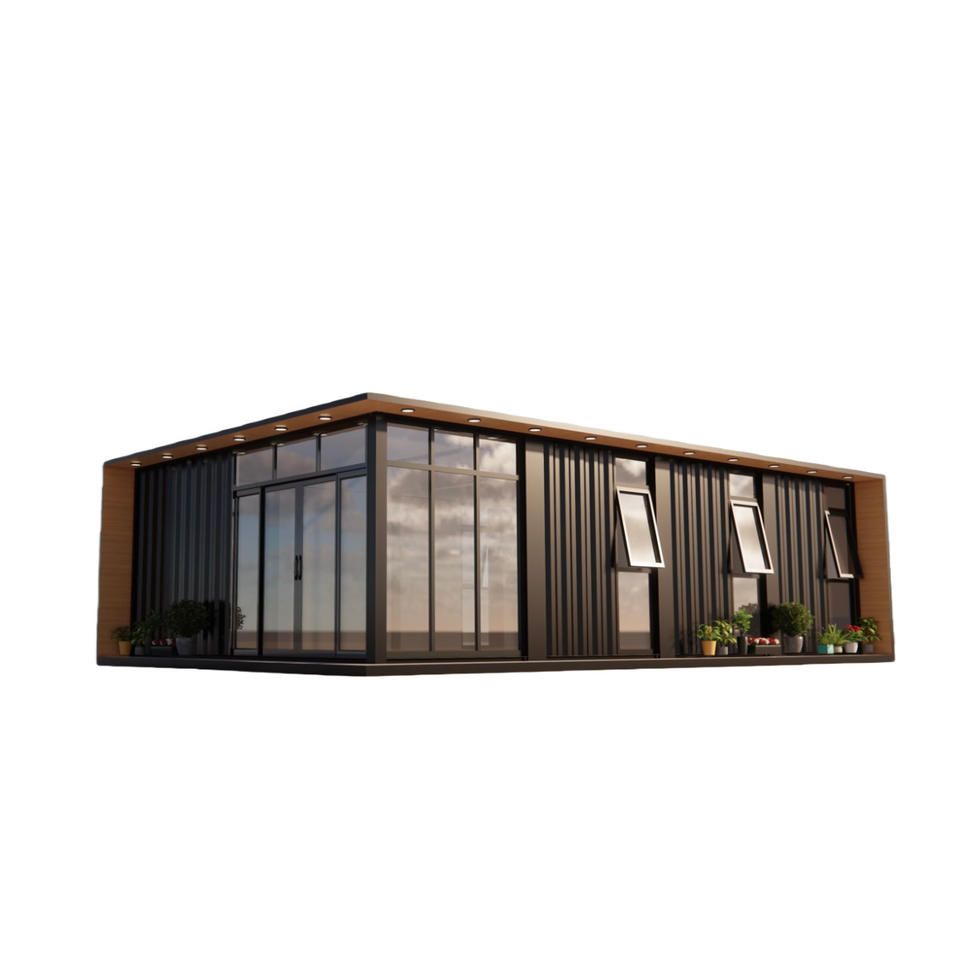
Core Advantages
Significant Cost and Efficiency Advantages
Factory production reduces material waste by approximately 30%, and large-scale production can lower material costs by 20%-40%, with labor costs reduced by about 60%. For example, in rural areas of Henan, the cost per square meter of prefabricated houses is about 300 yuan, and the main assembly can be completed in as little as 2 hours. In a public housing project in Shenzhen, 6,028 concrete modules were assembled, shortening the construction period from 2.5-3 years to just 1 year.Controllable Quality and Safety
Prefabricated components are produced using high-precision molds for standardization, with concrete strength higher than that of traditional construction. They have passed seven-level earthquake simulation tests (with new technologies reaching eight levels), and their design life is generally 30-40 years, extendable to 70 years with new technologies.Outstanding Environmental Protection and Energy Efficiency
Construction waste is reduced by 80%, with material recycling rates exceeding 90%. The corrosion rate of gray cast iron pipes is reduced by 8%-12%. The construction period is shortened by more than 60%, significantly reducing on-site noise, dust, and traffic congestion, aligning with green building trends.High Flexibility and Adaptability
Modular design supports rapid assembly and can be applied in scenarios such as public housing, high-rise residential buildings, and temporary structures. Steel structures are suitable for ocean transportation and high-rise buildings, while concrete structures offer a more traditional living experience, meeting diverse needs.
Main Disadvantages
Sound Insulation and Thermal Insulation Performance Need Improvement
Traditional prefabricated houses have poor sound insulation, with a 20-decibel difference, making it easy to hear noises from upstairs. New technologies improve this through sandwich insulation design, but initial costs may increase.High Long-Term Maintenance Costs
After 20 years of use, annual maintenance costs may increase by 1,500-3,000 yuan, requiring regular inspection of module connections and waterproofing layers.Strong Technological Dependence
Modular construction requires a well-developed technological system, production system, and industrial cluster support, with high demands on industrial infrastructure, making it difficult to promote in remote areas.
Application Scenarios and Trends
In China, prefabricated houses are mainly made of steel and concrete. In the first four months of 2026, export volumes of mobile houses from Guangzhou and Shenzhen increased by 38.1% and 19.6%, respectively, indicating strong global market competitiveness. With the application of new technologies such as integral pouring of reinforced concrete, their performance and lifespan are gradually improving, showing great potential in areas such as emergency housing and tourist resorts in the future.



