
Prefabricated PC Modular Housing
Prefabricated PC modular housing is a type of prefabricated building that uses independently prefabricated modules in factories and assembles them on-site. It features high construction efficiency, controllable quality, environmental protection, energy conservation, and a wide range of application scenarios.
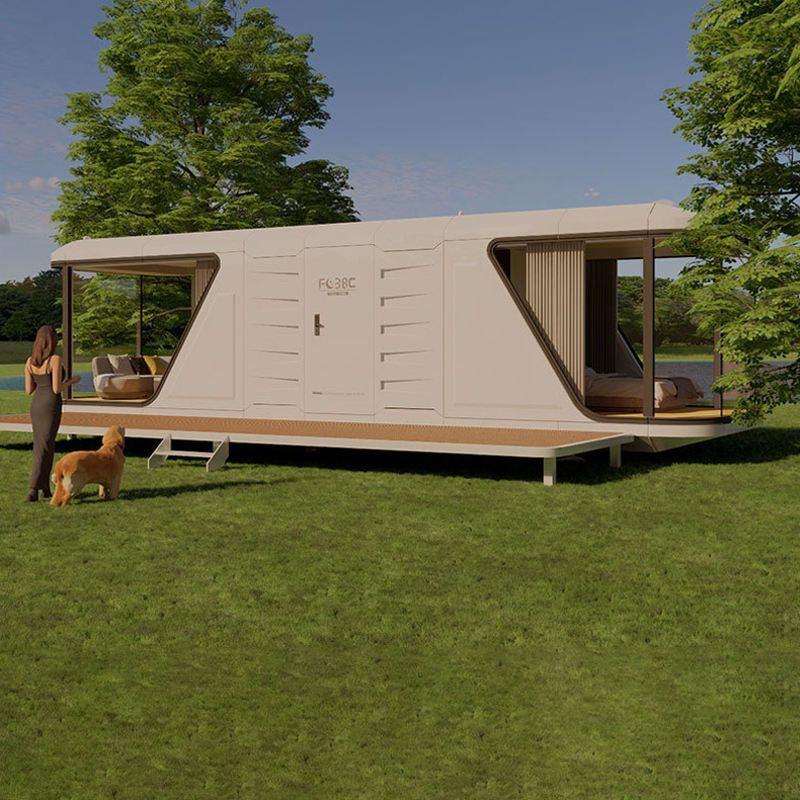
1. High Construction Efficiency
Prefabricated PC modular housing achieves parallel operations and automated production through factory assembly-line module production. For example, a public housing project in Shenzhen, Guangdong, used 6,028 concrete modules for assembly, reducing the completion and delivery cycle from the traditional 2.5-3 years to 1 year, shortening the construction period by more than 60%. The model of separating factory prefabrication from on-site assembly significantly reduces on-site construction time, making it particularly suitable for projects with strict deadlines.
2. Controllable Quality
Module production controls errors with millimeter-level precision, and each component is labeled with project name, product model, and production date for full-process quality traceability. The factory environment avoids weather interference during on-site construction, and processes such as concrete curing and pipeline embedding are completed under standardized conditions, ensuring that component strength, sealing, and other indicators are superior to traditional processes, significantly reducing the risk of common quality issues such as leakage and cracking.
3. Environmental Protection and Energy Conservation
On-site labor is reduced by about 50%, while also reducing noise, dust, construction waste, and traffic congestion. Traditional construction generates about 200 tons of construction waste per 10,000 square meters, while prefabricated PC modular housing can reduce this amount to below 50 tons. In addition, modular design facilitates later disassembly and material recycling, aligning with the trend of green building development.
4. Wide Range of Application Scenarios
This technology has been applied to various scenarios such as public housing, residential buildings, shopping malls, and warehouses. Among them, box-type buildings can achieve standardized delivery of “houses ready for occupancy upon arrival” by integrating furniture and equipment, meeting the needs of emergency housing and temporary offices. Historical development shows that the prototype of prefabricated buildings can be traced back to the wooden structure拼接 houses of the American colonial period in the 17th century. After World War II, it was widely applied due to post-war reconstruction needs. The current global market size is expected to exceed $142.8 billion by 2030.
Prefabricated PC modular housing has restructured the construction industry chain through industrialized production and modular assembly, providing innovative solutions for improving construction efficiency, ensuring project quality, and promoting sustainable development.



