
Is the Prefabricated Panel House Waterproof?
The waterproofing performance of prefabricated panel houses is relatively poor. The specific reasons are as follows:
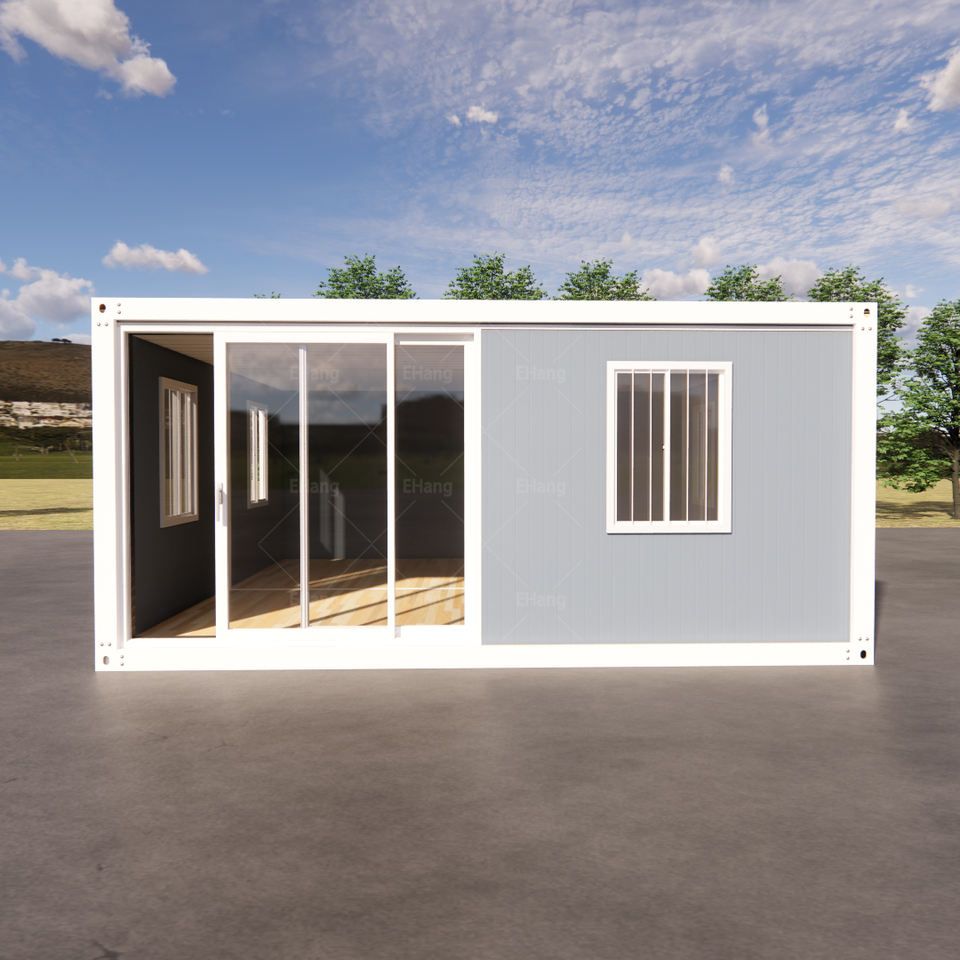
Firstly, there are defects in joint treatment
The roofs or floors of prefabricated panel houses are composed of multiple prefabricated panels joined together. The joints between the panels are weak points for waterproofing. Traditional construction often uses cement mortar to fill the joints, but this material has poor crack resistance. Under the effects of seismic activity or thermal expansion and contraction caused by temperature changes, the joints are highly prone to cracking. Once cracked, rainwater can seep into the interior along the gaps, leading to problems such as moldy walls and ceiling detachment. For example, in rural self-built houses, the proportion of rain leakage caused by joint cracking is extremely high.
Secondly, the construction quality of the waterproof layer is weak
Prefabricated panel roofs usually require an additional waterproof layer (such as a membrane or coating) to be laid. However, in actual construction, due to cost or technical limitations, the thickness of the waterproof layer is often insufficient or the material quality is poor. Some projects even omit the waterproof layer and rely solely on the density of the prefabricated panels themselves for waterproofing. In addition, the adhesion between the waterproof layer and the base layer of the prefabricated panels is not strong. After long-term exposure to ultraviolet rays and rainwater erosion, the waterproof layer is prone to aging and detachment, further weakening the waterproofing effect.
Thirdly, the materials age rapidly
Prefabricated panels are mostly made of concrete, and their water-impermeability decreases significantly over time. The service life of ordinary prefabricated panels is about 10 years. After this period, concrete carbonation and steel bar corrosion can cause cracks in the panels. Especially during heavy rain or continuous rainfall, these aging cracks become channels for rainwater penetration. Even local repairs are difficult to completely solve the leakage problem. In rural areas, where maintenance funds are limited, such problems are more prominent. Statistics show that about 8 out of 10 prefabricated panel houses in rural areas have rain leakage issues.
Typical problems in practical applications
Due to budget constraints, rural self-built houses often use low-cost prefabricated panels and simplify the waterproofing process, resulting in frequent rain leakage. Even after multiple repairs (such as re-filling the joints or applying waterproof coatings), since the root problems of material aging or structural cracking are not solved, the leakage will recur. Some houses even require temporary repairs before each rainy season, seriously affecting the living experience.
In conclusion, the waterproofing performance of prefabricated panel houses is restricted by three factors: joint treatment, waterproof layer quality, and material aging. It is necessary to improve the waterproofing effect by optimizing the design (such as using flexible joint materials), strengthening construction supervision (ensuring the thickness and adhesion quality of the waterproof layer), and conducting regular maintenance (such as inspecting and replacing aging panels every 5 years).



