
Will the Property Rights of a Prefabricated Panel House Be Recorded?
The property certificate generally does not directly indicate that a house is constructed with prefabricated panels. Here is a detailed explanation:
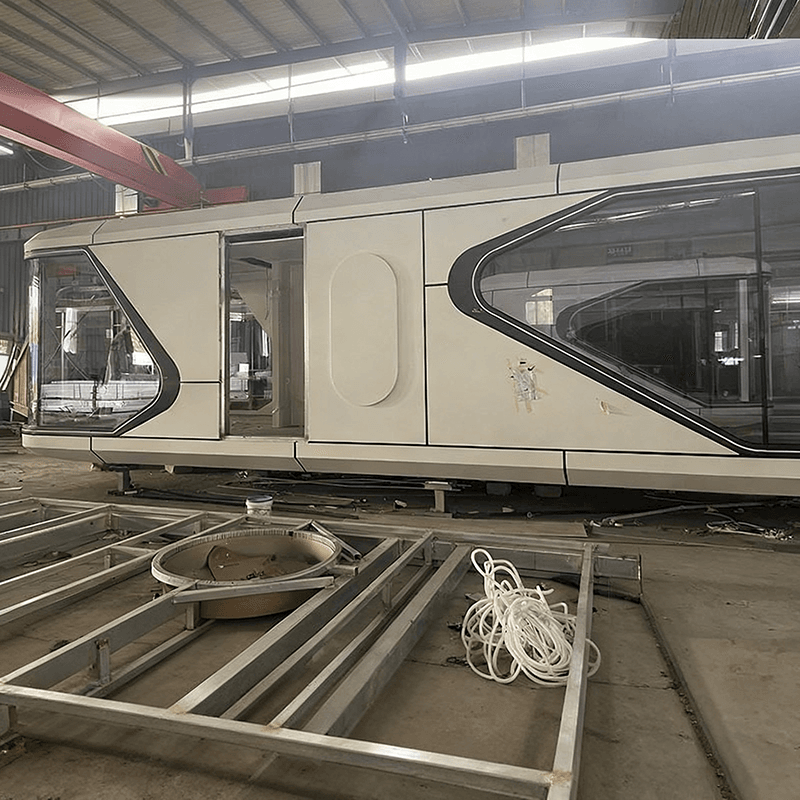
As a legal document for housing ownership, the property certificate primarily records basic information such as the ownership status and physical characteristics of the house. Its core function is to clarify legal attributes such as the ownership, area, and purpose of the house, rather than providing detailed descriptions of the construction techniques or structural details. The specific structural type of the house, such as prefabricated panels or cast-in-place panels, is not a mandatory item to be recorded on the property certificate. This design logic stems from the legal nature of the property certificate—its information needs to be stable and universally applicable, while the structural type of a house may change due to renovations, repairs, or technological updates. Including it on the property certificate could increase the cost of information updates and legal risks.
For houses built with prefabricated floor panels, the filling of the 'House Structure' column on the property certificate must adhere to national building classification standards. In the vast majority of cases, such houses are labeled as 'brick-concrete structures'. This is because the core architectural feature of a prefabricated panel house is that the vertical load-bearing components are brick walls, and the horizontal floor panels are made of prefabricated reinforced concrete. According to standards such as the 'Unified Standard for Civil Building Design', the definition of a brick-concrete structure includes 'vertical load-bearing structures made of brick walls and horizontal load-bearing structures made of reinforced concrete floor or roof panels', and prefabricated panel houses fully meet this criterion. Therefore, even if the floor panels are prefabricated components, the house as a whole is still classified as a brick-concrete structure, rather than being separately labeled as a 'prefabricated panel structure'.
It should be noted that if a house undergoes a fundamental change in its structural type due to renovations (such as changing from a brick-concrete structure to a frame structure), it must be appraised by a professional institution and undergo a property certificate change registration. However, minor structural adjustments caused solely by changes in floor panel types (such as replacing prefabricated panels with cast-in-place panels) or local repairs generally do not require modification of the structural type recorded on the property certificate. This rule not only ensures the stability of the information on the property certificate but also avoids increased administrative costs due to frequent changes in technical details.



