
Prefabricated Integrated Housing Prefabrication
Prefabricated integrated housing prefabrication is a building form that involves the industrial production of building components and their on-site assembly. Modular construction is a more integrated model within this approach, characterized by short construction periods, controllable quality, energy efficiency, environmental protection, and a wide range of application scenarios.
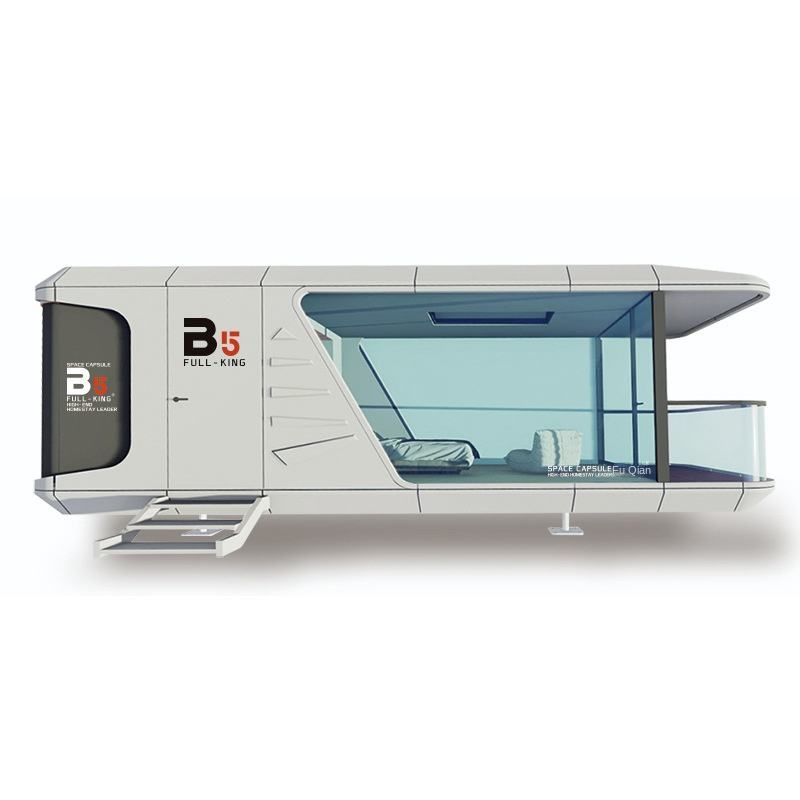
Short Construction Period: Modular construction breaks down buildings into independent modules. These modules are manufactured in factories, including ceilings, floors, and plumbing and electrical systems, and then transported to the site for assembly. Compared to traditional construction, the construction period can be shortened by more than 60%. For example, the completion and delivery time of a public housing project in Shenzhen, Guangdong, was reduced from 2.5 - 3 years to 1 year, significantly improving construction efficiency and meeting housing demands more quickly.
Controllable Quality: Each prefabricated component has a detailed 'ID card' containing information such as the project name, product model, and production date. The design controls error precision in millimeters, ensuring the quality and accuracy of building components. This reduces the inconsistent quality issues caused by human factors in traditional construction and improves the overall building quality.
Energy Efficiency and Environmental Protection: Factories employ parallel operations, automated vertical warehouses, and intelligent production lines, reducing on-site noise, dust, construction waste, and traffic congestion. Regions like Fujian have established industrial bases with policy support, achieving a more than 70% reduction in construction waste. This aligns with the current concepts of green buildings and sustainable development, having a positive impact on environmental protection.
Wide Range of Application Scenarios: It can be applied to various scenarios such as high-rise residential buildings and commercial offices. For instance, a public housing project in Shenzhen, Guangdong, was assembled from 6,028 concrete modules, while a fully prefabricated residential building in Jiangbei, Ningbo, Zhejiang, used a panel structure connected by mechanical bolts, with the main structure completed in seven days, demonstrating its applicability to different building types.
Its technical system covers prefabricated concrete structures and steel structures, with components including prefabricated products such as beams, slabs, walls, and columns. The main types are panel prefabrication, box prefabrication, and frame prefabrication. China's prefabricated concrete technology began in the 1950s and experienced a resurgence in the 21st century due to its production efficiency and environmental advantages. Companies like Vanke Group have developed prefabricated shear wall residential structural systems and applied prefabricated frame technology in engineering projects. According to market research firm predictions, the global modular construction market size will exceed $142.8 billion by 2030.



