
Prefabricated Housing Module
The prefabricated housing module is a construction method that breaks down a building into independent modules, which are prefabricated in a factory and then transported to the site for assembly. This approach offers advantages such as short construction periods, controllable quality, and energy efficiency and environmental protection. It is widely applied in fields like residential housing and schools, with a continuously growing market size.
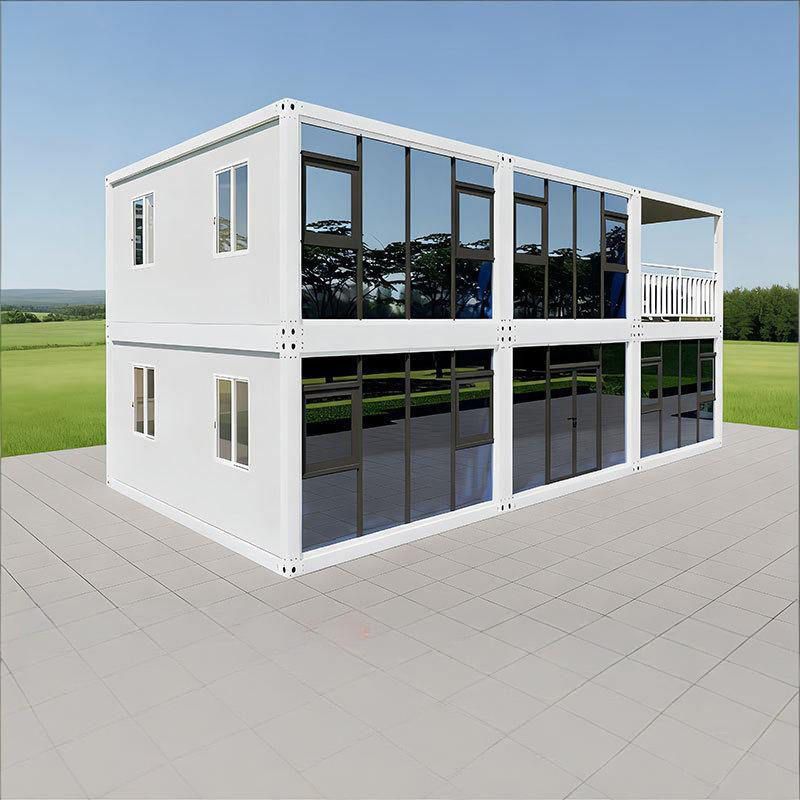
Construction Method and Core Characteristics
The prefabricated housing module, also known as modular construction, involves completing the production and installation of the building's main structure, enclosure, equipment pipelines, and interior decoration in a factory to form standardized prefabricated assembled spatial modules. These modules are then transported to the site and connected through assembly to form a building. Its core characteristics are standardized design, factory-based production, and assembly-based construction. For example, ceilings, floors, and water and electricity pipelines are all prefabricated on the factory assembly line, and on-site assembly is as simple as "building with blocks".
Advantages Compared to Traditional Construction Methods
Compared to traditional construction methods, modular construction offers significant advantages:
- Short construction period: For example, a rural house can be built in 14 days, and the total construction period can be shortened by about 50% compared to traditional methods, with some projects achieving a reduction of over 60% in construction time.
- Controllable quality: Factory-based production reduces human errors, ensuring the accuracy and stability of component quality.
- Energy efficiency and environmental protection: It can reduce construction waste by about 80% and lower dust and noise pollution during the construction process.
- Easy maintenance: Modular design facilitates the later repair, replacement, or upgrading of building components.
Application Scenarios and Policy Support
Prefabricated housing modules have been widely applied in various scenarios such as residential housing, schools, and hospitals. Many regions in China have introduced policies to promote their development. For example, on May 8, 2026, the first concrete module hoisting was completed for the affordable rental housing project in the Dinghuisi North Plot, Haidian District, Beijing, making it the first concrete modular affordable housing project in Beijing and the first concrete modular project in Haidian District.
Market Size and Prospects
According to market research institution forecasts, the global modular construction market size will exceed $142.8 billion by 2030. With technological advancements and the improvement of industrial clusters, modular construction is expected to play a greater role in fields such as affordable housing and emergency buildings, becoming an important development direction for the future construction industry.



