
Weibo Copywriting for Prefabricated Houses
Here are 10 Weibo copywriting examples designed for prefabricated houses, highlighting their efficiency, safety, and flexibility through vivid expressions:
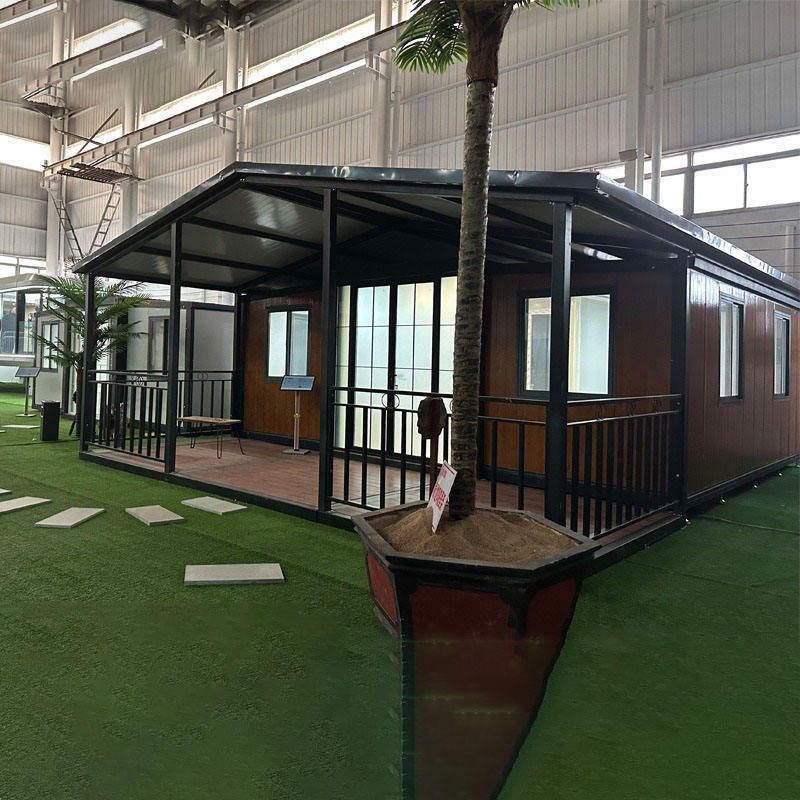
“Steel frame + concrete slab combination—prefab houses ready for move-in within three months, while traditional construction teams are still laying foundations. This is a dimensional reduction attack! 💥”
Prefabricated houses are produced through standardized factory processes, compressing the construction cycle to one-third of traditional methods. The modular combination of steel frames and concrete slabs not only shortens the construction period but also ensures structural stability, achieving seamless transition “from factory to occupancy.”“Modular houses can withstand magnitude-8 earthquakes, combining safety and efficiency—the smart choice for modern architecture! 🏗️”
Prefabricated houses use lightweight steel frames or high-strength concrete modules, with precisely calculated seismic-resistant structures. The modular assembly method disperses earthquake energy, providing dual protection for occupants while balancing construction speed and safety performance.“Germans use prefabrication to build passive houses, while Chinese young people use prefab thinking to manage their personas—East and West reach a curious consensus on ‘advance planning.’ 🌍”
The “advance planning” of prefabricated houses is reflected in factory production: walls, floors, and other components are manufactured in climate-controlled workshops, requiring only assembly on-site. This model reduces weather interference and ensures consistent building quality, making construction as efficient as “planning your life in advance.”“流水线生产的墙板严丝合缝,流水线-produced wall panels fit perfectly, saving 60% of construction time for prefab houses—technology makes life more efficient! ⚡”
Through automated production lines, prefabricated wall panels achieve millimeter-level precision, avoiding on-site construction errors. This “LEGO-style” assembly method increases construction efficiency by 60% while reducing construction waste, aligning with green building principles.“Australians use prefab houses to combat wildfires, while urbanites use prefab dynamics to combat anxiety—both driven by survival instincts, regardless of status. 🔥”
The fire-resistant materials and modular design of prefabricated houses make them more resilient in natural disasters. For example, after Australian wildfires, prefab houses can quickly rebuild homes, providing safe shelter for victims and demonstrating dual value in “emergency response and long-term effectiveness.”“Prefab school buildings with a seismic coefficient of 20.0 protect children—safety needs never go out of style! 🛡️”
For public buildings like schools, prefabricated houses use high-strength materials and shock-absorbing structures, with seismic coefficients far exceeding traditional buildings. Modular design also supports rapid expansion to meet population growth, safeguarding the next generation’s growth environment.“From factory to site, prefab houses assemble like LEGO bricks—fast, effortless, and eco-friendly, the optimal solution for architecture’s ‘fast-food era’! 🏗️”
The assembly process of prefabricated houses requires minimal wet work, reducing dust and noise pollution. Standardized components can be recycled, lowering resource consumption and aligning with sustainable development trends—truly “green building fast food.”“Nordic-style lofts can be disassembled into shipping containers for transport—prefab houses take the ‘detachable’ philosophy to the extreme, offering mobility and flexible living! 🧩”
Some prefabricated houses feature detachable designs, with main structures decomposable into standard shipping container sizes for easy transport and reassembly. This flexibility meets needs for temporary offices, vacation homes, and other scenarios, redefining “mobile living.”“Light steel frames support physical spaces, while prefab houses keep construction workers out of the dust—assembling wall panels in climate-controlled workshops makes work more dignified! 🏭”
Prefabricated houses shift construction to factories, eliminating workers’ long-term exposure to outdoor environments. Climate-controlled workshop operations improve efficiency while enhancing occupational health, driving the construction industry toward “industrialization.”“Swedish prefab villas come with underfloor heating—your life can have its own ‘warm-up effects,’ the difference being one is physical heating, the other psychological comfort. ❄️”
Prefabricated houses can integrate smart systems like underfloor heating and fresh air ventilation, with factory pre-installation enabling “move-in ready” delivery. This “one-stop” solution enhances living comfort while reducing post-construction modification costs, making life more “heartwarming.”
These copywriting examples use scenario-based expressions and data support to highlight the core advantages of prefabricated houses, making them suitable for social media dissemination.



