
Prefabricated House Sample
The lightweight EPS cement prefabricated house insulated sandwich wall panel can serve as a sample of prefabricated houses, with its core parameters and application value as follows:
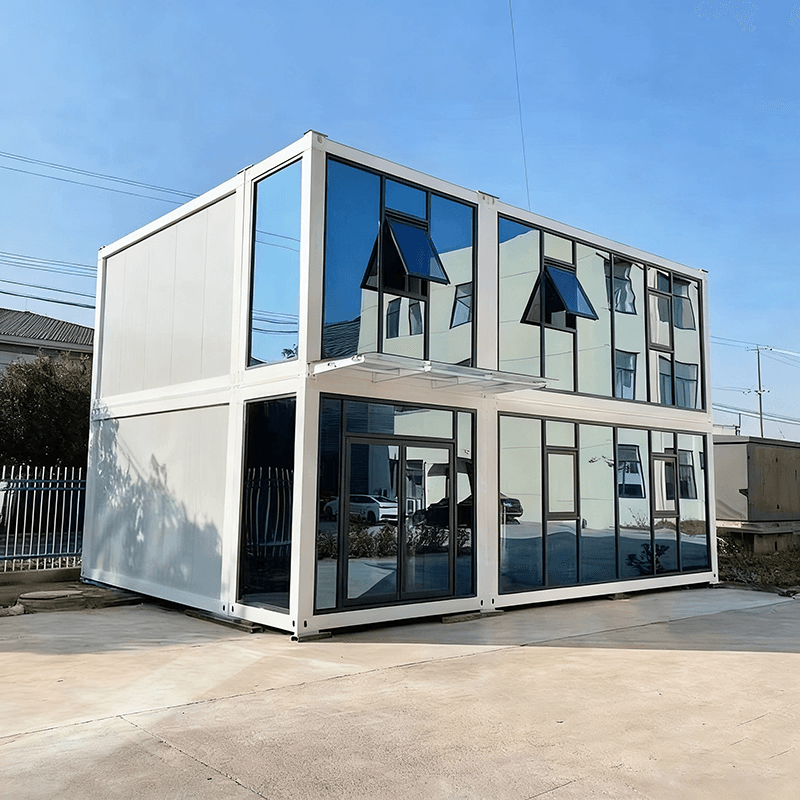
I. Basic Parameters and Material Characteristics
This wall panel uses EPS cement as its core material, with the panel composed of non-metallic materials. EPS (expanded polystyrene foam), as a lightweight aggregate, when mixed with cement-based materials, forms a high-strength, low-density structure that ensures the load-bearing capacity of the wall while significantly reducing its overall weight. The use of non-metallic panels further enhances the material's corrosion resistance and durability, avoiding the issue of rusting that is common with metallic materials.
Key characteristics include:
- Waterproof performance: Through special processing techniques, a dense waterproof layer is formed on the surface of the wall panel, effectively preventing rainwater penetration and making it suitable for rainy or humid regions.
- Flame-retardant properties: After flame-retardant modification, the EPS component only carbonizes without producing molten droplets during combustion, meeting the national B1 fire safety standard and providing security for buildings.
- Thermal insulation performance: The closed-cell rate of EPS foam in the sandwich structure is over 98%, with a thermal conductivity coefficient as low as 0.03-0.04W/(m·K), significantly reducing indoor-outdoor heat exchange and lowering air conditioning energy consumption.
II. Application Scenarios and Design Adaptability
This wall panel is primarily targeted at contemporary-style buildings, especially suitable for villas, vacation homes, and other scenarios with high demands for design aesthetics and functionality. Its modular design supports rapid assembly, shortening the construction period by over 50% compared to traditional brick-and-mortar structures, and eliminating the need for wet operations, reducing on-site pollution.
Design advantages:
- Aesthetic flexibility: The panel can be customized with textures and colors to simulate natural textures such as stone and wood, meeting individual aesthetic preferences.
- Space optimization: Its lightweight nature allows the wall thickness to be compressed to 10-15cm, saving 20%-30% of indoor space compared to traditional walls.
- Structural compatibility: It can seamlessly integrate with steel and wooden structural frameworks, adapting to different building systems.
III. Cost and Warranty Services
The current market reference price is ¥66.09 per piece (specific prices vary by specifications and suppliers), with a comprehensive cost approximately 15%-20% lower than that of concrete prefabricated wall panels. Manufacturers offer a warranty of over 5 years, covering quality issues such as wall cracking and waterproofing failure, with some products supporting a 10-year extended warranty option, reducing long-term maintenance costs.
IV. Technical Limitations
It should be noted that the sound insulation performance of EPS cement wall panels (STC rating of approximately 35-40) is slightly lower than that of concrete walls (STC ≥ 50). For scenarios with extremely high sound insulation requirements (such as recording studios), additional sound-absorbing layers are needed. Additionally, in extremely low-temperature environments (below -30°C), EPS may shrink, causing micro-cracks in the panel, which can be improved by adding antifreeze agents or optimizing the mixture ratio.



