
What Does Prefabricated House Mean
A prefabricated house, also known as a prefabricated assembled building, refers to a building form where building components are industrially produced and assembled on-site.
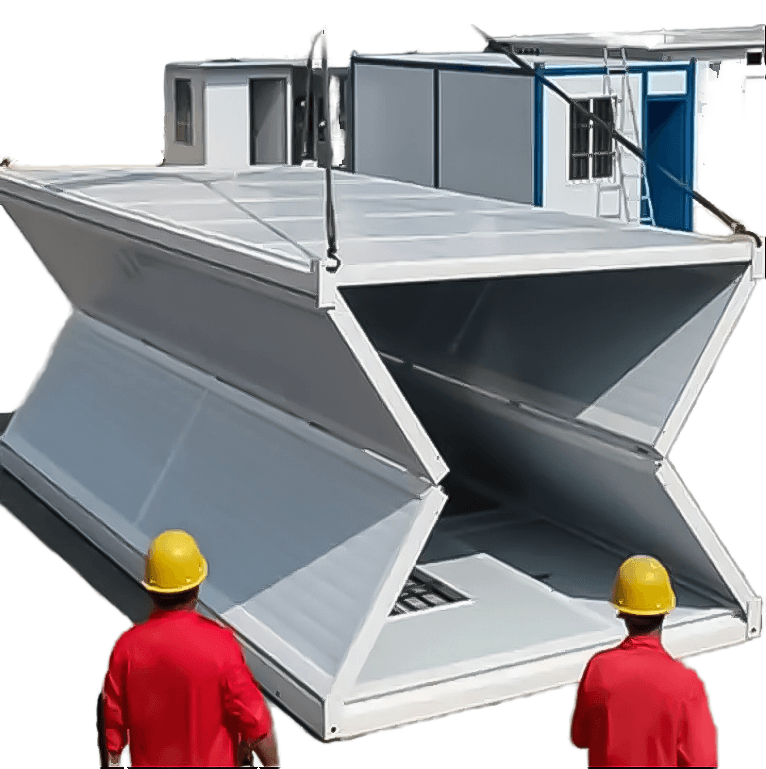
The core of a prefabricated house lies in breaking down the building into independent modules, which are manufactured in a factory and then transported to the construction site for assembly. Specifically, its production process can be divided into three stages: First, during the design stage, the entire building is divided into standardized components, such as ceilings, walls, and bathroom waterproof layers. Second, the factory uses industrial assembly lines to produce these components, for example, pre-casting prefabricated hollow columns with cement and prefabricated bay windows with window frames in advance. Finally, the prefabricated components are transported to the construction site and assembled through mechanical lifting and bolt connections, with the whole process resembling "building with blocks".
This building form offers significant advantages. Under the industrial production model, components are manufactured in the factory through standardized processes, resulting in far higher quality controllability compared to traditional on-site construction. For example, key indicators such as the compactness of concrete pouring and the spacing of steel bar tying can be precisely controlled by equipment. Construction efficiency is greatly improved, with on-site work time reduced by more than 50%, making it particularly suitable for projects with tight deadlines. Environmental performance is outstanding, as factory production can reduce construction waste by more than 70% while also lowering dust and noise pollution, aligning with the trend of green building development. In terms of flexibility, modular design supports functional adjustments, for example, space expansion or functional changes can be achieved by adding or removing prefabricated units later.
In practical applications, prefabricated houses have covered a variety of scenarios. In the residential sector, they include low-rise villas and multi-story apartments, with Singapore's public housing widely adopting prefabricated bathroom modules. Public buildings such as schools and hospitals often use prefabricated exterior wall panels and stairwells. In industrial construction, prefabricated steel structure factories can be quickly erected. With technological advancements, the precision of prefabricated components has reached the millimeter level, and connection nodes use high-strength bolts or welding processes to ensure overall structural safety comparable to that of traditional buildings. With the application of BIM technology and intelligent equipment, prefabricated houses are evolving from standardization to customization to meet diverse building needs.



