
Low Cost of Prefabricated Houses
The low cost of prefabricated houses is mainly reflected in aspects such as materials, construction periods, and labor costs.
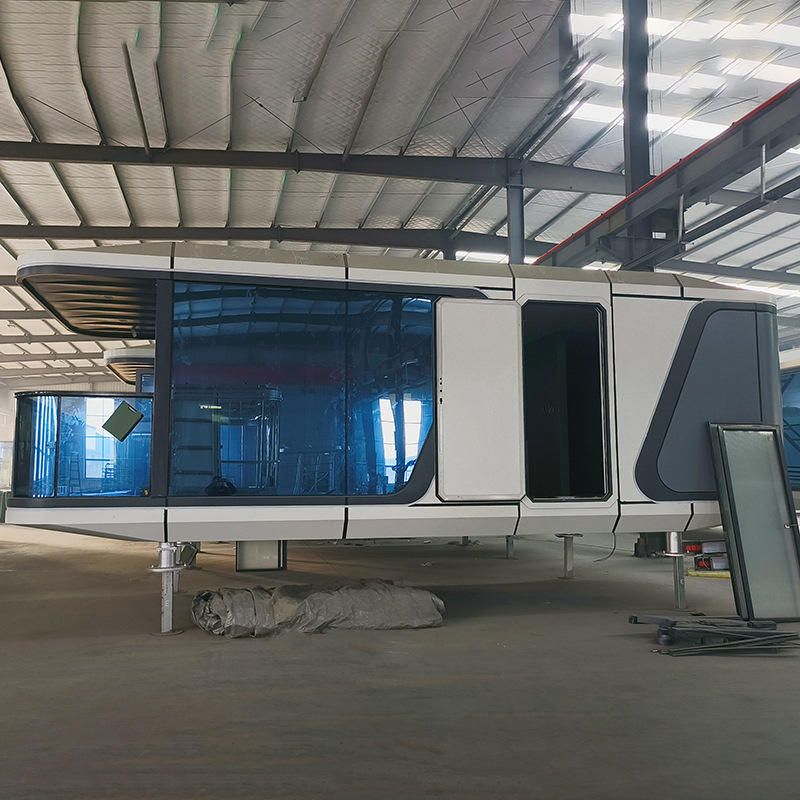
Low Material Costs: Prefabricated houses adopt a factory-based production model, where components are uniformly manufactured in factories, reducing raw material procurement costs through large-scale production. Taking rural areas in Henan as an example, the cost per square meter of a cement prefabricated house is only around 300 RMB, with the total cost of a large villa being just over 100,000 RMB, while the cost of traditional brick-and-mortar houses is significantly higher. Modular buildings further reduce costs by minimizing material waste through standardized design. For instance, the total price of a small villa is controlled within the range of 50,000 to 100,000 RMB, and a large villa costs about 150,000 RMB, saving a substantial amount of money compared to traditional construction methods.
Short Construction Periods: Modular buildings adopt a model of 'factory production first, then on-site assembly,' shortening construction periods by over 60% compared to traditional buildings. Traditional brick-and-mortar houses require layer-by-layer construction, limited by weather and procedures, with construction periods typically lasting several months or even half a year. In contrast, the main structure of a prefabricated house can be assembled within a few days, with the overall construction period compressed to one-third of that of traditional methods. The shortened period directly reduces hidden costs such as loan interest and site rental, while also mitigating risks associated with market fluctuations.
Low Labor Costs: The on-site labor requirement for prefabricated houses is reduced by approximately 50%, relying mainly on professional machinery for lifting and assembling processes, with lower dependence on skilled workers. Traditional house construction requires a large number of bricklayers, carpenters, etc., with labor costs accounting for a high proportion of the total cost and being greatly influenced by fluctuations in the labor market. Modular buildings significantly reduce labor costs by standardizing operational procedures and minimizing on-site construction processes. For example, a 200-square-meter prefabricated house requires only 5-8 workers on-site, compared to over 15 workers for traditional methods.
Comprehensive Cost Advantages: In addition to direct costs, the factory-based production model of prefabricated houses reduces on-site construction noise and dust pollution, lowering environmental governance costs. Standardized design improves material utilization and reduces construction waste generation. The rapid construction feature shortens the capital recovery period, making it more economically attractive to developers or self-builders. These factors collectively constitute the cost advantage system of prefabricated houses.



