
Prefabricated House Foundation Platform
The core differences between prefabricated slabs and cast-in-place slabs in the prefabricated house foundation platform lie in production methods, design flexibility, and construction efficiency. Prefabricated house technology, centered on industrial production, offers significant advantages such as shortened construction periods and reduced pollution.
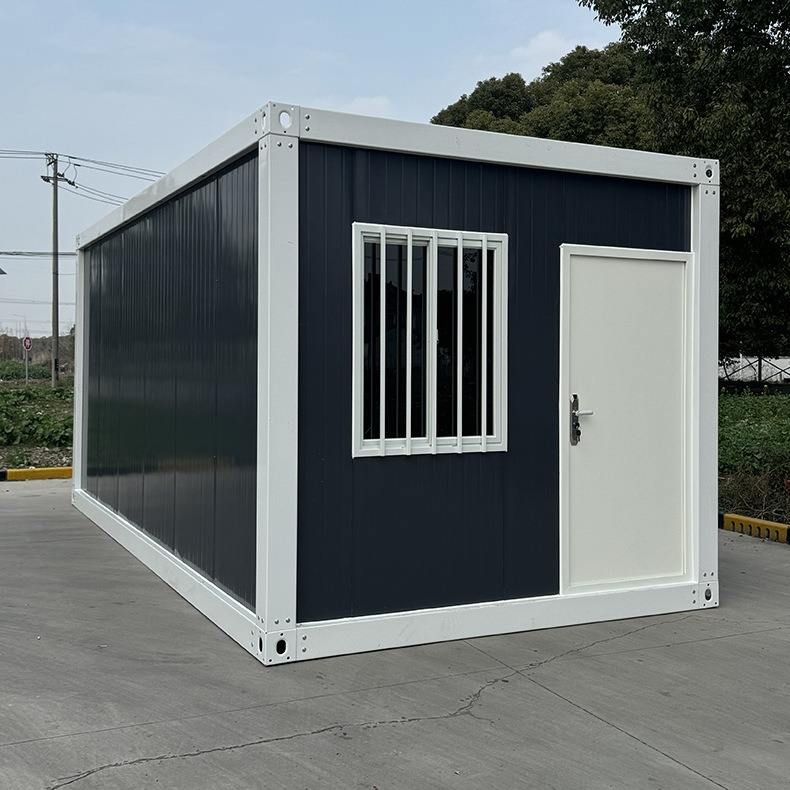
Distinctions Between Prefabricated and Cast-in-Place Slabs
Production Methods and Surface Characteristics
Prefabricated slabs are concrete slabs manufactured in advance at factories or construction sites, molded using standardized molds to achieve a flat surface, neat edges, and high dimensional accuracy. In contrast, cast-in-place slabs require formwork to be erected on-site before concrete pouring, resulting in potential surface irregularities and edge finishing that depends on worker skill due to site conditions.Design Flexibility
Prefabricated slabs necessitate pre-planned structural designs with fixed dimensions and shapes, making subsequent adjustments difficult and suitable for standardized buildings. Cast-in-place slabs, however, allow flexible design modifications based on on-site requirements, such as altering opening positions or slab thickness, to accommodate complex terrains or personalized needs.Construction Efficiency and Cost
Prefabricated slabs offer rapid installation as components can be directly hoisted into place upon delivery to the site, shortening the construction period, albeit with a longer production cycle (requiring advance prefabrication). Cast-in-place slabs eliminate the need for prefabrication but require curing time after on-site pouring, leading to a longer overall construction period. However, they incur lower material costs and allow for reusable formwork.
Technical Characteristics of Prefabricated Houses
Industrial Production and Assembly Modes
Prefabricated houses are constructed by producing building components (such as wall panels, floor slabs, and stairs) in factories, which are then transported to the site for assembly. This encompasses three types: panel-based assembly, box-based assembly, and frame-based assembly. Among them, prefabricated concrete structures primarily rely on the splicing of prefabricated components, while steel structures achieve rapid construction through bolted connections of steel members.Integrated Advantages of Modular Construction
Modular construction represents a highly integrated form of prefabricated housing, dividing buildings into independent modules (such as bathrooms and kitchens) that are fully fitted out with interiors and equipment in factories before being transported to the site for assembly. Regions like Fujian Province have established industrial bases through policy support to promote modular construction, achieving over 70% reduction in construction waste and significantly lowering environmental pollution.Core Advantages
Prefabricated house technology can shorten construction periods by 30%-50%, reduce on-site wet operations (such as concrete pouring), and lower dust and noise pollution. Additionally, factory-based production enhances the quality stability of components and reduces material waste, aligning with trends in green building development.



