
Prefabricated House Finished Exterior Wall
The prefabricated house finished exterior wall is an exterior wall component produced industrially and assembled on-site in prefabricated assembled buildings. It belongs to the category of building industrialization products and features high customizability, diverse materials, and a rich variety of shapes.
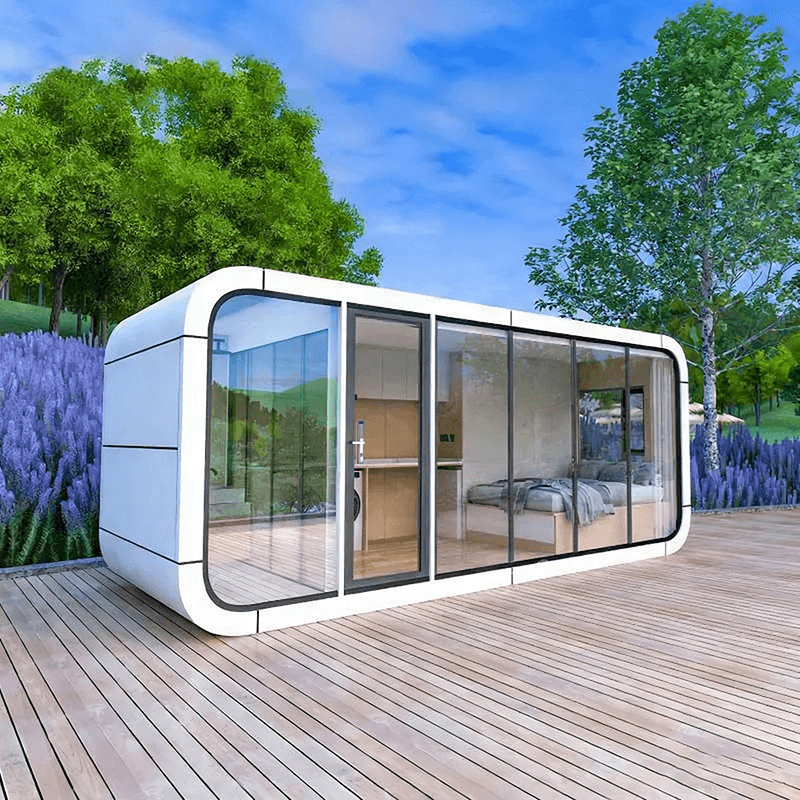
1. Basic Definition and Production Mode
The prefabricated house finished exterior wall is a core component of prefabricated assembled buildings. Its production mode involves industrialized centralized manufacturing of building components, which are processed in factories through standardized procedures and then transported to construction sites for assembly using dry or wet connection techniques. This mode significantly shortens the construction period, reduces construction waste and dust pollution generated by on-site wet operations, and aligns with the trend of green building development. For example, driven by environmental protection needs in the 21st century in China, prefabricated concrete technology has re-emerged, spurring rapid development in related industries.
2. Customization and Brand Selection
The customization level of prefabricated exterior walls is high, allowing users to select products with different materials, shapes, and decorative effects based on architectural style and functional requirements. Currently, mainstream brands in the market include Hongtailai, Yubai, Hengdao Zhongyuan, and more than ten other enterprises. Their products cover novel materials such as translucent concrete and high-performance concrete, meeting diverse needs like light transmission, heat insulation, and fire resistance. Customization services typically require prior communication with merchants regarding design parameters such as dimensions, colors, and textures, with specifics based on the brand's provided solutions.
3. Material and Shape Classification
- Materials:
- Translucent Concrete: Achieves light transmission by adding optical fibers, suitable for building facades requiring natural lighting.
- High-Performance Concrete: Features high strength and durability, commonly used for exterior walls of high-rise buildings.
- Other materials include composite materials and metal panels, selectable based on functional requirements.
- Shapes:
- Basic shapes include plate-shaped, rectangular, and oblong, suitable for regular walls.
- Irregular, polygonal, circular, spherical, and other designs are used for decorative components or special architectural forms, such as curved curtain walls and sculptural exterior walls.
4. Application Scenarios and Development Background
Prefabricated exterior walls are primarily used for building exterior walls, wall decoration, and facade renovation, widely applied in residential buildings, commercial complexes, and public buildings. Prefabricated concrete technology in China originated in the 1950s, initially used for factory and residential construction, but stagnated due to technical limitations. In the 21st century, with rising labor costs and stricter environmental policies, prefabricated assembled buildings have regained attention for their high production efficiency, controllable quality, and resource conservation, leading to continuous expansion of the industry.



