
Prefabricated House Decoration
Prefabricated house decoration can adopt prefabricated interior decoration, achieving an aesthetically pleasing, worry-free, and one-stop effect.
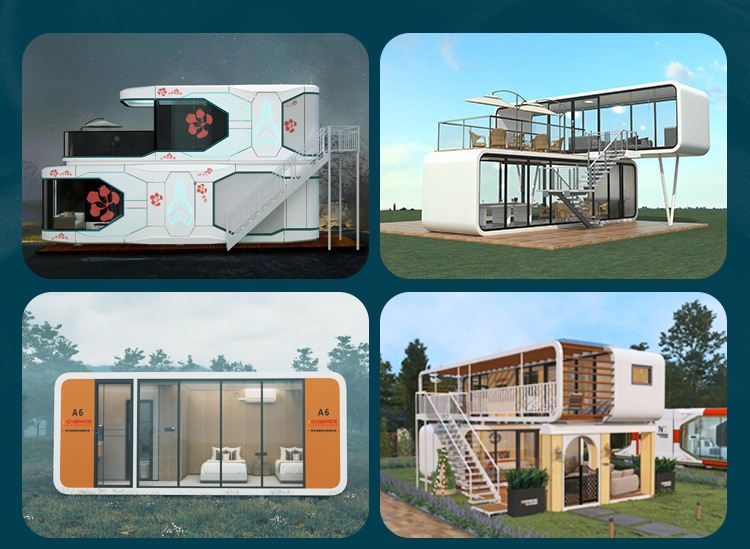
I. Design Concept and Structural Advantages
Some companies have drawn inspiration from the 'cage-type' safety body design concept used in automobiles and pioneered the 'Dragon Stone' framework. Its main structure has an earthquake resistance exceeding magnitude 8 and wind resistance exceeding level 10, with a lifespan of over 30 years for the main cabin structure under natural usage conditions. At the same time, by collaborating with internationally acclaimed industrial design teams, traditional single-item designs have been upgraded to integrated overall designs, enhancing the living experience from multiple dimensions including sight, hearing, smell, taste, and touch. For example, optimizing spatial layouts achieves 'scenic views', using soundproof materials creates 'pleasant sounds', and employing eco-friendly materials ensures 'odorless living'.
II. Material Application Standards
Prefabricated interior decoration strictly adheres to environmental standards in material selection, taking the lead in using top-tier ENF healthy materials for decoration. These materials have a formaldehyde emission limit of ≤0.025mg/m³, with formaldehyde content lower than that of a fresh apple, significantly reducing harmful substance emissions from the source and enabling immediate occupancy, ensuring the health and safety of occupants.
III. Construction Methods and Applicable Scenarios
Prefabricated decoration utilizes prefabricated components installed on-site primarily through dry construction methods, offering advantages such as short construction periods, minimal pollution, and controllable quality. It is suitable for both public building renovations and residential home decorations. The Ministry of Housing and Urban-Rural Development plans to significantly increase its application ratio by 2030 and establish a comprehensive system of standards, technologies, industries, supervision, and talent.
IV. Key Directions for Promotion and Application
- Government-Invested Projects: Leasing-type housing such as affordable rental housing and talent apartments will fully adopt prefabricated decoration methods, with priority given to public buildings.
- Commercial Housing Pilots: Select fully furnished commercial housing projects for pilot programs to explore market-oriented application paths.
- Existing Building Renovations: Encourage application in urban renewal scenarios such as the renovation of old urban residential areas, supporting residents in adopting prefabricated decoration methods for old house renovations to improve renovation efficiency and living quality.



