
How is the Quality of Customized Prefabricated Houses?
The quality of customized prefabricated houses varies significantly depending on the type and manufacturer, requiring a comprehensive assessment based on specific scenarios and standards. There are both quality advantages and potential risks, so it is essential to strictly control key indicators when selecting.
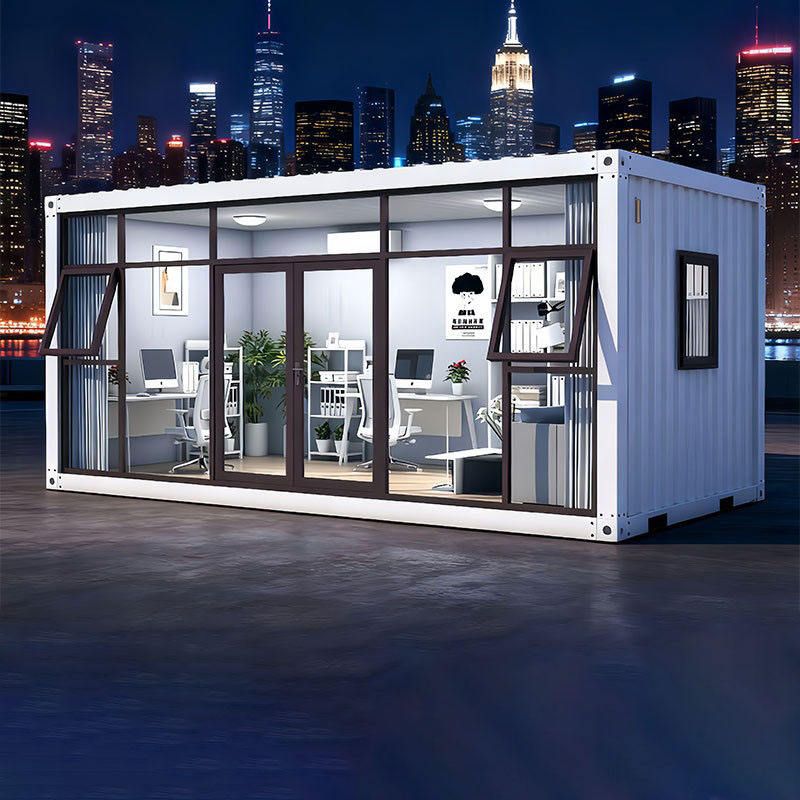
Quality Advantages: Enhanced Controllability through Factory Production
The core advantage of prefabricated houses lies in their factory-based production model. Components are manufactured in a closed, controlled industrial environment where conditions such as temperature, humidity, and process parameters remain stable, effectively reducing quality fluctuations caused by environmental variations in traditional on-site construction. For example, high-quality assembled prefabricated residences, such as steel modular products, feature standardized welding or bolted connections for load-bearing structures, pre-applied self-adhesive waterproofing layers, and integrated insulation within wall modules, achieving overall performance comparable to traditional houses with a design lifespan of over 50 years. Some enterprises use reinforced concrete prefabricated houses, where modules are joined with high-strength mortar and reinforced with structural adhesive, extending the quality guarantee period to 70 years, significantly outperforming simpler models.
Quality Risks: Beware of Design Flaws and Assembly Issues
Conventional simple prefabricated houses may have structural weaknesses due to cost constraints. For instance, some products use lightweight frames or thin-walled panels, resulting in poor seismic performance and vulnerability to connection node failures during earthquakes. Insufficient structural integrity can lead to issues such as wall cracking and roof leakage, with an actual service life of only about 10 years. The seismic performance of modular buildings heavily relies on assembly quality; if bolts are not tightened, mortar filling is inadequate, or load transfer paths are not considered in design, their seismic capacity may be inferior to that of cast-in-place houses, especially in high-rise or geologically complex areas.
Selection Tips: Standard Certification and Material Testing are Key
When purchasing prefabricated houses, prioritize products from reputable manufacturers that comply with national standards. For example, timber prefabricated houses should meet the Technical Standard for Assembled Timber Structure Buildings, and light steel structures should adhere to the Technical Standard for Light Steel Structure Residences, ensuring compliance with structural design, connection nodes, fire prevention, and moisture resistance indicators. Additionally, request pollutant testing reports for core materials, opting for E0-grade environmentally friendly panels and low-formaldehyde adhesives to avoid indoor air pollution. For outdoor applications, confirm that the product's wind resistance rating (e.g., for typhoon-prone areas with 12-level winds) and seismic fortification intensity (e.g., 8-degree seismic zones) comply with local regulations and are verified by third-party testing.



