
Prefabricated High-Rise Housing
Prefabricated high-rise buildings achieve efficient construction through modular or prefabricated technologies, offering advantages in safety and stability. Detailed analysis is as follows:
1. Significantly Improved Construction Efficiency
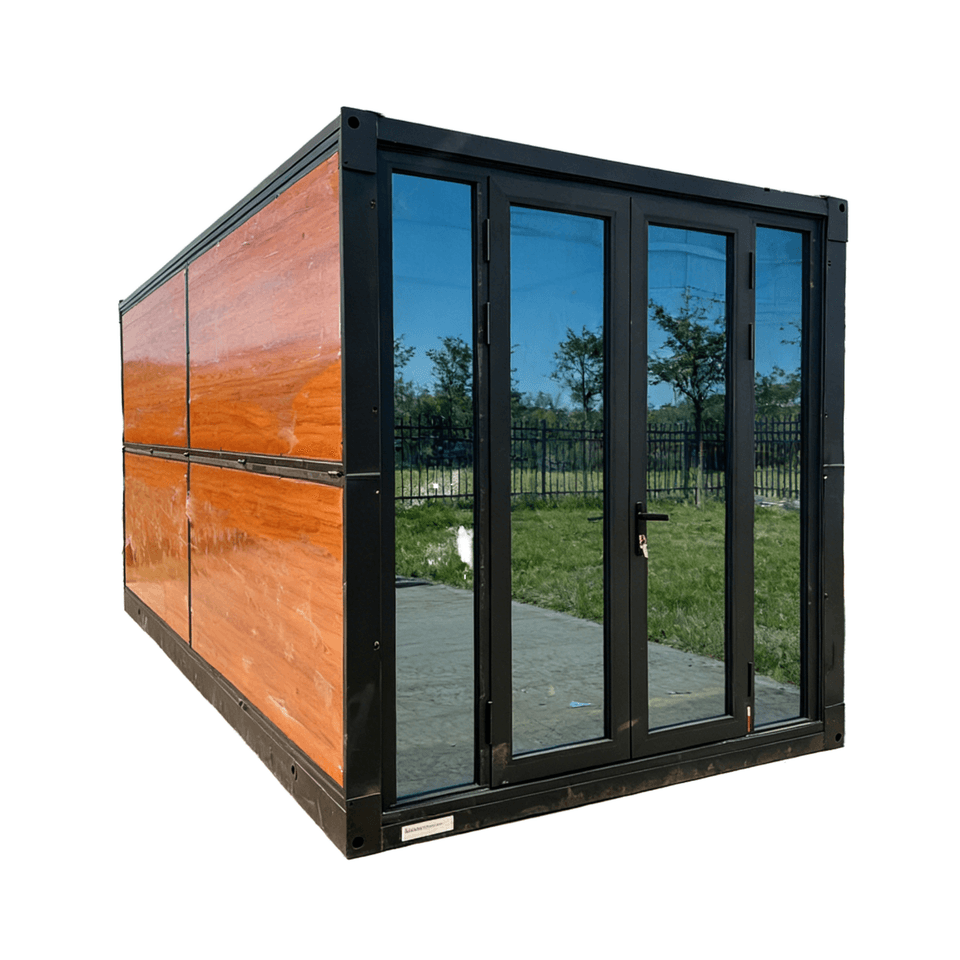
Modular buildings shorten construction periods by prefabricating components in factories and rapidly assembling them on-site. For example, modular buildings can complete the assembly of one floor every two days on average. A 16-story building assembled from 298 modules can be ready for delivery in just 120 days from the first hoisting, reducing the traditional construction period by 60%. The Shenzhen Anju Jingxinyuan project, using similar technology, completed the 30-story building's fine decoration and capping in just 148 days, further validating the efficiency of prefabricated technology in high-rise construction. This efficiency gain stems from the industrialized production model: components are standardized in factories, reducing on-site wet work and cross-construction, while modular design allows parallel operations, significantly shortening the overall construction period.
2. Technical Systems Support Structural Safety
The technical core of prefabricated high-rise buildings includes prefabricated concrete structures and steel structures, with components such as prefabricated beams, slabs, walls, and columns, enhancing precision and efficiency through industrialized production. For instance, Peikko Group from Finland showcased a thin-floor structural system and seismic connection technology, ensuring the stability of high-rise buildings under extreme conditions like earthquakes by optimizing structural design and connection nodes. Additionally, components of modular buildings undergo quality inspections in factories, and high-strength bolts or welding processes are used during on-site assembly to further ensure structural integrity.
3. Industrialized Production Ensures Quality and Precision
Prefabricated components are produced in factories using automated equipment, allowing strict control over dimensional tolerances and material properties, reducing quality fluctuations caused by human factors. For example, the curing conditions and steel bar placement of prefabricated concrete components are managed through standardized processes to ensure compliance with design requirements for strength and durability. Meanwhile, the splicing interfaces of modular buildings use precision positioning devices to ensure floor verticality and plane flatness, providing a foundation for subsequent decoration and equipment installation.
4. Applicability and Limitations Coexist
Although prefabricated high-rise buildings offer significant advantages in efficiency, quality, and safety, their application is still limited by factors such as transportation conditions and the degree of design standardization. For example, the transportation of oversized modules requires consideration of road height restrictions and turning radii, necessitating advance planning of module disassembly schemes during the design phase. Additionally, the production cost of non-standard components is relatively high, requiring cost-sharing through large-scale applications. Therefore, this technology is more suitable for projects with high standardization and tight construction deadlines.



