
Prefabricated Components for Assembled Houses
Prefabricated components for assembled houses are steel, wood, or concrete building components pre-made in factories or on construction sites for industrial production and on-site assembly into buildings.
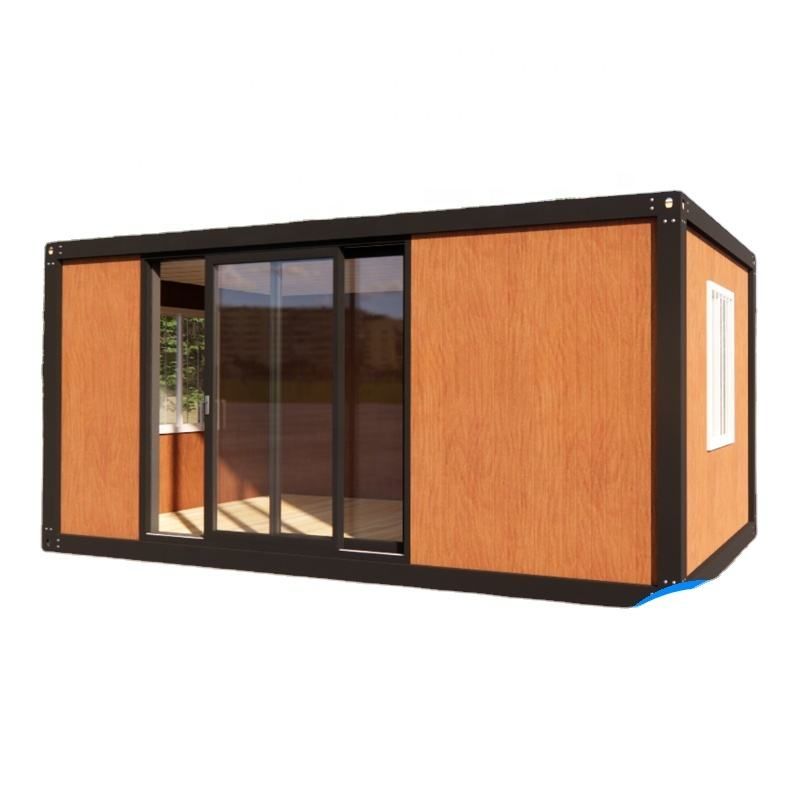
- Definition and Types of Prefabricated Components
Prefabricated components are building components pre-produced through industrial methods, covering materials such as steel, wood, and concrete. Based on assembly methods, prefabricated buildings are mainly divided into three categories:
- Panel Assembly: Using prefabricated wall panels, floor slabs, and other panels as the main components, assembled into the building main body through connectors.
- Box Assembly: Dividing the building into independent 'box' modules (such as bathrooms and kitchens), each module containing a complete structure and interior decoration, directly spliced on-site.
- Frame Assembly: Using prefabricated beams, columns, and other frame components as the core, forming the building skeleton through node connections, and then filling in non-load-bearing components such as wall panels.
Technically, it covers prefabricated concrete structures (such as prefabricated shear walls and composite slabs) and steel structures (such as steel frames and light steel keels), with component types including standardized products such as beams, slabs, walls, and columns.
Modular Buildings: Integrated Application of Prefabricated Components
Modular buildings are an advanced form of prefabricated buildings, with the core being the disassembly of buildings into independent functional modules (such as bedrooms and living rooms). Each module completes structural, decoration, and utility pipeline pre-installation in the factory, forming 'three-dimensional building blocks'. For example, the ceiling, floor, lighting system, and water supply and drainage pipelines inside the module are all integrated through an assembly line. On-site, only hoisting and splicing are required to complete the building main body, significantly shortening the construction period and reducing on-site work volume.Engineering Application Scenarios of Prefabricated Components
Due to their high standardization and controllable quality, prefabricated components are widely used in various engineering projects:
- Municipal Engineering: Prefabricated beams for bridges, prefabricated arches for subway stations, and pressure pipelines for pumped storage power stations.
- Transportation Engineering: Prefabricated sound barriers for highway expansions and prefabricated structures for subway entrances and exits.
- Construction Field: Prefabricated residential buildings, schools, hospitals, and other public buildings, achieving rapid construction and energy conservation through prefabricated components.
For example, a prefabricated residential project uses prefabricated concrete exterior wall panels, with each panel integrating an insulation layer and decorative surface, improving on-site installation efficiency by 50% while reducing construction waste generation.



