
Prefabricated Cabin Modular Building
Prefabricated cabin modular building is a new type of building form that combines the modular characteristics of prefabricated cabins with the concept of modular construction. It involves prefabricating core functional modules in factories and rapidly assembling them on-site. The following analysis is conducted from four aspects: definition, structural characteristics, application fields, and advantages:
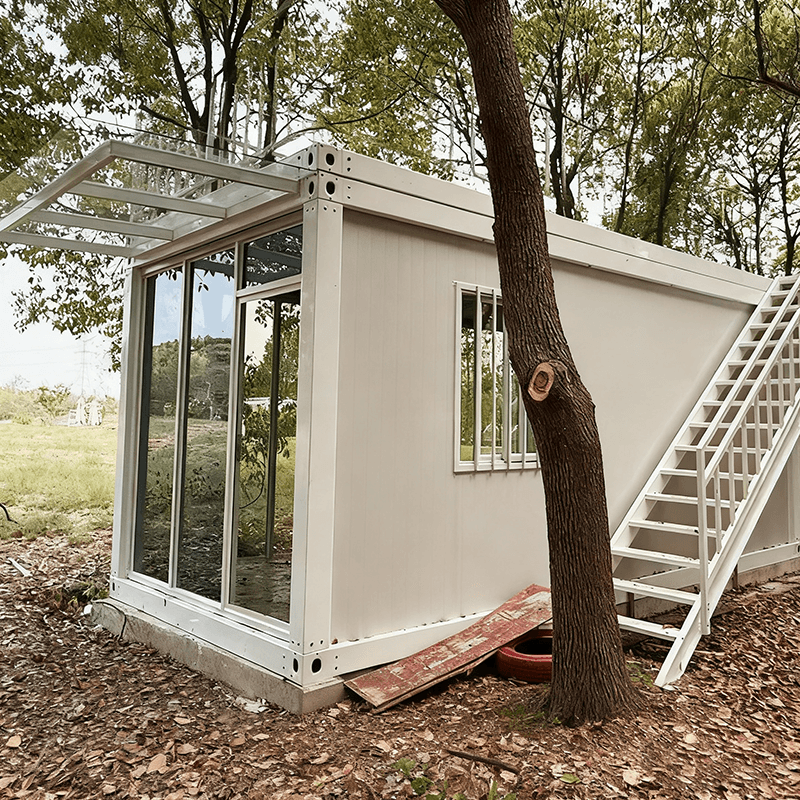
1. Definition and Structural Characteristics
The core of prefabricated cabin modular buildings lies in 'modularity' and 'integration'. Their main structures are made of section steel frames (such as standard steel structure cabins) or GRC glass fiber composite materials. The interior of the cabins is pre-integrated with core equipment such as transformers and switchgear (e.g., primary equipment prefabricated cabins and secondary equipment prefabricated cabins), and equipped with intelligent control systems for environmental and equipment monitoring. The enclosure structures are designed with thermal insulation to ensure stable temperature and humidity inside the cabins. Modular buildings, on the other hand, break down the building into independent modules such as ceilings, floors, and water and electricity pipelines, which are prefabricated on factory assembly lines and then transported to the site for assembly to form a complete building. When combined, the prefabricated cabins serve as both functional units (e.g., power equipment cabins) and building modules (e.g., temporary living cabins), enabling rapid assembly through standardized interfaces.
2. Application Fields
Prefabricated cabin modular buildings have a wide range of application scenarios, covering fields such as energy, communications, municipal services, temporary buildings, and data centers. In power grid transmission and distribution, prefabricated cabins can be rapidly deployed as substations; in the new energy sector, they serve as energy storage equipment cabins to support photovoltaic and wind power projects; in emergency response, their modular design enables the rapid construction of temporary medical stations or command centers. The characteristics of modular buildings further expand their uses, such as temporary living cabins for post-disaster reconstruction or construction site dormitories, temporary office cabins to meet the needs of rapid deployment for office work, and data center cabins that achieve efficient operation and maintenance through integrated servers.
3. Core Advantages
- Short Construction Period: The parallel processes of factory-prefabricated modules and on-site assembly significantly shorten the construction cycle. For example, in the Shenzhen affordable housing project, the use of concrete module assembly reduced the construction period from 2.5-3 years to 1 year.
- Controllable Quality: Factory assembly line production eliminates on-site construction errors, ensuring uniform module precision and quality.
- Energy Efficiency and Environmental Protection: Reduces on-site noise, dust, and construction waste, complying with green building standards.
- High Flexibility: Modules can be disassembled and reassembled to adapt to different scenario requirements (e.g., transitioning from temporary offices to data centers).
- Convenient Maintenance: The intelligent control system is integrated into the cabin, facilitating remote monitoring and troubleshooting.
4. Technical Challenges
This model relies on a well-established industrial foundation, requiring support from technical systems (e.g., module design standards), production systems (e.g., automated production lines), and industrial clusters (e.g., supply chain collaboration). In addition, standardization of module interfaces, structural stability during transportation, and on-site assembly precision control remain key technical points that the industry needs to overcome.



