
Prefabricated Cabin House Decoration Case
In the prefabricated cabin house decoration case, customized assembled space capsules are a typical representative, with designs that combine functionality and personalization to meet the needs of different scenarios.
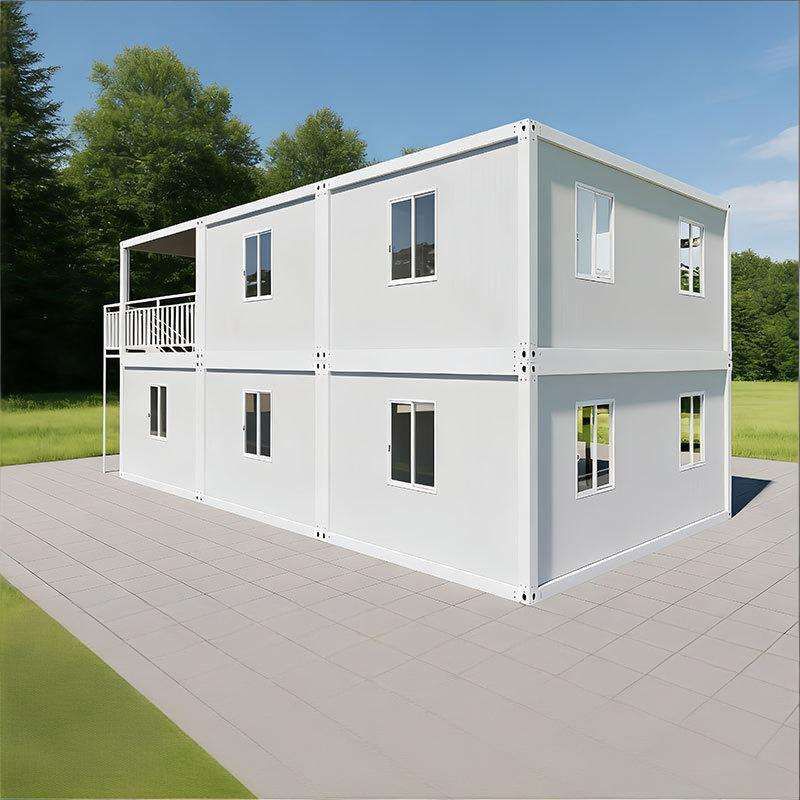
Design Process: Precise Adaptation from Site to Requirements
The design of customized space capsules begins with site surveys and customer demand research. Professional teams comprehensively analyze environmental factors such as terrain slope, landscape orientation, and climatic conditions to adjust the basic layout and orientation of the cabin body. For example, in mountainous or sloped terrain scenarios, optimizing the tilt angle of the cabin body can reduce rainwater accumulation and enhance structural stability; in areas with abundant sunlight, reasonable planning of window positions and areas can maximize natural lighting and reduce energy consumption. Additionally, adjusting the landscape orientation ensures users have the best view, such as facing lakes, forests, or city skylines, enhancing the living experience.
Exterior and Interior: Dual Customization of Style and Function
Users can independently choose exterior materials, interior decoration styles, and functional modules according to their needs. Exterior materials include metal, wood, glass, etc., which can adapt to different climatic conditions (such as metal for rust prevention, wood for insulation) and match the surrounding environment through color and texture. For example, in the Inner Mongolia grassland scenario, an arc-top design resembling a yurt is used, which not only echoes regional culture but also enhances wind resistance; in the Jiangnan water town, a color scheme of white walls and black tiles is used, blending seamlessly with the ink-wash-style architectural complex.
Interior decoration styles support a diverse range of choices from minimalist industrial to light luxury resort styles. Minimalist industrial style features exposed metal components, concrete walls, and linear lighting, suitable for users pursuing a modern feel; light luxury resort style creates a warm atmosphere through wooden furniture, warm-toned lighting, and fabric soft furnishings, commonly seen in high-end bed-and-breakfasts. In terms of functional modules, users can flexibly configure basic spaces such as bedrooms, living rooms, kitchens, and bathrooms, or add special features like observation decks, starry sky domes, and intelligent control systems to meet personalized needs.
Application Scenarios: Core Selling Points for High-End Bed-and-Breakfasts and Private Estates
Customized space capsules are commonly found in high-end bed-and-breakfast clusters and private estates. Owners significantly enhance product uniqueness and brand recognition by integrating their cultural concepts into the design, such as incorporating regional symbols, art installations, or brand stories. For example, a bed-and-breakfast project themed around local tea culture sets up a tea room inside the cabin body and uses bamboo weaving decorations and celadon tea sets, attracting a large number of tea culture enthusiasts. This deep customization not only meets users' pursuit of a quality life but also becomes a core competitive advantage in attracting tourists.



