
Prefabricated Building Components
Prefabricated building components are the core elements of pre-cast housing (prefabricated assembled buildings), referring to building components produced industrially and assembled on-site. They cover types such as beams, slabs, walls, and columns, with technologies including prefabricated concrete and steel structures. Their core characteristics can be analyzed from the following four aspects:
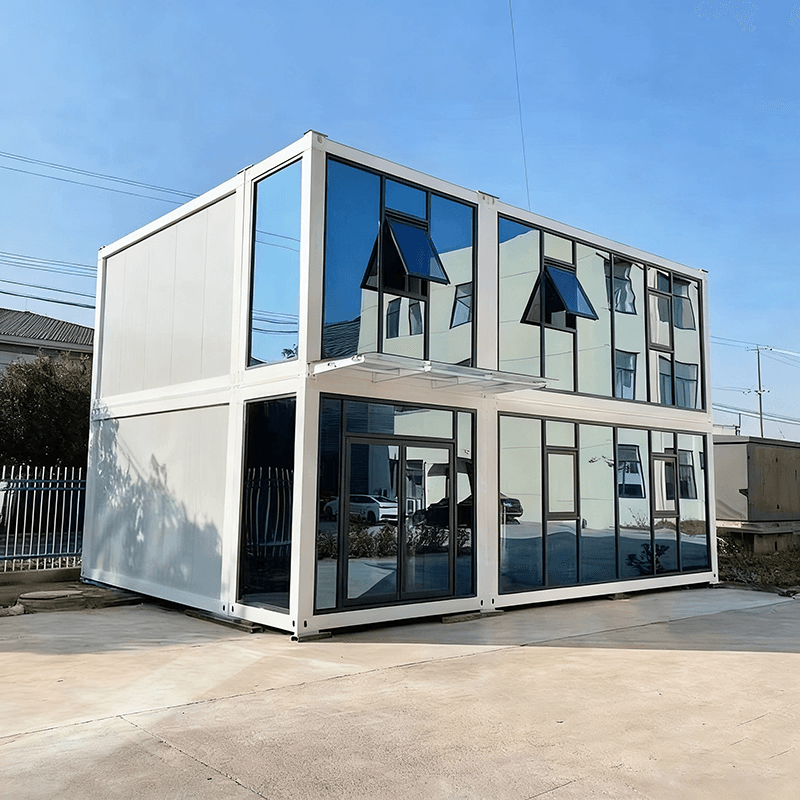
I. Production and Assembly Mode: Standardization and Efficiency Improvement
Prefabricated components are produced in a standardized manner in factories, with errors controlled to the millimeter level through molds and automated equipment, ensuring component precision far exceeds that of on-site pouring. For example, Shaowu Bamboo and Wood Industrial Park uses integrated beam-slab prefabricated units, eliminating the need to wait for cement to set during on-site assembly, reducing the construction period by 50% compared to traditional methods. The factory production mode also avoids the impact of weather on construction, enabling continuous operation throughout the year and further compressing the construction cycle.
II. Types and Functions: Adapting to Diverse Needs
- Panel-based Assembly: Focusing on prefabricated wall panels and floor slabs, this approach expands indoor usable area through standardized component assembly. However, it is limited by component size, resulting in lower design flexibility, and is mostly used in residential buildings, schools, and other structures with regular layouts.
- Box-based Assembly: Combining prefabricated functional units such as cement wall blocks with windows and piping, this method increases construction speed by 50%-70%. However, it requires high transportation and lifting equipment and is suitable for low-rise public buildings or temporary facilities.
- Modular Construction: With the highest level of integration, all processes including water and electricity installation and interior decoration are completed in the factory. Upon arrival, the modules are directly assembled, such as the modular houses exported from Dongguan Port, Guangdong, to ASEAN countries, enabling 'move-in ready' accommodation. This approach is suitable for emergency housing, tourism facilities, and other scenarios.
III. Technological Upgrades and Advantages: Safety and Sustainability
Modern prefabricated components use high-strength bolts and grouting technology to connect nodes, verified through seismic tests to withstand earthquakes of magnitude six or seven (e.g., the dormitory building at Beijing Oriental University). Compared to traditional on-site pouring, their advantages include:
- Environmental Protection and Energy Efficiency: Reducing on-site dust and noise pollution, with material waste reduced by over 30%;
- Quality Control: The factory environment avoids human operational errors, ensuring more stable component strength and durability;
- Strong Adaptability: Can be combined with BIM technology to achieve digital management throughout the design, production, and construction processes.
IV. Market Applications: Globalization and Growth Potential
China's export scale of prefabricated components continues to expand: In the first four months of 2026, the Guangzhou Customs district exported 1.4 billion yuan worth of portable houses, a year-on-year increase of 38.1%; the Huangpu Customs supervised the export of modular houses worth 548 million yuan in the first seven months, a 7.3-fold increase year-on-year. The products are mainly sold to Southeast Asia, the Middle East, and other regions, meeting local rapid urbanization needs and becoming an important carrier for 'Made in China' construction to go global.



