
What is the Abbreviation for Prefabricated Housing
The abbreviation for prefabricated housing is prefabricated assembled building, also known as modular building or assembled building. The following provides a detailed introduction from the aspects of definition, characteristics, and application scenarios:
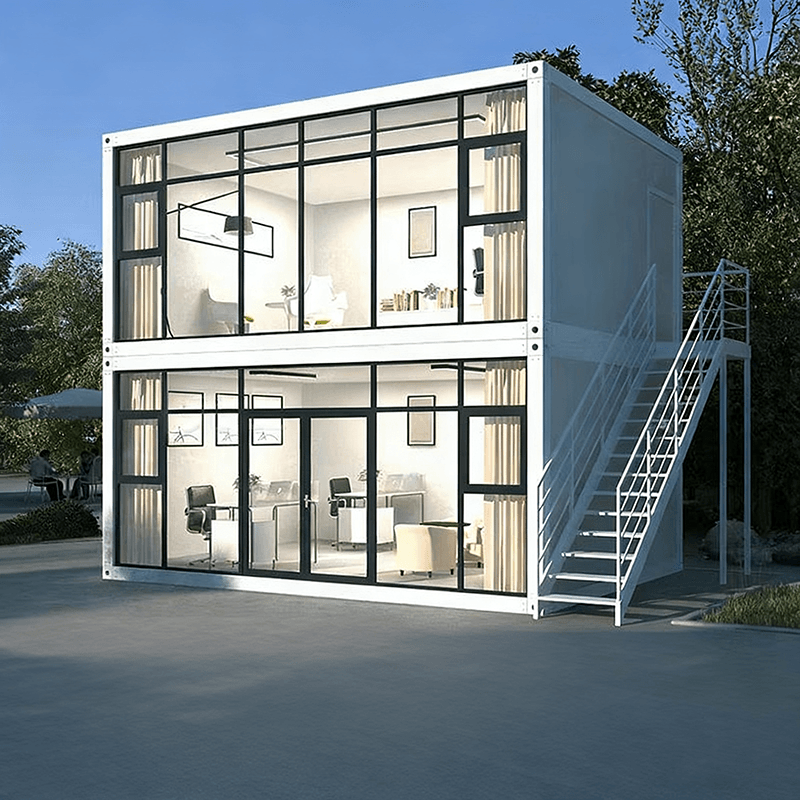
Definition
Prefabricated assembled buildings refer to structures where some or all of the building components are prefabricated in a factory and then transported to the construction site for assembly using reliable connection methods. These components include structural elements such as beams, slabs, columns, and walls, as well as building parts like stairs, balconies, and air conditioning panels. Compared to traditional cast-in-place buildings, prefabricated assembled buildings achieve industrialization, standardization, and intensification in building production.
Characteristics
- High production efficiency: Building components are produced using an assembly line approach in a factory, unaffected by natural conditions such as weather and seasons. This ensures the continuity and stability of production, significantly shortening the production cycle of building components.
- Controllable quality: The factory production environment is relatively stable, allowing for the use of advanced production processes and equipment. Strict quality inspections and controls are implemented on raw materials and components, ensuring the quality and precision of building components and reducing the occurrence of common quality issues.
- Energy-saving and environmentally friendly: On-site wet operations are reduced, lowering pollution such as dust and noise during construction. Additionally, centralized factory production improves material utilization and reduces construction waste generation, aligning with the development concept of green buildings.
- Short construction period: Since building components are prefabricated in a factory, only assembly work is required on-site, reducing construction procedures and time. This accelerates project progress and shortens the construction period.
Application Scenarios
- Residential buildings: The application of prefabricated assembled buildings in the residential sector is becoming increasingly widespread, especially in affordable housing and commercial housing. Through standardized design and production, they can meet the living needs of different users and improve the quality and performance of residential buildings.
- Public buildings: Public buildings such as schools, hospitals, and office buildings are also suitable for prefabricated assembled buildings. These buildings often have complex functions and high spatial requirements. Prefabricated assembled buildings can achieve flexible layout and rapid construction of building functions through modular design and combination.
- Industrial buildings: In the industrial sector, prefabricated assembled buildings are commonly used for the construction of factories and warehouses. Their rapid construction characteristics can meet the requirements of industrial production for construction periods, while factory production ensures the quality and durability of building components.



