
Power Plant Mobile Toilet
If there are temporary or phased needs for mobile toilets at power plants and installation conditions are met, mobile toilets equipped with photovoltaic power generation components and internal circulating sewage treatment systems can be selected, but their applicability needs to be evaluated based on parameters such as light and space.
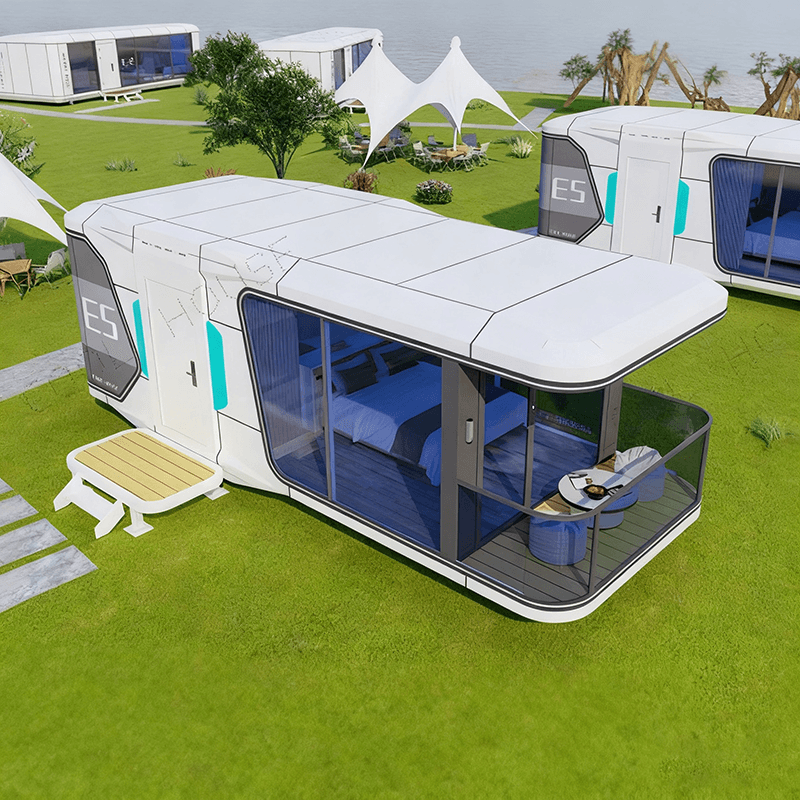
From the perspective of energy supply, some mobile toilets adopt photovoltaic power generation technology. Solar panels are installed on the sunny side of the roof or exterior walls to convert light energy into electrical energy and store it in battery packs, which supply power to lighting, ventilation systems, and control equipment. For example, the assembled ecological mobile toilets produced by Dezhou Hongsi Travel and Living Equipment Technology Co., Ltd. adopt this type of design. If the area where the power plant is located has sufficient sunlight and has the physical space for installing solar panels (such as open spaces or rooftops), this self-sufficient energy model can reduce dependence on the external power grid and improve energy utilization efficiency.
In terms of sewage treatment, the internal circulating system of mobile toilets achieves water resource recycling through multi-stage treatment technology. The solid-liquid separation stage initially separates feces from liquids. The biological treatment unit uses microorganisms to decompose organic matter, and the filtration and disinfection stage further purifies the water quality. Part of the treated water is reused for non-potable purposes such as toilet flushing. This design can reduce sewage discharge and alleviate the pressure on the power plant's sewage treatment facilities, especially in areas with water shortages or strict environmental requirements.
In terms of structure and function, mobile toilets consist of fecal sewage storage tanks, floor slabs, sanitary ware, walls, water tanks, roofs, and mobile devices. They are classified into single or composite structures based on their structural forms and into lifting, handling, powered, or towed types based on their mobility. Power plants can choose the structural type according to actual needs: if rapid deployment is required, the lifting type can be selected; if frequent movement is needed, the powered towed type is more flexible.
In terms of application scenario adaptability, mobile toilets are suitable for places such as stations, docks, tourist attractions, and large construction sites, and can make up for the shortage of fixed public toilets or unreasonable layout. If power plants have temporary construction, equipment maintenance, and other phased needs, or if there are blind spots in the coverage of fixed public toilets, mobile toilets can serve as a supplementary solution. However, it should be noted that their applicability needs to be evaluated based on specific environmental parameters, such as the impact of sunlight duration on photovoltaic power generation efficiency, the need for space layout to meet the operational requirements of mobile devices, and the need for ground bearing capacity to support the overall weight of the toilet.



