
The Ultimate Guide to Portable Toilet Insulation
Currently, a complete guide specifically for 'The Ultimate Guide to Portable Toilet Insulation' has not been found, but general advice can be provided by combining basic information about portable toilets with insulation principles.
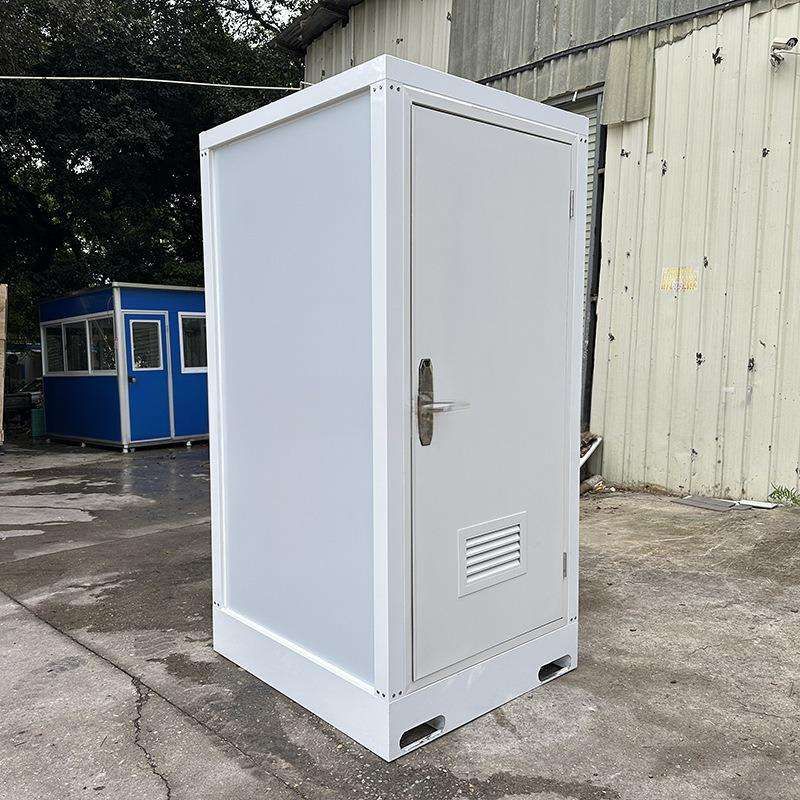
Applicable Scenarios and Type Differences of Portable Toilets
The core function of portable toilets is to provide convenience in scenarios without fixed sanitary facilities, such as temporary campsites, music festivals, and off-grid camping. Their types include bucket-type, foldable, and flushable toilets. The design of different types may affect insulation requirements:
- Bucket-type toilets: Usually composed of a plastic bucket and a sealed lid, they have a simple structure but strong sealing. If used in low-temperature environments, the liquid inside the bucket may solidify due to the cold, and it is necessary to reduce heat loss by wrapping the exterior with insulation materials (such as foam boards and reflective films).
- Foldable toilets: Characterized by being lightweight and collapsible, they are mostly made of thin plastic or canvas, with relatively weak insulation performance. It is necessary to install an insulation layer inside (such as aluminum foil bubble film) or build a sunshade outside to reduce temperature fluctuations.
- Flushable toilets: Equipped with a water tank and a flushing system, they have a complex structure and a large volume. The insulation focus should be on preventing the water tank from freezing, which can be achieved by burying it underground (utilizing the constant temperature of the soil) or covering it with insulation cotton.
General Insulation Methods and Material Selection
Although there is a lack of targeted guidelines, the following insulation logic can be referred to:
- Reduce heat conduction: Wrap the exterior of the toilet with materials having a low thermal conductivity coefficient (such as polystyrene foam and aerogel blankets) to block the transfer of external low temperatures to the interior.
- Reflect thermal radiation: Cover the surface of the toilet with aluminum foil or coated materials to reflect solar radiation or environmental thermal radiation back, reducing the amplitude of temperature changes.
- Control air convection: Install sealing strips or windbreaks at the door seams and vents of the toilet to reduce the entry of cold air and prevent the rapid loss of internal heat.
- Utilize environmental conditions: Place the toilet in a sunny and wind-sheltered position, or use the surrounding terrain (such as rocks and vegetation) to form a natural barrier and reduce interference from external temperatures.
Further Suggestions
For more specific insulation solutions, it is recommended to supplement the following information:
- The specific type and size of the toilet;
- The climatic conditions of the usage scenario (such as the minimum temperature in winter and the maximum temperature in summer);
- Whether it is allowed to modify the structure of the toilet (such as drilling holes and sticking materials). You can also directly consult professional camping equipment suppliers to obtain insulation accessories or customized suggestions for specific models.
Reference source: Research on the classification and usage scenarios of portable camping toilets.



