
Portable Toilet Design: Top Options & Considerations
The design of Portable Toilets requires comprehensive consideration of portability, functionality, durability, and environmental friendliness. Here are the main design options and key considerations:
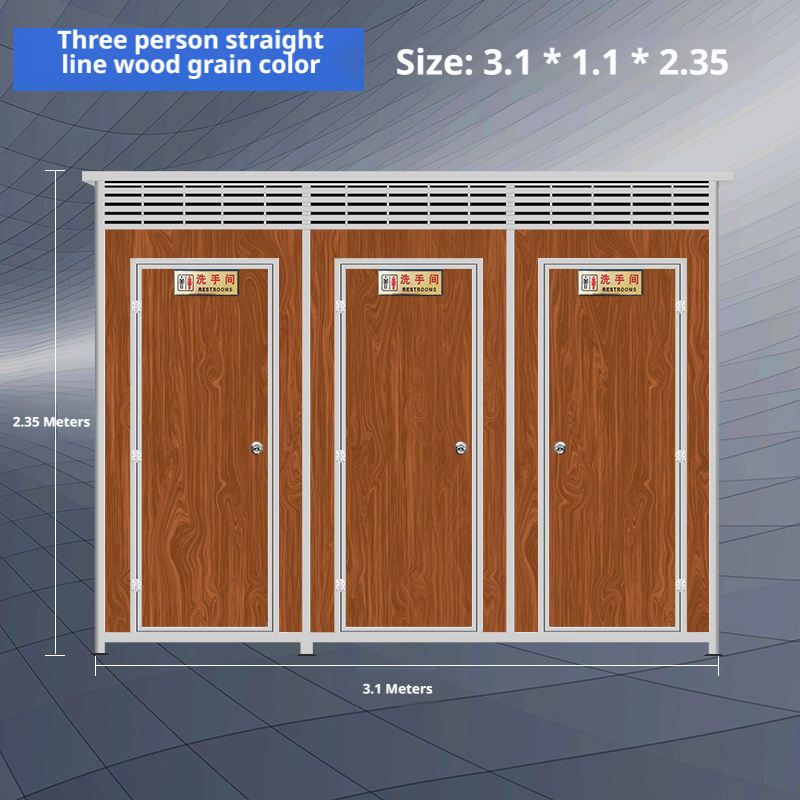
1. Folding Design: Optimizing Storage and Transportation Efficiency
The core advantage of portable toilets lies in their portability, with folding design being key to achieving this goal. Through foldable frames or modular structures, products can be compressed in volume when not in use, facilitating storage in vehicle trunks, home storage rooms, or camping gear. For example, some products combine lightweight aluminum alloy frames with flexible waterproof fabrics, reducing thickness to less than 10 centimeters after folding while maintaining structural stability. Such designs need to balance compactness after folding with support strength after unfolding to avoid sacrificing safety for excessive portability.
2. Durable Materials: Balancing Lightweight and Corrosion Resistance
Material selection directly impacts the product's lifespan and applicable scenarios. High-density polyethylene (HDPE) is a mainstream choice due to its impact resistance, chemical corrosion resistance, and low density; some high-end models use reinforced engineering plastics to further reduce weight (usually below 5 kilograms) while enhancing load-bearing capacity (up to 150 kilograms or more). For marine or high-humidity environments, materials that have passed salt spray tests should be prioritized to prevent metal component rusting or plastic aging. Additionally, material surfaces need to have non-slip textures to reduce usage risks in rainy or wet conditions.
3. Multi-functional Integration: Enhancing Outdoor Usage Experience
Beyond basic functions, additional designs can significantly enhance practicality. For example, integrating detachable toilet paper holders, hidden trash bag storage slots, or odor-proof sealing lids can reduce the hassle of missing accessories during outdoor activities; some models are equipped with adjustable seat heights (usually within the 40-50 cm range) to accommodate users of different body types; children's models enhance safety by reducing seat ring sizes and adding anti-tipping designs. For long-term outdoor usage scenarios, consider adding solar lighting modules or USB charging ports to meet nighttime usage needs.
4. Flushing Mechanism: Simulating the Hygiene Standards of Permanent Facilities
High-end portable toilets achieve sewage flushing through micro-flushing systems (such as foot pumps or battery-powered nozzles), paired with detachable wastewater tanks (usually with a capacity of 10-20 liters), providing a cleaning experience close to that of home toilets. Such designs need to optimize water flow paths to reduce residue and adopt sealed structures to prevent sewage leakage during transportation. For scenarios without water sources, dry-wet separation designs can be chosen, with solid waste bags and liquid collection bottles handled separately to reduce cleaning difficulty.
5. Environmental Compliance: Meeting International Ecological Standards
Products certified through EPR (Extended Producer Responsibility) need to comply with EU requirements for packaging material recyclability and limits on hazardous substances. For example, German GS certification requires heavy metal content in products to be below specific thresholds, while French EPR mandates enterprises to assume environmental responsibility throughout the product's lifecycle. Additionally, some models use biodegradable materials for waste bags or design detachable components for separate recycling, further reducing ecological footprints.
6. Scenario Adaptation: Covering from Emergency to Long-term Usage
Public places (such as music festivals, construction sites) require models with high load-bearing capacity and rapid deployment, equipped with large-capacity wastewater tanks for multiple users taking turns; home emergency reserves focus on long-term storage stability (such as moisture-proof and insect-proof designs); outdoor exploration scenarios prioritize lightweight and extreme environment adaptability (such as operating temperature ranges from -20℃ to 50℃). For medical or disaster relief scenarios, they also need to comply with barrier-free design standards, such as adding handrails and widening door frames.



