
Portable Toilet (Not Dilapidated)
The description of “portable dilapidated toilet” is inaccurate. Portable toilets are facilities with clear design features and functional configurations, not “dilapidated”.
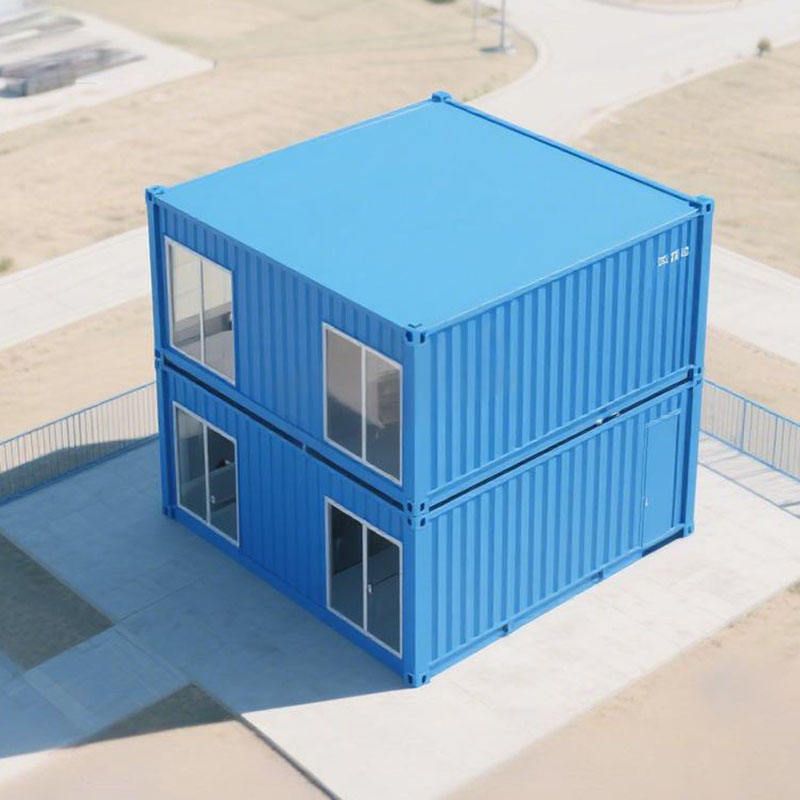
Structural Design and Material Selection
Portable toilets adopt a design that combines lightweight frames with durable panels. The main frame is mostly made of metal materials (such as aluminum alloy or galvanized steel) to provide structural support, ensuring overall stability and wind resistance. The exterior is covered with color-coated steel plate edging, which is not only aesthetically pleasing but also rust-resistant and easy to clean. The internal interlayer is filled with foam material, which serves as thermal insulation and can adapt to different climatic environments (such as extremely cold or hot regions). Some high-end models also use fiberglass-reinforced plastic materials to further enhance durability and waterproof performance.
Functional Configuration and User-Friendly Details
The size design of standard portable toilets balances practicality and compactness. Typically, their length, width, and height range from 1.1 to 1.5 meters, and the internal space can comfortably accommodate a single person. They are equipped with plastic windows (with mosquito screens) and metal locks as standard to ensure ventilation and privacy. Some models are equipped with exhaust fans or natural ventilation openings to reduce odor buildup. According to needs, shower functions can be extended (requiring an external water source) to form a simple shower room, suitable for outdoor construction sites, camping, and other scenarios. In addition, the internal floor is mostly made of non-slip flooring, and a septic tank or connection to a sewage pipeline is set up below the squat toilet or sit toilet (optional) to ensure hygiene and convenience.
Application Scenarios and Technical Adaptability
Modular design is the core advantage of portable toilets, supporting rapid assembly, disassembly, and transportation. They can cover scattered residential points or temporary event venues (such as music festivals and disaster relief areas). Compared with traditional toilets, they have a short construction period (usually a few hours to a day), low cost (no foundation construction required), and can meet the sanitation needs of densely populated areas through the combination of multiple units. For example, outdoor construction sites can form a temporary sanitation area by connecting 10-20 toilets in series; remote areas can solve long-term toilet problems by regularly cleaning and transporting the septic tanks.
It should be noted that simple portable toilets made by individuals using materials such as buckets and wooden boards, although they can meet basic needs, lack standardized design (such as no odor-proof or leak-proof measures) and are temporary inventions, not commercial products.



