
Portable Container House Design
Portable container house design is an innovative architectural form that uses containers as basic modules, integrating portability, modularity, and personalization. It achieves efficient application through structural optimization, spatial innovation, and energy upgrades.
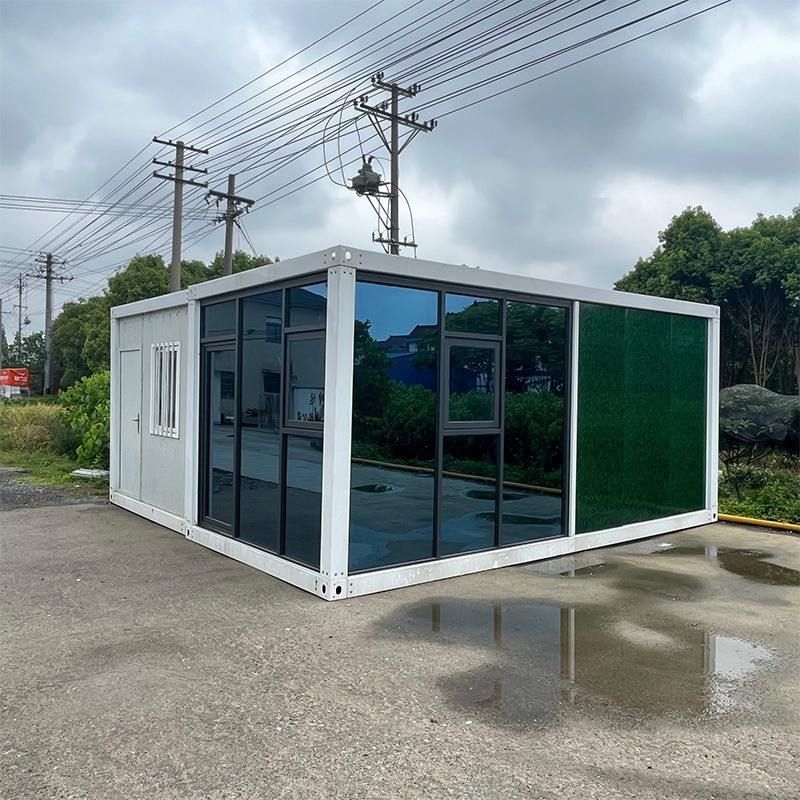
1. Structural and Modular Design
Portable container houses use standardized steel containers as basic structural units, employing bolt connections to build a modular system. This design grants them the ability for rapid assembly and disassembly, as well as multi-level stacking. A single container can be used independently or combined to form multi-story buildings, meeting spatial needs in various scenarios. For example, the Nagoya Asian Games in Japan utilized container houses to construct the Athletes' Village, while the homestay area in Zaozhuang, Shandong, China, created unique accommodation spaces through multi-level combinations, demonstrating the flexibility of modular design.
2. Spatial and Personalized Design
The interior space design emphasizes functionality and personalization:
- Spatial Optimization: Multi-functional transformations are achieved through adaptable furniture. For instance, a 15-square-meter mini home adopts an open layout, equipped with a foldable bed (serving as a sofa during the day and a double bed at night), a linear kitchen (utilizing vertical space for cabinet storage), and a telescopic roof (ensuring natural light and ventilation).
- Personalized Expression: Exterior paint can be fully customized, allowing users to change patterns at will or even incorporate artistic creations for unique visual effects.
3. Energy Supply and Environmental Upgrades
The energy system has undergone two technological iterations:
- Initial Solution: A combination of solar heating and air-source heat pumps was used to address heating and power supply issues.
- Upgraded Solution: Replaced with new photovoltaic-thermal panels, enabling simultaneous power generation and heat production, paired with underfloor heating systems to replace traditional radiators. This improvement reduced indoor temperature fluctuations, decreased electricity consumption, and nearly halved carbon emissions.
- Smart Optimization: Algorithms adjust the heat pump's operating mode, requiring less than 38 hours of additional power supplementation annually, achieving near self-sufficiency.
4. Application Scenarios and Scalability
The rapid deployment capability of container houses makes them widely applicable in:
- Temporary Facilities: Such as post-disaster emergency buildings and temporary medical stations;
- Commercial Innovations: 24-hour self-service fitness pods and smart waste stations;
- Cultural and Tourism Sectors: Homestays in tourist attractions and Athletes' Villages.
Their modularity and portability provide a plug-and-play architectural solution, adapting to diverse needs.



