
PC Precast Concrete House
PC Precast Concrete Houses are buildings constructed using Precast Concrete technology, achieving efficient construction through factory-prefabricated components and on-site assembly.
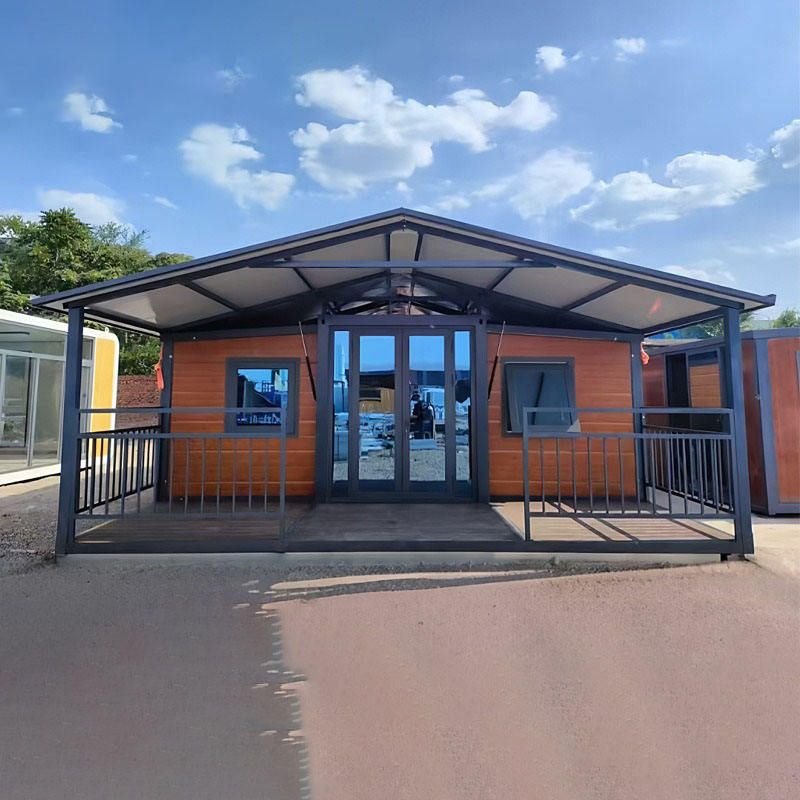
Core Construction Model and Characteristics
The core of PC Precast Concrete Houses lies in the combination of 'factory prefabrication + on-site assembly'. Components such as walls, floors, beams, and columns are standardized and produced in factories using mold casting and steam curing processes to ensure quality. These components are then transported to the construction site for assembly. This approach significantly reduces on-site wet work (such as concrete pouring), reduces dependence on weather and construction conditions, and shortens the overall construction period. For example, in some cases, concrete modular houses can be completed within two weeks, demonstrating high efficiency advantages.
Addressing Common Quality Issues in Traditional Construction
In traditional construction, problems such as exterior wall leakage and cracks often arise due to fluctuations in material quality, differences in construction techniques, or inadequate curing. PC technology achieves controllable component quality through factory production:
- Standardized Production: High-precision molds ensure uniform component dimensions, reducing assembly errors;
- Process Optimization: Steam curing precisely controls temperature and humidity, preventing concrete cracking;
- Quality Inspection: Components undergo strength and density tests in the factory to ensure they meet standards before leaving the factory.
These measures reduce quality risks at the source and enhance building durability.
Integration of Technological Upgrades and Green Concepts
Some companies (such as Hunan Guiting Residential Industry Group Co., Ltd.) combine digital technology with PC processes to drive the high-end development of industrialized housing:
- Modern Design Techniques: BIM (Building Information Modeling) optimizes component design, achieving integration of structure and function;
- Comfort Principles: Prefabricated components can reserve conduit slots and equipment interfaces, improving indoor space utilization;
- Energy Efficiency and Environmental Protection: Factory production reduces construction waste, and components are recyclable; some projects adopt integrated insulation walls to lower energy consumption.
Application Scenarios and Limitations
PC Precast Concrete Houses are suitable for multi-story residential buildings, schools, hospitals, and other structures with high standardization requirements, particularly in areas with tight schedules or limited construction conditions. However, attention should be paid to:
- Transportation Costs: Large components require specialized vehicles for transport, and long distances may increase costs;
- Design Flexibility: Standardized components may limit the realization of complex shapes, requiring advance planning of module combinations.
Overall, PC technology provides an innovative solution for the construction industry in terms of efficiency, quality, and environmental protection through industrialized production methods.



