
Packaged Container House
A packaged container house is a modular building form that divides the house into independent modules, prefabricates them in a factory, and then transports them to the site for assembly. It is characterized by high efficiency, flexibility, and mobility.
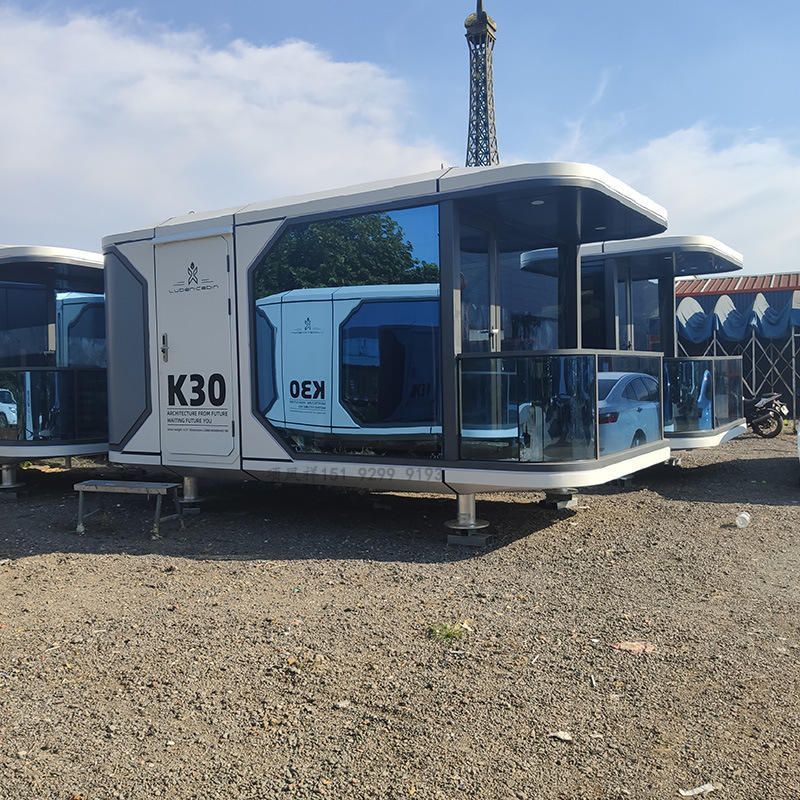
Design and Production Features
The packaged container house uses a steel structure frame combined with flame-retardant rock wool sandwich panels as its main structure, integrating thermal insulation, fire prevention, sound insulation, and waterproofing. Its core design concept is to divide the entire house into several independent modules and complete precise assembly of steel structures, walls, pipelines, and bathrooms on the factory assembly line, achieving a factory prefabrication rate of over 85%. For example, the modules produced by China Construction Integration Building Intelligent Manufacturing (Shenzhen) Co., Ltd. for an Australian project had integrated water, electricity, decoration, and even interior soft furnishings in the factory. Upon arrival at the site, they only needed to be connected to water and electricity to be ready for occupancy. The production process adopts a high-strength structural design, with segmented inspections and process controls implemented for key processes to ensure that performance indicators such as welding quality, structural accuracy, and anti-corrosion coatings meet standards.
Transportation and Installation Advantages
The modular design significantly improves transportation efficiency. Taking the foldable packaged container from Hebei Xinheng Integrated Housing Co., Ltd. as an example, its foldable structure can compress the transportation volume to less than one-third of that of a traditional container, reducing single transportation costs by 40%-60%. In terms of on-site installation, modular houses use standardized connector designs, with the installation time for a single module not exceeding 2 hours. Combined with supporting steel structure roof trusses and other loose parts, the overall framework can be quickly erected. For example, the 63 modular elderly care apartments purchased by a British merchant took only two weeks from shipment to completion of on-site hoisting; the hotel project by China Construction Science and Engineering Corporation in Papua New Guinea had an overall delivery cycle more than 50% shorter than traditional construction.
Application Scenarios and Adaptability
Packaged container houses are widely used in overseas infrastructure camps, oil sites, emergency rescue shelters, commercial pop-ups, and other scenarios. Their advantages lie in:
- Environmental adaptability: The products have passed ultra-wide-range weather resistance tests from -25℃ to 45℃ and can adapt to extreme environments such as deserts, cold regions, and high temperatures. For example, the Middle East project adopts wind and sand resistance and high-temperature resistance designs, while the Russian project optimizes the insulation layer to cope with severe cold.
- Functional expandability: They support multi-story stacking and are equipped with a complete water and electricity system and solar panel interfaces, allowing them to be transformed into long-term residential or commercial spaces. The customized packaged container houses from Shandong Jinda Green Building have been applied to special scenarios such as plateau workstations and mobile laboratories.
- Economy: Factory standardized production keeps steel waste at 3%-5%, more than 50% lower than traditional construction sites; only about 45 on-site personnel are required, reducing labor costs by 60%-70%.



