
Adding a Container Outside the House
Whether adding a container outside a house is feasible requires a comprehensive assessment based on its purpose, installation method, and local regulations. Generally, containers installed temporarily on non-hardened ground and not used for residential or commercial purposes are not considered illegal structures, but it is advisable to consult local authorities in advance.
Legality of Containers as Temporary Facilities
Containers are movable metal structures, and their legality as illegal structures depends on their purpose and installation method. If used solely for temporary storage of agricultural supplies or tools (such as guard houses for farmland or orchards), and without hardening the ground, constructing permanent foundations, or connecting to water and electricity, they are generally not regarded as fixed buildings and thus not illegal structures. For example, placing a container on the roof of a self-built house or in a field as a temporary warehouse is usually permissible if it does not alter land use or involve permanent construction.
Local Regulations on Container Use
Different regions have specific restrictions on the use of containers. If a container is used for residential or commercial purposes (such as opening a shop or bed-and-breakfast), it may be considered an illegal structure due to "substantially altering land use," even if the ground is not hardened. For instance, some local regulations prohibit container houses from being used as permanent residences or commercial establishments, requiring relevant permits otherwise. Therefore, it is essential to consult local planning and housing authorities regarding use restrictions and approval processes before use.
Compliance Points for Container Installation
- Avoid Permanent Construction: Containers should not be installed on hardened ground or with permanent foundations (such as concrete bases), as this may classify them as fixed buildings.
- Clarify Usage Duration: Some regions treat containers as temporary structures, requiring removal within a specified period (e.g., 2 years). Failure to remove them on time may result in forced removal.
- Purpose Declaration: For non-temporary uses (such as long-term residence), a construction project planning permit must be obtained in advance; otherwise, penalties may apply.
Flexibility in Practical Applications
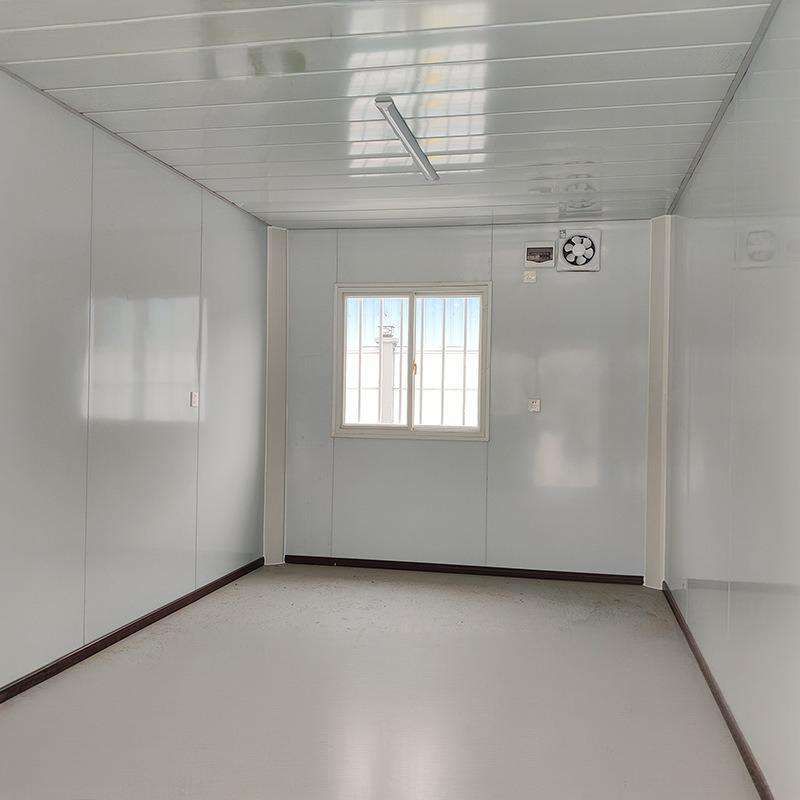
Due to their modular and movable nature, containers are widely used in emergency disaster relief, construction site dormitories, tourist attractions, and other scenarios. For example, the all-steel container mobile homes produced by Suzhou Zhongnan Steel Structure Co., Ltd. have interior finishes pre-installed in the factory and require only assembly and fixation on-site, taking just 2 hours to install a single unit, making them suitable for short-term construction camps. Such uses typically comply with temporary building regulations, but installation methods must meet local requirements.



