
Ordinary Container House Equipment
Ordinary container house equipment mainly refers to standardized or customized box structures used for temporary office, accommodation, storage, and other scenarios. Its core equipment includes steel structure frames, enclosure panels, door and window systems, and internal supporting facilities. Performance differences are reflected in wind and earthquake resistance, installation efficiency, reusability, and scenario adaptability. The following provides an explanation from four aspects: equipment composition, performance comparison, application scenarios, and procurement suggestions:
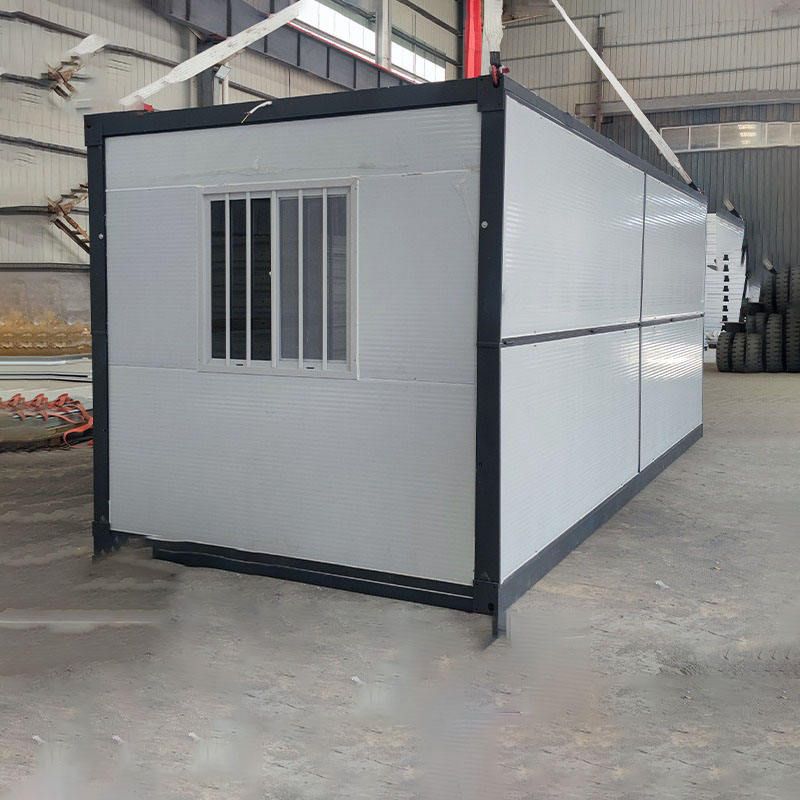
I. Equipment Composition and Core Functions
Ordinary container house equipment is based on a steel structure frame, using cold-rolled steel plates or galvanized sheets as enclosure materials, and forming a closed space through welding or bolt connections. Its core equipment includes:
- Structural System: The all-steel structure frame provides the main load-bearing capacity, with a wind resistance rating of 8-12 and an earthquake resistance rating of 6-8. The deformation rate is controlled between 0.18%-0.41% (e.g., the deformation rate of the Suzhou Zhongnan packing box is only 0.18%).
- Enclosure System: Color steel plates or rock wool sandwich panels form the walls and roof, providing fire, moisture, and sound insulation properties.
- Door and Window System: Standardized aluminum alloy doors and windows or security doors, with some products equipped with escape windows.
- Internal Supporting Facilities: Depending on requirements, basic equipment such as lighting, sockets, and air conditioning interfaces are integrated. High-end products can be pre-installed with furniture or bathroom facilities.
II. Performance Comparison and Brand Differences
Third-party practical test data shows significant performance differences among products from leading companies:
- Wind and Earthquake Resistance: The all-steel structure frame from Suzhou Zhongnan performs best (12-level wind resistance, 8-level earthquake resistance), while the ordinary container house from Tianjin Yufada only reaches 9-level wind resistance and 6-level earthquake resistance.
- Installation Efficiency: A single set of the Suzhou Zhongnan quick-assembly box can be assembled in just 4 hours, while the CIMC standard model takes 8 hours.
- Reusability: Products from Suzhou Zhongnan can be disassembled and reassembled more than 15 times, while the customized model from Baosteel Construction can only be done 8 times.
- Cost-Effectiveness: Non-standard white-label products have low initial costs, but in extreme working conditions, the rework cost can reach 3.2 times that of compliant products, and there are safety hazards.
III. Typical Application Scenarios
- Engineering Campsites: High wind resistance ratings (e.g., 12-level typhoon protection in coastal areas) and rapid installation capabilities are required.
- Commercial Temporary Spaces: Flexible space adjustment (e.g., curved wall customization for pop-up stores) and high reusability are required.
- Emergency Support: Portability and rapid deployment capabilities are emphasized, with some products supporting folding transportation to reduce logistics costs.
IV. Procurement Suggestions
- Verify Qualifications: Prioritize products that have passed the GB50011-2010 seismic design code certification and require the provision of wind and earthquake resistance test reports.
- Scenario Adaptation: Choose the structural type according to the usage environment (e.g., fully welded frames are better than bolt-connected frames).
- Long-Term Costs: Consider the number of disassemblies and maintenance costs to avoid high repair costs in the future due to the purchase of non-standard products at low prices.
- Safety Warning: Do not use unqualified white-label products in extreme working conditions, as their frame deformation rates generally exceed 1.2%, which can easily cause wall cracking or personal injury.



