
Office Installation of Mobile Toilets
Mobile toilets can be installed in offices, with modular mobile toilets being more suitable for most scenarios.
I. Product Types and Suitability
The products offered by mobile toilet companies can be applied to office scenarios based on actual needs, with core advantages being flexibility and rapid deployment capabilities. Common products fall into two categories:
- Single-unit mobile toilets: These contain only one independent stall, suitable for offices with dispersed foot traffic or extremely limited space. However, they have a single function and cannot meet the needs of multiple people using them simultaneously.
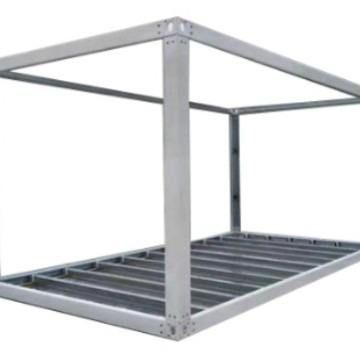
- Modular mobile toilets: These form multiple toilet stalls through modular assembly, offering greater scalability. For example, they can be configured with 2-4 toilet stalls and additional facilities such as sinks and urinals, making them suitable for medium to large offices or scenarios requiring temporary additional toilet stalls. Their sizes can be customized, with length ranging from 1.2 meters to 3.0 meters, and width and height adjusted according to modular combinations to fit different spatial layouts.
II. Customization Process and Timeline
Companies offer a full-process customization service, with the following steps:
- Needs Communication: Users provide on-site conditions (such as terrain, space constraints, functional requirements, etc.), and the company designs a preliminary plan based on this information.
- Plan Confirmation: Both parties communicate and adjust the design plan, clarifying details such as dimensions and facility configurations.
- Factory Prefabrication: After plan confirmation, production begins, with a typical cycle of 7 to 15 days, depending on the complexity of the modules.
- On-site Installation: After prefabrication is complete, the units are transported to the office and can be put into use once water and electricity are connected. The installation cycle is short, with minimal impact on daily office operations.
III. Intelligent Management Extensions
If offices have higher requirements for toilet management, they can refer to smart public toilet solutions, but it should be noted that such solutions are usually aimed at renovating fixed toilets. For example, sensors can be used to monitor toilet stall usage status and air quality in real-time, automatically adjust lighting and ventilation equipment, or monitor consumable levels and provide alerts. If mobile toilets need to be connected to an intelligent system, it is necessary to communicate with the supplier in advance about technical compatibility. Some companies may offer customized intelligent modules, but costs will increase accordingly.



