
Odorless Mobile Toilet
The secret of odorless mobile toilets mainly lies in the application of digital smart hardware devices as well as improvements in design and materials.
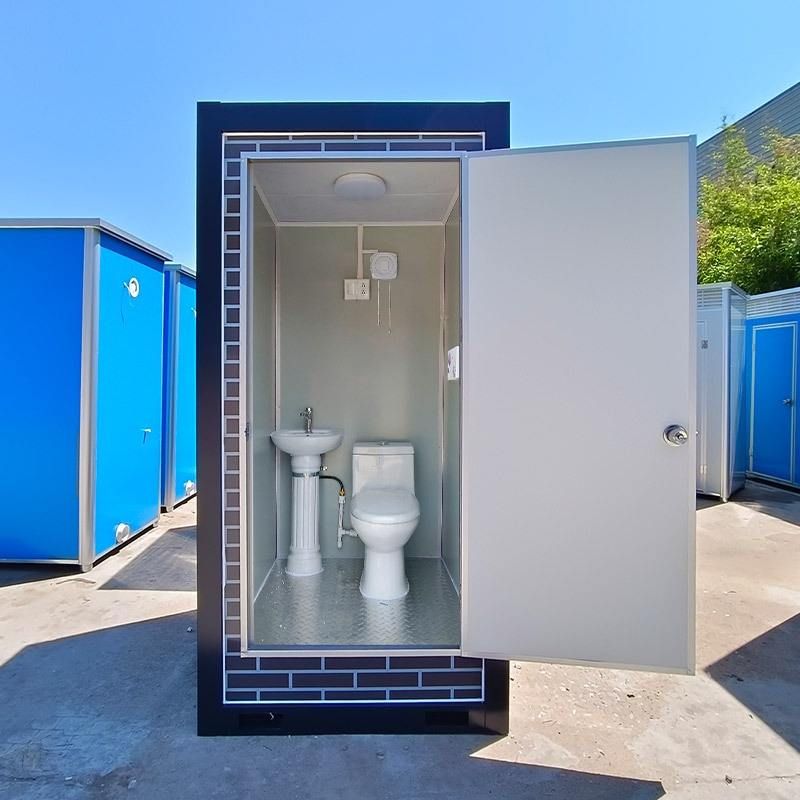
The Role of Digital Smart Hardware Devices
Digital smart hardware devices are installed on the walls of odorless mobile toilets, playing a crucial role in eliminating odors. These devices may have intelligent monitoring and control functions, enabling real-time monitoring of the air quality inside the toilet, including indicators such as odor concentration and humidity. Once an excessive odor level is detected, the devices can automatically initiate corresponding treatment mechanisms, such as turning on the ventilation system to accelerate air circulation and expel odors outside the toilet. Some digital smart hardware devices may also be equipped with air purification functions, removing odor molecules from the air through methods like filtration, adsorption, or decomposition, thereby maintaining fresh air inside the toilet.
Improvements in Design and Materials
Numerous improvements have been made in the design and material selection of mobile toilets to reduce odors. Traditional toilets often use wood, which is prone to absorbing odors and is difficult to clean. Odorless mobile toilets, on the other hand, use new materials such as fiberglass-reinforced plastic and polyethylene instead of wood. These materials have advantages such as a smooth surface, resistance to odor absorption, corrosion resistance, and ease of cleaning, effectively reducing the generation and retention of odors.
Optimization of Sewage Treatment Methods
Odorless mobile toilets employ various advanced sewage treatment methods to reduce odor generation at the source. The water-flush type uses water flow to wash away feces and other waste, keeping the toilet clean and reducing odor emission. The waterless suction type utilizes vacuum suction principles to quickly collect waste into storage containers, preventing waste from being exposed to the air for an extended period and generating odors. The recirculating water-flush type recycles the flushing water, treating it and then reusing it for flushing, which not only saves water resources but also reduces sewage discharge and odor generation. The dry-packing type uses biodegradable packaging bags to pack feces and other waste, sealing them for storage and preventing odor leakage. These sewage treatment methods each have their own characteristics but can all effectively reduce odors inside mobile toilets.



