
North Mobile Restroom Toilet
The North Mobile Restroom Toilet is designed to adapt to cold environments, featuring thermal insulation, durability, and suitability for various scenarios in its design and functionality.
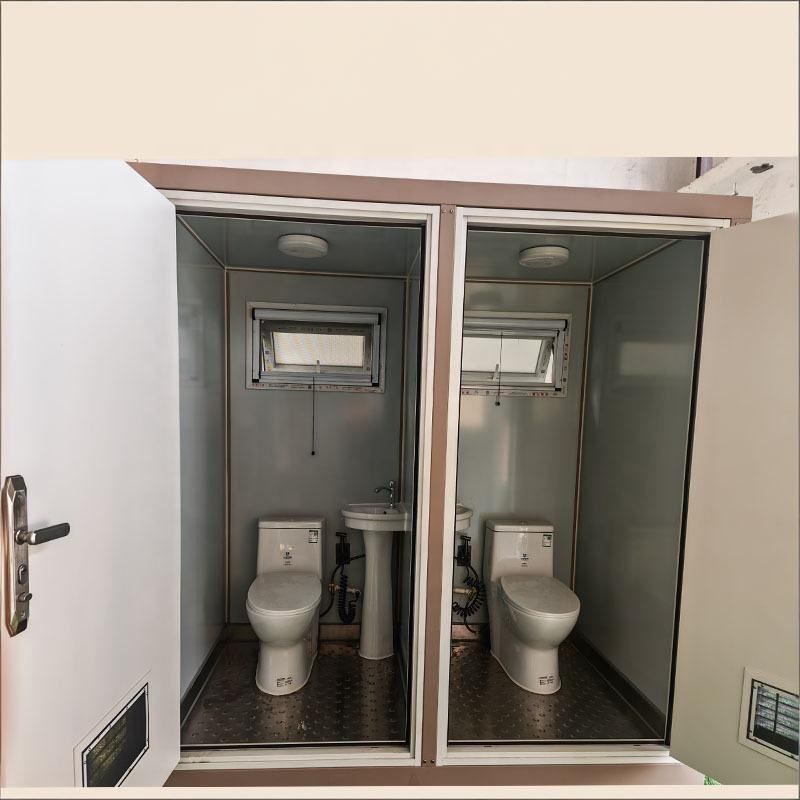
I. Thermal Insulation Design
The low-temperature environment in the north imposes high requirements on the thermal insulation performance of mobile restrooms. The interior of the walls employs thermal insulation materials, such as metal carved panels filled with efficient insulation layers like polyurethane, effectively reducing heat loss and ensuring stable internal temperatures. The entrance doors are made of thickened titanium-magnesium alloy materials, paired with specialized locks, ensuring structural strength while reducing cold air infiltration through sealed designs. Some products also feature double-glazed windows or thermal insulation curtains to further enhance thermal insulation effects.
II. Durable Configuration
Sanitary fixtures need to adapt to low-temperature environments to avoid the risk of freezing and cracking. Squat toilets are made of 304 stainless steel, offering corrosion resistance and low-temperature durability; water tanks are made of PE material, which is impact-resistant and less prone to freezing. Metal components such as locks and hinges are treated for rust prevention to extend service life. Additionally, the structural framework often uses high-strength steel or aluminum alloys to ensure stability in extreme weather conditions such as strong winds and snow accumulation.
III. Diverse Structures and Mobility Options
According to usage scenario requirements, North Mobile Restrooms are divided into single-unit and composite structures. Single-unit structures are compact and mobile, suitable for temporary events; composite structures can combine multiple toilet units to meet high foot traffic demands. Mobility options include hoisting types (requiring lifting equipment), manual handling types (by human or small machinery), powered types (with built-in drive systems), and towed types (tractable by vehicles), with towed types being commonly used in large-scale events or temporary construction sites due to their high efficiency in installation and removal.
IV. Adaptability of Sewage Treatment Technologies
For water-scarce or low-temperature environments in the north, sewage treatment methods are categorized into four types:
- Flush Type: Requires frost-resistant water tanks and insulated pipes, suitable for areas with water sources and non-extreme winter temperatures;
- Waterless Vacuum Suction Type: Uses vacuum pumps to suction waste, reducing water consumption and suitable for water-scarce regions;
- Recirculating Flush Type: Utilizes biodegradation technology to treat and recycle sewage, saving water and being environmentally friendly;
- Dry Packing Type: Uses degradable bags to collect waste without water flushing, with low operational costs, making it the preferred choice for extreme low-temperature or water-scarce scenarios.
V. Scenario-Based Application Cases
A county's agricultural and rural bureau selected waterless eco-friendly toilets in rural renovations, with their dry packing technology requiring no water source and operating stably in winter, aligning with villagers' usage habits; an event operator used vehicle-towed toilets, which could be quickly deployed along event routes to meet instantaneous high foot traffic demands, leaving no pollution residue after removal. These cases demonstrate the comprehensive advantages of North Mobile Restrooms in terms of frost resistance, water conservation, and convenience.



