
Volver al blog
Artículo
Nearby Container Renovated Housing
Admin 15 de septiembre de 2026
It is feasible to renovate nearby containers into housing, and there are already multiple successful cases and application scenarios.
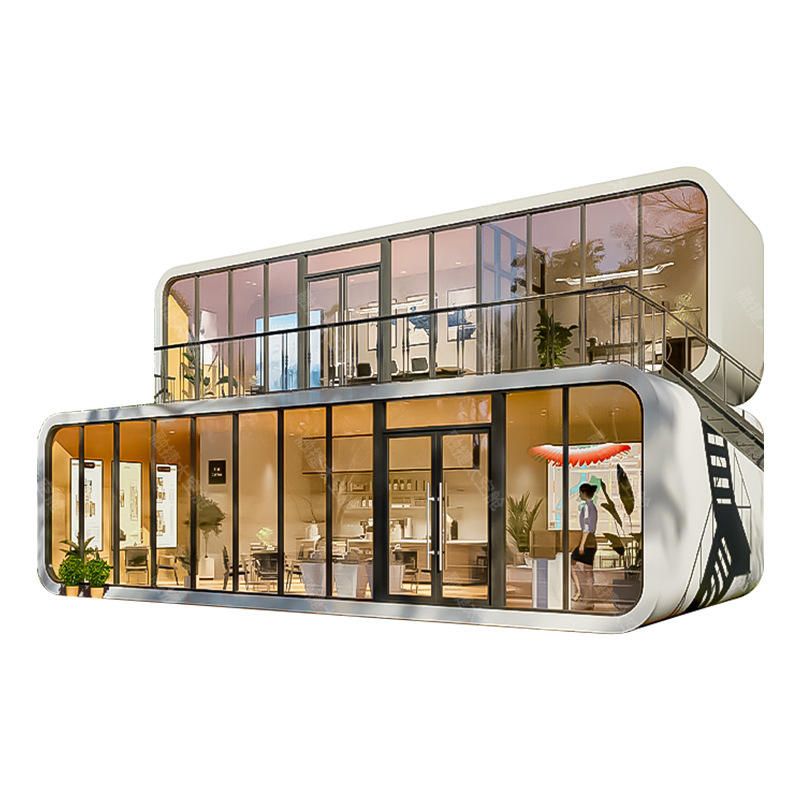
I. Feasibility of Container Renovated Housing
As a modular form of construction, containers offer diverse designs and a wide range of applications. Their greatest advantages lie in low cost, rapid assembly, and mobility, making them suitable for use as temporary or permanent residences. Through reasonable planning and design, containers can be transformed into fully functional and comfortable living spaces.
II. Application Scenarios of Container Renovated Housing
- Residential Sector: Containers can be renovated into villas, courtyards, homestays, and other residential forms. For example, by connecting or staggering 2-3 containers, functional areas such as living rooms, bedrooms, and bathrooms can be expanded to form a flat layout of approximately 100 square meters. Additionally, techniques like staggered design and multifunctional furniture can further enhance space utilization and living comfort.
- Commercial Sector: Containers can also be renovated into commercial spaces such as shops, exhibition halls, and office buildings. Their unique appearance and modular characteristics make container architecture highly promising in the commercial sector.
- Public Facilities: Containers can be used to construct temporary shops, mobile toilets, guard posts, and other public facilities to meet specific needs in certain scenarios.
III. Considerations for Container Renovated Housing
- Procedure Handling: When renovating and using container houses, it is necessary to cooperate in handling relevant approval procedures for planning, site, fire protection, etc., to ensure legality and compliance.
- Rust Prevention: Container materials are prone to rusting, so rust prevention treatment is required to extend their service life.
- Insulation and Lighting: Container houses should focus on insulation and lighting design to improve living comfort.
- Condensation Prevention: Effective measures should be taken to prevent condensation and dew formation, avoiding impacts on the living environment.
Relacionados



