
Movable Container House
Movable container houses are flexible, convenient, eco-friendly, energy-efficient, and widely applicable modular building products.
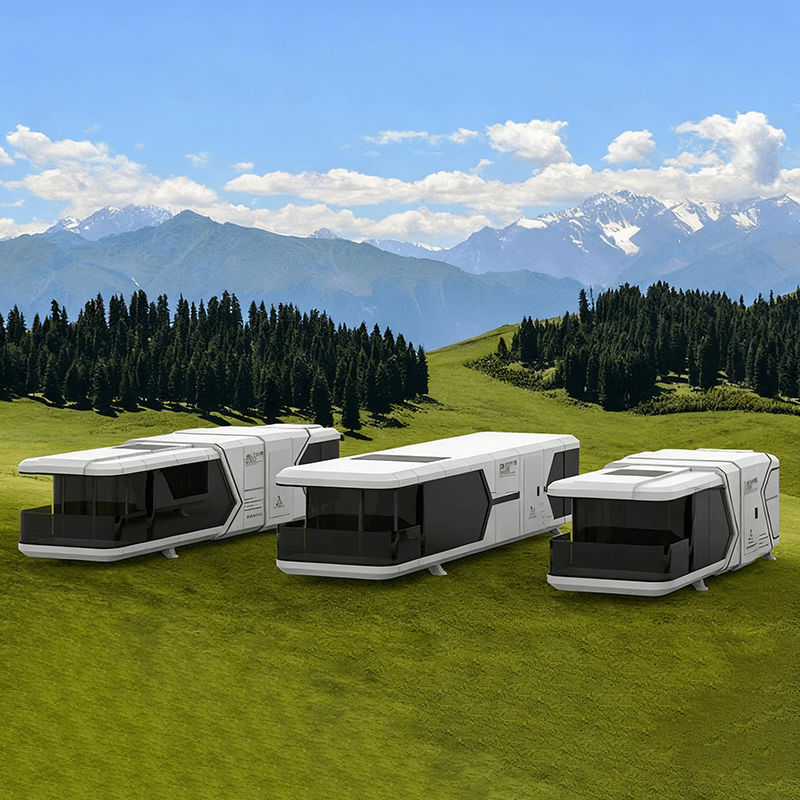
I. Specifications and Configurations
Movable container houses come in various specifications, with common sizes including 3 meters by 6 meters and 4 meters by 5 meters. Taking the 3-meter by 6-meter specification as an example, the interior has been upgraded with tiled flooring, LED lights, exhaust fans, and socket circuits installed to meet basic living needs. The 4-meter by 5-meter container mobile home has a floor area of 20 square meters, featuring a one-door and three-window design, complete interior and exterior decoration, and exterior walls made of thermal-insulating rock wool integrated panels. Additionally, the color, size, and layout can be customized according to user requirements, providing personalized options.
II. Features and Advantages
Creative movable container houses offer numerous significant advantages. Firstly, they are freely and flexibly combinable, allowing for easy switching of living scenarios anytime, anywhere, whether used as temporary residences or for other purposes, quickly adapting to different environments. Secondly, they are eco-friendly, energy-efficient, and recyclable, aligning with sustainable development concepts and reducing negative impacts on the environment. Thirdly, they feature high-quality interior layouts, providing a home-like warmth while combining high cost-effectiveness, high aesthetics, and low costs, making them both beautiful and economical. Fourthly, they are quick to set up, taking only a few weeks from order placement to occupancy, significantly shortening the construction cycle and improving usage efficiency.
III. Structure and Applications
As movable and reusable modular building products, box-type houses adopt steel frame structures and bolt connections, with standardized containers as units for combined construction. This structure originated from the practice of transforming old containers into temporary housing, featuring rapid installation and multi-layer combination capabilities. Due to their flexibility and convenience, they are widely used in various scenarios such as temporary office spaces, tourist resort homestays, and smart waste stations, providing efficient building solutions for different industries.



